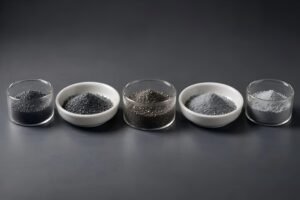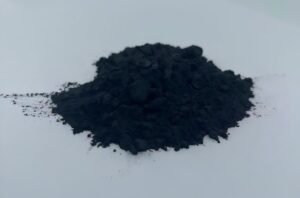


Zirconium silicide applications in high-temperature coatings depend on more than the material’s chemical formula. Why can zirconium disilicide (ZrSi₂) show promising oxidation resistance in certain high-temperature coating environments, yet behave differently under pressurized steam? The answer lies in its phase composition, coating microstructure, and exposure conditions.
From the reaction between ZrO₂ and silicon to the formation of protective oxide layers, understanding zirconium silicide applications requires looking beyond basic material properties. This article explores ZrSi₂ synthesis routes, high-temperature oxidation behavior, practical limitations, and the key powder specifications engineers should verify before material selection.
1. What Is Zirconium Disilicide (ZrSi₂)?
Zirconium disilicide is an intermetallic compound composed of zirconium and silicon, with a nominal atomic ratio of 1:2. Its chemical formula is ZrSi₂, and it is also known as zirconium disilicide or zirconium silicide.
| Property | Information |
| Chemical formula | ZrSi₂ |
| CAS number | 12039-90-6 |
| Molecular weight | Approximately 147.39 g/mol |
| Composition | Zirconium and silicon |
| Crystal structure | Orthorhombic |
| Material class | Metal silicide |
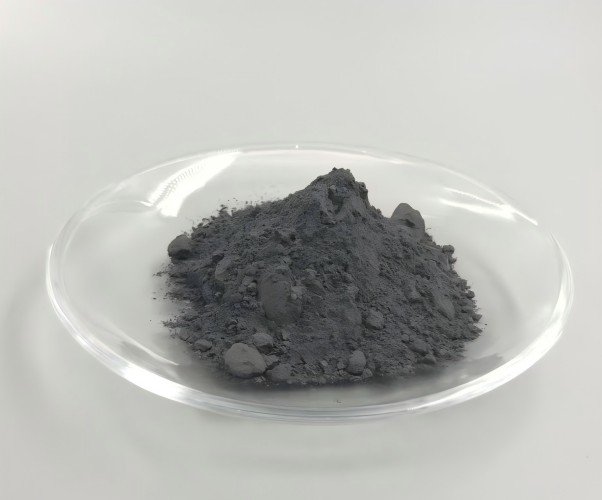
ZrSi₂ belongs to the broader family of zirconium silicides. It should not be treated as interchangeable with ZrSi or Zr₂Si. These compounds have different zirconium-to-silicon ratios and represent distinct phases. This distinction matters during synthesis and quality evaluation. A powder prepared from zirconium and silicon at a nominal 1:2 atomic ratio does not automatically consist entirely of single-phase ZrSi₂. Incomplete reaction, local composition differences, or processing conditions can leave secondary phases or unreacted starting materials. Phase identification therefore requires more than checking the nominal elemental ratio.
2. ZrSi₂ vs. ZrSi vs. Zr₂Si: Why Phase Composition Matters
Zirconium and silicon can form several silicide phases. Three compositions relevant to zirconium-silicide materials research are Zr₂Si, ZrSi, and ZrSi₂.
| Compound | Zr atomic ratio | Composition |
| Zr₂Si | 2:1 | Zirconium-rich silicide |
| ZrSi | 1:1 | Intermediate zirconium–silicon composition |
| ZrSi₂ | 1:2 | Silicon-rich zirconium silicide |
The difference is not merely a change in chemical notation. Phase composition can influence oxidation products, coating behavior, and the final material structure.
Among Zr₂Si, ZrSi, and ZrSi₂ coatings on Zircaloy-4, ZrSi₂ provides the strongest oxidation resistance in air at 700°C. Its oxide scale consists of nanocrystalline SiO₂ and ZrSiO₄ phases distributed within an amorphous Zr–Si–O matrix. A denser coating structure can also be achieved by using lower argon deposition pressures, which may help improve oxidation protection.
These results highlight the importance of phase composition and coating microstructure in high-temperature oxidation behavior. However, performance can vary with the coating system and exposure environment, particularly between air oxidation and pressurized steam.
Practical implication: When purchasing ZrSi₂ powder for synthesis or coating development, verify the phase composition rather than relying only on the nominal Zr ratio. X-ray diffraction (XRD) can help identify the main crystalline phase and detect secondary crystalline phases.
3. ZrSi₂ Synthesis: Direct Reaction and the ZrO₂–Si Route
ZrSi₂ can be formed through reactions involving zirconium and silicon. The selected route, reaction conditions, and control of final composition all influence the resulting material.
3.1 Direct reaction of zirconium and silicon
The direct synthesis reaction can be represented as:
Zr + 2Si → ZrSi₂
The stoichiometric equation indicates that one mole of zirconium reacts with two moles of silicon to form one mole of ZrSi₂. In practice, however, the starting ratio alone does not establish whether the reaction has gone to completion.
Reaction temperature, holding time, contact between starting materials, atmosphere, and the selected processing method can all affect phase formation. If the reaction is incomplete or the local composition is not uniform, residual zirconium, silicon, or other zirconium-silicide phases may remain.
Spark plasma sintering (SPS) has been used to prepare bulk ZrSi₂ from zirconium and silicon powders. In one reported investigation, the resulting bulk material was examined by in-situ XRD during oxidation in air at 900, 1000, and 1100°C for 20 hours. This demonstrates the use of SPS in preparing material for high-temperature evaluation, but the oxidation temperatures should not be mistaken for universal synthesis temperatures or production parameters.
Different equipment, starting-material characteristics, and process configurations may require different conditions. The final phase composition should be verified rather than inferred from the nominal starting ratio.
3.2 Reaction of zirconium dioxide with silicon
Another reaction discussed in zirconium-silicide formation research is:
ZrO₂ + 4Si → ZrSi₂ + 2SiO
In this reaction, silicon participates in the conversion of zirconium dioxide to zirconium disilicide, while silicon monoxide (SiO) is formed as a gaseous product under suitable conditions.
The reaction is more complex than simply mixing zirconium dioxide and silicon at a selected temperature. Its thermodynamic driving force depends on the reaction environment, including the partial pressure of SiO. The removal or accumulation of gaseous reaction products can therefore affect the reaction pathway and equilibrium.
Three factors deserve particular attention:
Silicon availability: The nominal amount of silicon must account for the stoichiometric requirement and possible consumption in side reactions.
Reaction atmosphere: The gas environment and the behavior of gaseous SiO can influence the reaction equilibrium.
Final phase verification: A balanced reaction equation describes the intended overall conversion; it does not prove that the resulting product is single-phase ZrSi₂.
For material development, the final product should be examined using phase analysis and appropriate chemical characterization. Temperature alone is not sufficient to establish successful conversion.
4. Zirconium Silicide Applications: What High-Temperature Data Shows
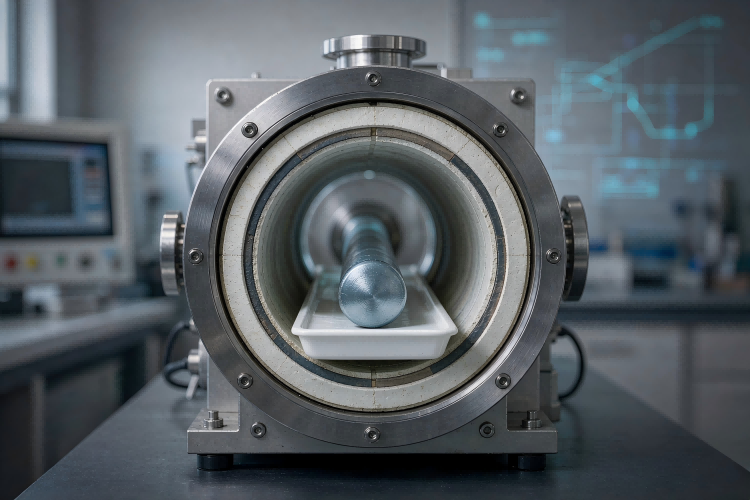
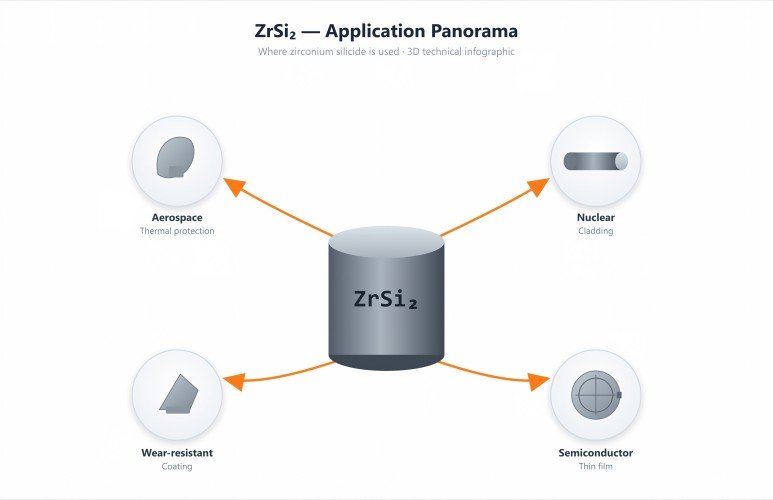
One important application of ZrSi₂ is its use in high-temperature protective coatings, particularly on zirconium-based alloys.
4.1 Oxidation-resistant coatings on zirconium alloys
ZrSi₂ coatings provide better oxidation resistance than Zr₂Si and ZrSi coatings on Zircaloy-4 in air at 700°C. The protective oxide scale contains nanocrystalline SiO₂ and ZrSiO₄ within an amorphous Zr–Si–O matrix. This silicon-containing oxide layer helps limit oxidation of the underlying alloy. Its protective effect depends on coating density, continuity, adhesion, and stability during high-temperature exposure.
4.2 High-temperature oxidation at 900–1100°C
Bulk ZrSi₂ forms an oxide layer containing crystalline ZrO₂ and amorphous SiO₂ after 20 hours of oxidation in air at 900, 1000, and 1100°C. ZrSi₂ coatings have also shown oxidation protection at higher temperatures. On Zircaloy-4 tubing, a laser 3D-printed ZrSi₂ coating resulted in an oxidized outer layer approximately 10–30 μm thick after exposure to a vapor/argon atmosphere at 1200°C for 2000 seconds. By comparison, the uncoated inner surface showed approximately 300 μm of oxidation.
4.3 Oxidation behavior in pressurized steam
ZrSi₂ does not show the same behavior in every oxidizing environment. Under pressurized steam at 400°C and 10.3 MPa for 72 hours, bulk ZrSi₂ experienced weight loss, with surface silicon depletion associated with material recession. A ZrSi₂ coating approximately 3.9 μm thick, pre-oxidized in air at 700°C, prevented oxidation of the underlying Zircaloy-4 substrate under the tested conditions, although a thin porous ZrO₂ layer formed.
These results show that ZrSi₂ oxidation behavior depends strongly on temperature and atmosphere. Air oxidation resistance should not be treated as equivalent to resistance under pressurized steam.
5. How to Evaluate ZrSi₂ Powder Quality Before Purchasing
For powder users, the key question is not simply whether a material is labeled ZrSi₂. Its phase composition, chemical purity, particle-size distribution, and morphology should match the intended processing route.
| Evaluation item | Why it matters | Suggested verification |
| Phase composition | Confirms whether ZrSi₂ is the principal crystalline phase and identifies detectable secondary phases | XRD |
| Elemental composition | Checks the zirconium-to-silicon composition and possible deviations | ICP-OES or another suitable elemental analysis |
| Chemical impurities | Helps assess contamination from raw materials or processing | Appropriate trace-element analysis |
| Oxygen content | Relevant where oxygen contamination may affect subsequent processing | Inert gas fusion or another suitable oxygen analysis |
| Particle-size distribution | Influences powder handling, mixing, packing, and process behavior | D10, D50, D90; laser diffraction where appropriate |
| Particle morphology | Helps identify particle shape, agglomeration, and visible surface features | SEM |
| Batch consistency | Helps determine whether material properties remain consistent between deliveries | Comparison of batch-specific test results |
5.1 Phase composition: do not rely on the nominal formula alone
For ZrSi₂, phase identification is especially important because zirconium can form more than one silicide composition. XRD can help identify crystalline ZrSi₂ and detectable secondary phases such as ZrSi, Zr₂Si, or unreacted silicon.
The interpretation should consider the detection limits of the method and sample preparation procedure. A statement such as “single phase” should be supported by an appropriate analytical result rather than inferred from the nominal starting ratio.
5.2 Particle size: distinguish primary particles from agglomerates
Particle-size information should be interpreted in the context of the measurement method.
Laser diffraction provides a particle-size distribution based on the measurement and dispersion conditions. SEM provides direct images of particle morphology and can help distinguish individual particles from visible agglomerates. These methods do not necessarily report identical particle sizes.
For powder processing, it is useful to confirm:
Whether the stated size refers to a sieve range, a measured distribution, or an average value.
Whether D10, D50, and D90 are available.
Whether the measurement was performed on dispersed or undispersed powder.
Whether agglomeration may affect handling or subsequent processing.
A nominal mesh specification alone does not provide the same information as a complete particle-size distribution.
5.3 Purity and oxygen content
Purity values should be read together with their measurement basis. For example, a specification expressed as the combined content of zirconium and hafnium is not necessarily equivalent to a specification for zirconium alone.
Oxygen and trace-element limits may also be relevant depending on the synthesis or coating process. Buyers should identify which impurities are critical for their application and confirm whether the supplier’s reported values are based on measured results or nominal specifications.
6. ZrSi₂ Powder Specifications: What Should Buyers Confirm?
Before requesting a quotation, buyers should define the material requirements that have the greatest effect on their process. A clear specification helps avoid misunderstandings between nominal product descriptions and actual acceptance criteria.
The following information is useful when evaluating zirconium disilicide powder:
Chemical identity: Confirm that the required material is ZrSi₂ rather than ZrSi or Zr₂Si.
Purity basis: Clarify whether the stated purity refers to Zr + Hf, total metallic content, or another analytical basis.
Particle-size requirement: Specify the required mesh range or particle-size distribution, including D10, D50, and D90 when needed.
Phase requirement: State whether secondary crystalline phases are acceptable and whether an XRD result is required.
Impurity limits: Identify critical elements and oxygen limits where they affect the process.
Packaging and handling: Confirm the required packaging, quantity, and storage conditions.
Documentation: Clarify which documents are needed, such as a specification sheet, safety data sheet, or batch-specific analysis report.
Not every application requires the same level of characterization. For example, a powder used for preliminary laboratory research may have different acceptance criteria from one intended for a controlled coating-development process.
The most useful specification is therefore the one linked to the actual process requirements, rather than the one with the longest list of nominal parameters.
7. Zirconium Silicide Powder from ULPMAT
ULPMAT supplies zirconium silicide powder for research and material-development requirements. The product listing provides a nominal purity specification of 99.5% (Zr + Hf) and a particle-size specification of -325 mesh.
These values should be interpreted according to their stated specification basis. In particular, 99.5% (Zr + Hf) represents a combined zirconium and hafnium content, not a claim of 99.5% zirconium alone. A -325 mesh designation is a sieve-related specification and should not be treated as a complete D10/D50/D90 particle-size distribution.
For projects with more specific requirements, buyers should communicate the intended application and confirm the applicable phase, particle-size, impurity, and documentation requirements before ordering.
Learn more about zirconium silicide powder.
For a broader discussion of deposition methods and phase control in silicide materials, see our guide to silicide thin-film deposition.
FAQs
ZrSi₂ and ZrSi are different zirconium silicide phases with different atomic ratios. ZrSi₂ has a zirconium-to-silicon ratio of 1:2, while ZrSi has a ratio of 1:1. Their phase composition and material properties are different, so they should not be treated as interchangeable materials.
Zirconium disilicide can be synthesized through the direct reaction of zirconium and silicon:
Zr + 2Si → ZrSi₂
Another possible reaction route involves zirconium dioxide and silicon:
ZrO₂ + 4Si → ZrSi₂ + 2SiO
The required processing conditions depend on the synthesis method and reaction environment. X-ray diffraction (XRD) can be used to verify the resulting crystalline phases.
ZrSi₂ can provide favorable oxidation resistance in certain high-temperature air environments. For example, ZrSi₂ coatings on Zircaloy-4 showed better oxidation resistance than Zr₂Si and ZrSi coatings at 700°C. However, bulk ZrSi₂ can experience silicon depletion and weight loss under pressurized-steam conditions. Its oxidation behavior therefore depends on temperature, atmosphere, and material structure.
XRD identifies the crystalline phases present in ZrSi₂ powder and helps determine whether ZrSi₂ is the main phase. It can also reveal detectable crystalline secondary phases. This is important because a nominal chemical composition or Zr ratio alone does not confirm phase purity.
ZrSi₂ powder can be specified by mesh size or particle-size distribution, depending on the application. Mesh specifications describe particle passage through a defined sieve opening, while D10, D50, and D90 indicate particle-size distribution. Buyers should also confirm the measurement method and dispersion conditions, particularly when powder agglomeration may affect the results.
A ZrSi₂ powder inquiry should include the required phase composition, purity specification and its calculation basis, particle-size range, critical impurity limits, order quantity, intended application, and documentation requirements. Providing these details helps suppliers evaluate material suitability and recommend an appropriate specification.
References
- 1. Yeom et al. “Zirconium-Silicide Coatings for High-Temperature Oxidation Protection.” Surface and Coatings Technology (2017).
- 2. Yeom et al. “Steam Corrosion of Zirconium-Silicide Coated Fuel Claddings.” Journal of Nuclear Materials (2018).
- 3. Kim et al. “High-Temperature Oxidation of ZrSi₂ and Its Coatings.” Nuclear Engineering and Technology (2020).
- 4. Okabayashi et al. “Interfacial Reactions in ZrO₂/Si Structures.” e-Journal of Surface Science and Nanotechnology (2006).
Looking for Zirconium Silicide Powder for Your Application?
Share your required purity, particle-size range, phase composition, material quantity, and intended application with ULPMAT. You can also review our available zirconium silicide powder specifications to identify a suitable starting point for your inquiry.