

Magnesium Fluoride Evaporation can become difficult to reproduce even when the material purity looks acceptable. The form of MgF₂, how it is loaded into the evaporation source, and the deposition conditions are all worth checking when coating results change.
For optical coating engineers, the practical question is whether to use magnesium fluoride powder, granules, or pellets. Powder may suit one loading method, while pellets may be easier to handle in another system. But switching material form does not automatically improve film quality.
The important point is to separate material handling from film performance. The first depends on the physical form and source design. The second also depends on deposition rate, substrate temperature, film structure, and the coating process itself.
Why Material Form Matters in Magnesium Fluoride Evaporation
When a coating process becomes inconsistent, purity is an obvious place to start. It is not always the only issue.Fine powder can be difficult to transfer cleanly, and the way it is distributed inside the source may vary between loadings. Granules and pellets are larger, but their size and shape must suit the source. A material that is convenient to handle may still be unsuitable for a particular holder or heating arrangement.
This is why the same charge mass should not automatically be treated as the same loading condition. How the material sits in the source can change, even when the chemistry and nominal mass remain unchanged. Before changing the material form, record the existing loading method, charge mass, source condition, and process settings. If you change the material and the heating program at the same time, it becomes much harder to identify what caused the difference.
Powder vs. Granules vs. Pellets: What Is the Difference?
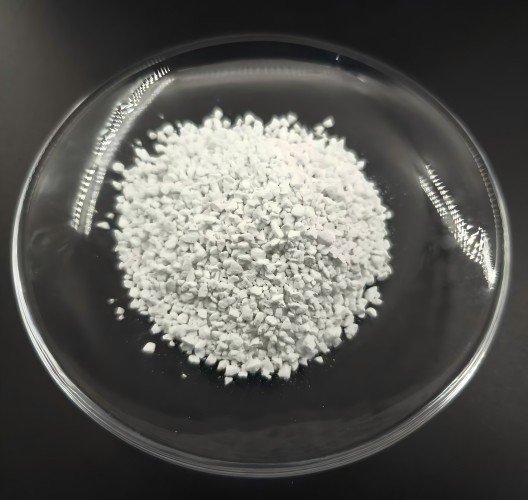
The best form depends on your equipment and loading method. There is no universal ranking that makes one form the right choice for every evaporation system.
Magnesium Fluoride Powder
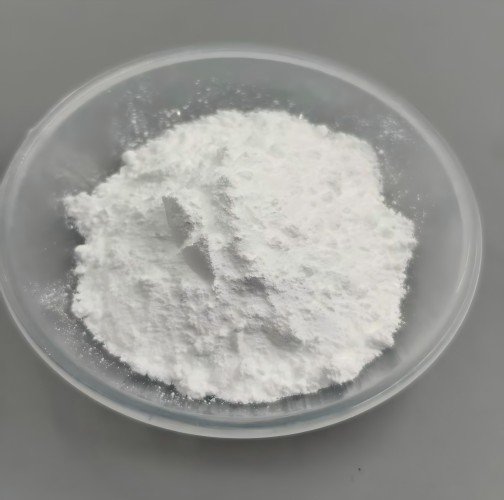
Powder may be suitable for systems designed around fine material. The main practical concern is handling consistency. Fine particles can be lost during transfer, and the way the powder is distributed or packed in the source may vary. If powder is already working in your process, keep the loading procedure consistent before assuming that a different form is necessary. Record the charge mass and note any changes in how the material is placed in the source.
ULPMAT lists magnesium fluoride powder with a stated purity of 99.9% and a nominal particle size of -325 mesh. Check the current product specification and confirm that it matches your process requirements.
Magnesium Fluoride Granules
Granules can be easier to handle than fine powder in some setups. However, their suitability depends on particle size, shape, mechanical stability, and the geometry of the evaporation source. Do not specify granules simply because they are larger. If the pieces do not fit the source or cannot be loaded consistently, the change may create a new problem rather than solve an existing one.
If you need granules, confirm the required size range and availability with the supplier. A powder listing does not mean that a separate granule grade is available.
Magnesium Fluoride Pellets
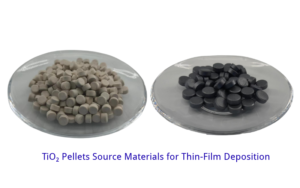
Pellets have defined shapes and dimensions, which can make handling and loading more straightforward in compatible equipment. Their dimensions also make it easier to specify the physical form when purchasing.
The key question is whether the pellet fits your source and loading method. A pellet that works in one setup may not suit another, and changing pellet dimensions can change how the charge is arranged.
ULPMAT lists magnesium fluoride pellets with a stated purity of 99.99% and listed dimensions of Ø15 × 7 mm and Ø18 × 10 mm. Confirm the latest specifications and availability before ordering.
Which Form Should You Choose?
Use the source design and loading procedure as the starting point.
| Selection factor | Powder | Granules | Pellets |
| Handling | Fine particles may require more care during transfer | Depends on particle size and shape | Defined dimensions can simplify handling |
| Loading | Distribution and packing need to be consistent | Size range must suit the source | Dimensions must fit the source |
| Specification to confirm | Particle size and purity | Size range, shape, and availability | Diameter, thickness, and purity |
| Main question | Is fine material suitable for this source? | Is the granule size suitable? | Do the pellet dimensions fit the loading arrangement? |
This table compares practical handling considerations, not measured deposition performance. The studies discussed below do not establish that powder, granules, or pellets inherently produce better films.
How Deposition Conditions Affect MgF₂ Film Quality

Material form is only one part of the process. Deposition rate and substrate temperature can also affect MgF₂ film structure, optical properties, and coating consistency. The following results illustrate why process conditions should be considered when troubleshooting film performance.
Deposition Rate and Film Performance
For MgF₂ films deposited on fused silica by molybdenum boat evaporation for 193 nm optical applications, a substrate temperature of 300°C and a deposition rate of 0.05 nm/s were associated with a higher laser-induced damage threshold and better optical characteristics under the reported experimental conditions.
These values are reference points, not universal production settings. The appropriate conditions depend on the evaporation equipment, coating design, substrate, and required optical performance.
When film performance changes between runs, review deposition rate and substrate temperature alongside material specifications. This helps avoid attributing every variation to the incoming MgF₂ material.
Substrate Temperature and Film Characteristics
Substrate temperature can influence film structure and measured thickness. In a study of MgF₂ thin films deposited at different substrate temperatures, the following thickness values were reported.
| Substrate temperature | Thickness on optical monitor | Thickness on quartz substrate |
| Room temperature | 429 nm | 308 nm |
| 150°C | 417 nm | 299 nm |
| 200°C | 413 nm | 292 nm |
| 250°C | 407 nm | 289 nm |
| 300°C | 404 nm | 286 nm |
These values are from a specific experiment and should not be treated as general production targets.
Substrate temperature also affected film microstructure, packing density, and inhomogeneity through the film thickness. After exposure to air, the refractive index increased under the reported conditions, with adsorbed water and magnesium oxide formation contributing to the observed changes.
For coating engineers, the key point is to evaluate material specifications and process records together. If optical properties change, check substrate temperature, deposition conditions, thickness measurements, and post-deposition handling before concluding that the MgF₂ material itself is responsible.
Troubleshooting Common MgF₂ Evaporation Problems
When a run differs from the previous one, start with the variables that can be compared directly.
| Observed issue | What to check first |
| Results vary between runs | Compare charge mass, loading procedure, source condition, and recorded process settings |
| Powder is difficult to load consistently | Review transfer and loading methods; check whether another form is compatible with the source |
| Pellets do not fit correctly | Confirm source geometry and required pellet dimensions |
| Film optical properties change | Review deposition rate, substrate temperature, film structure, and post-deposition handling |
| A new batch behaves differently | Compare available batch documentation, material form, dimensions, and quality specifications |
| Changing the material form does not help | Check whether source condition or deposition settings also changed |
These checks help narrow down possible causes; they do not prove that a particular material form is responsible for every problem.
Where practical, change one variable at a time and keep the other conditions consistent. This gives you a clearer comparison than changing the material form, source arrangement, and heating program in one run.
What to Confirm Before Ordering MgF₂ Evaporation Materials
A material can meet a nominal purity requirement and still be unsuitable for a particular loading method. Before requesting a quotation, confirm the specifications that matter to your process.
Purity: State the required purity and ask what quality documentation is available.
Material form: Specify powder, granules, or pellets rather than requesting MgF₂ without further details.
Particle size or dimensions: Confirm the powder particle-size specification or the diameter and thickness of pellets.
Batch documentation: Ask which test results or certificates are supplied.
Equipment compatibility: Explain any relevant source geometry or loading constraints.
Availability and lead time: Confirm current stock and whether the requested form or dimensions can be supplied.
If batch-to-batch consistency is important, ask which properties are specified and documented for each batch. Do not assume that every listed property is independently tested for every shipment.
MgF₂ Materials from ULPMAT
ULPMAT lists magnesium fluoride powder and pellets for customers evaluating materials for evaporation applications.
Review Magnesium Fluoride Powder for the listed purity and particle-size specification.
Review Magnesium Fluoride Pellets for the listed purity and pellet dimensions.
If your process requires a particular size, purity, or physical form, confirm the current specification and availability before ordering. If granules are required, confirm their availability separately rather than assuming they are included in the powder range.
FAQs
It may be suitable for some systems, depending on the evaporation source, loading procedure, and process requirements. Confirm that the material specification and physical form are compatible with your equipment.
No. Pellets may be easier to handle in compatible systems, but the best choice depends on the source design, material dimensions, and loading procedure. There is no universal performance ranking based on form alone.
No. Purity is important, but published research also shows that deposition conditions, film microstructure, and substrate temperature can affect optical properties [1, 2].
Compare the material batch and form, loading procedure, source condition, deposition rate, substrate temperature, measurement method, and post-deposition handling. Where practical, change one variable at a time.
Check the current product listings and confirm your requirements with the supplier. Do not assume a particular granule size or custom dimension is available until it has been confirmed.

Conclusion
Choosing MgF₂ for evaporation involves more than comparing purity values. Powder, granules, and pellets differ in handling and physical form, and each needs to suit the evaporation source and loading procedure.
Published research also shows that substrate temperature and deposition rate can affect MgF₂ film structure and optical performance. These findings are useful when troubleshooting inconsistent results, but they should not be mistaken for a direct comparison of the three material forms.
Before ordering, confirm purity, particle size or dimensions, batch documentation, and equipment compatibility. For current specifications, see ULPMAT’s magnesium fluoride powder and magnesium fluoride pellets listings.
References
- 1. Liu, M.-C., Lee, C.-C., Kaneko, M., Nakahira, K., & Takano, Y. (2006). “Microstructure of magnesium fluoride films deposited by boat evaporation at 193 nm.” Applied Optics, 45(28), 7319–7324.
- 2. Sun, J., Shao, J., Yi, K., & Zhang, W. (2014). “Effects of substrate temperatures on the characterization of magnesium fluoride thin films in deep-ultraviolet region.” Applied Optics, 53(7), 1298–1305.