

What Is Indium Zinc Oxide Rotatable Target?
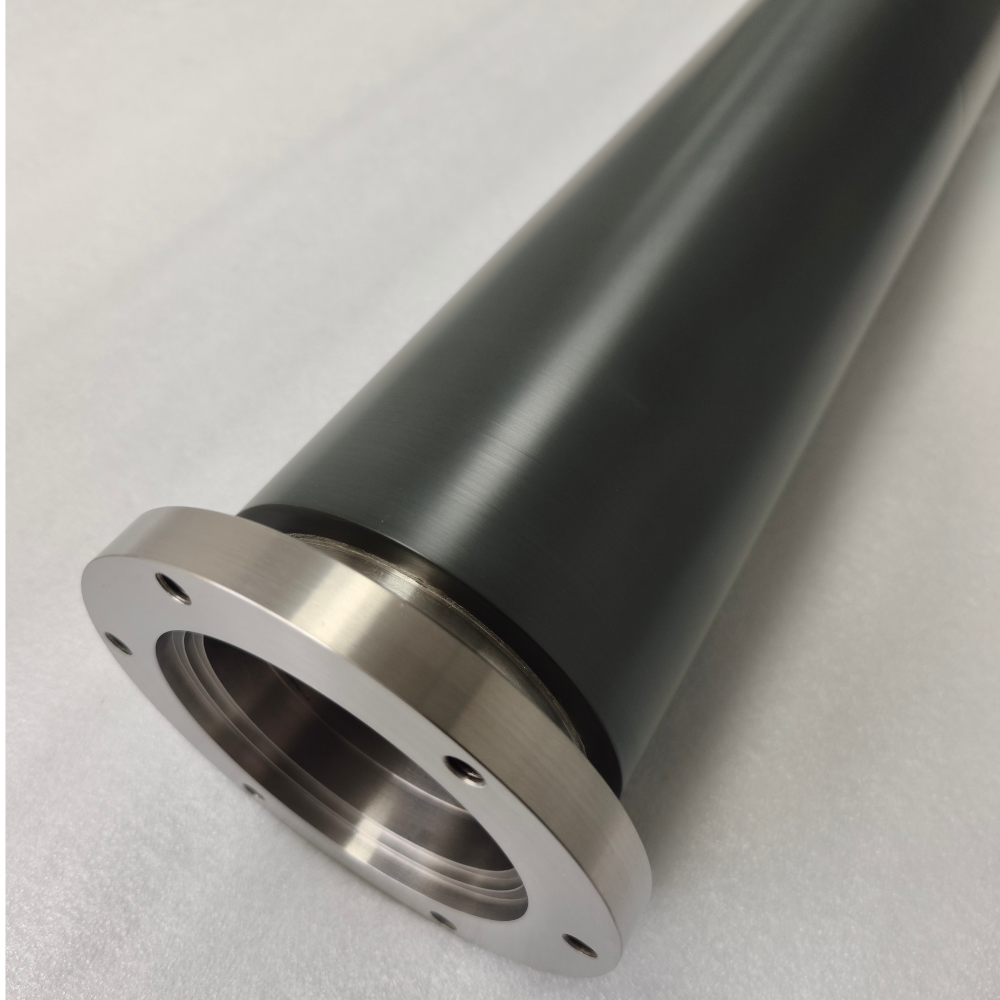
Indium Zinc Oxide rotatable target is a cylindrical sputtering target designed for rotary cathode magnetron sputtering systems. It is manufactured from high-purity Indium Zinc Oxide ceramic material and is used to deposit transparent conductive oxide (TCO) thin films for applications such as display technologies, semiconductor devices, optical coatings, and other advanced thin film processes.Unlike conventional planar sputtering targets, IZO rotatable targets rotate continuously during the sputtering process. This rotation distributes plasma erosion more evenly across the target surface, enabling higher material utilization, improved deposition stability, and better suitability for large-area coating systems.
An IZO rotatable target typically consists of a cylindrical Indium Zinc Oxide ceramic target, a metallic backing tube, and a bonding interface compatible with rotary cathode sputtering equipment. The target material is mainly composed of indium oxide (In₂O₃) and zinc oxide (ZnO), combining the high electrical conductivity of indium oxide with the optical transparency, chemical stability, and semiconductor characteristics of zinc oxide.Due to its balanced electrical and optical properties, Indium Zinc Oxide (IZO) has been widely studied as a transparent conductive oxide (TCO) material and an alternative material for transparent electrodes and oxide semiconductor applications.
IZO Rotatable Target vs Planar Target: Deposition Efficiency Comparison
For industrial thin film deposition, target geometry plays an important role in sputtering efficiency, target utilization, and continuous production capability. Studies on magnetron sputtering systems have demonstrated that cylindrical rotatable targets can achieve significantly higher material utilization compared with conventional planar targets due to their larger effective erosion area and continuous rotation during deposition.
| Feature | IZO Rotatable Target | IZO Planar Target |
| Target Geometry | Cylindrical tube | Flat plate |
| Erosion Pattern | Rotating and distributed erosion | Localized erosion track |
| Material Utilization | Typically higher due to extended erosion area | Lower due to non-uniform erosion |
| Deposition Operation | Suitable for long-duration industrial coating | More frequent target replacement |
| Large-area Deposition | Highly suitable for inline coating systems | Limited by target size and erosion profile |
Research and industrial sputtering practices indicate that rotatable targets can achieve material utilization rates of 70–90%, while planar targets commonly show lower utilization because a significant amount of target material remains unused after the erosion groove reaches its limit.
The higher utilization of rotatable targets can reduce target replacement frequency, minimize production interruption, and improve cost efficiency in large-area thin film coating processes.
Advantages of IZO Rotatable Targets During the Sputtering Process
For industrial thin film deposition, IZO rotatable target performance directly affects sputtering stability, film quality, production efficiency, and operating cost. Factors such as target density, purity, erosion behavior, and equipment compatibility play important roles throughout the deposition process.
1. Reliable Integration with Rotary Cathode Systems
Precise dimensions, structural integrity, and consistent ceramic properties are essential for smooth installation and stable operation. High-quality IZO rotatable targets help ensure proper bonding, reliable rotation, and compatibility with different sputtering systems.
2. High Density and Purity for Stable Deposition
For ceramic oxide targets, density and purity directly influence sputtering stability and film quality. A high-density IZO target structure helps reduce internal defects and particle generation while supporting uniform erosion and consistent thin film properties.
3. Uniform Erosion and Consistent Film Performance
The cylindrical structure of IZO rotatable targets enables more uniform erosion compared with planar targets. This helps maintain stable deposition rates and consistent film characteristics, including electrical properties and optical transparency.
4. Longer Sputtering Cycles and Better Material Utilization
Rotatable targets utilize a larger erosion area, allowing more efficient use of target material. This helps reduce target replacement frequency, minimize production interruptions, and improve overall coating efficiency.
5. Suitable for Large-Area Thin Film Deposition
IZO rotatable targets are designed for rotary cathode sputtering systems used in continuous coating processes. Their stable operation makes them suitable for large-area applications such as transparent conductive oxide films, display coatings, semiconductor research, and optical layers.
Applications of Indium Zinc Oxide Rotatable Target
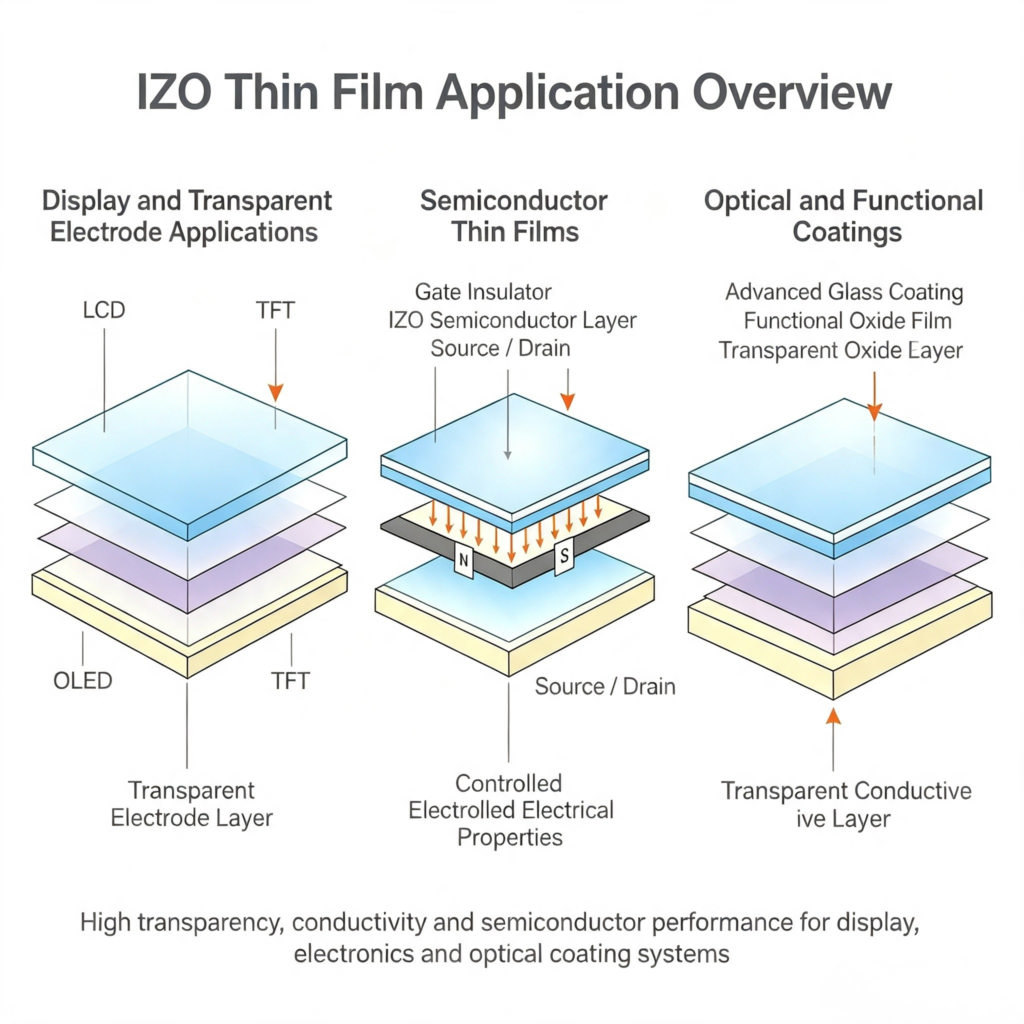
Display and Transparent Electrode Applications:IZO thin films are widely studied for display-related applications, including LCD, OLED, and TFT technologies. Their high optical transparency and conductive properties make them suitable for transparent electrode layers and oxide semiconductor components.
Semiconductor Thin Films:IZO is an important oxide semiconductor material for thin film transistor (TFT) research and electronic device applications. IZO sputtering targets enable the deposition of functional oxide layers with controlled electrical properties.
Optical and Functional Coatings:IZO thin films can also be used in optical coating applications that require transparent conductive layers or functional oxide films, including advanced glass coatings and other electronic-related coating systems.
IZO Rotatable Target vs ITO Rotatable Target
The selection between IZO and ITO depends on the specific application requirements, including electrical performance, optical properties, device structure, and sputtering process conditions.
| Application Requirement | Recommended Material | Typical Applications |
| Maximum electrical conductivity | ITO | Touch panels, displays, electronic devices |
| Balanced conductivity and optical transparency | IZO | Transparent conductive films, TFT-related applications, oxide semiconductor research |
| Display-related thin film applications | IZO / ITO | LCD, OLED-related films, transparent electrodes |
| Oxide semiconductor applications | IZO | Thin film transistors (TFT), oxide semiconductor devices |
| Mature industrial production processes | ITO | Large-scale commercial display and electronic applications |
| Alternative TCO material selection | IZO | Advanced thin film deposition and research applications |
How to Select an Indium Zinc Oxide Rotatable Target for Sputtering Applications
Selecting an IZO rotatable target is not only about choosing a material grade. The target needs to match the customer’s deposition process, equipment requirements, and final film performance objectives. A practical selection process usually follows several key considerations.
Application Requirements → Material Selection → Target Specification → Equipment Compatibility → Deposition Optimization
Step 1: Define the Film Requirements and Application
The selection process begins with understanding the purpose of the deposited IZO film. Different applications may require different balances between electrical conductivity, optical transparency, film uniformity, and process stability.For example, transparent electrode applications may prioritize optical and electrical performance, while oxide semiconductor applications may require precise control of film composition and electrical characteristics.
Step 2: Select the Appropriate Material Quality
After defining the application requirements, target quality becomes the next consideration. The purity and density of an IZO rotatable target directly influence sputtering stability and deposited film quality.High-purity and dense ceramic targets help reduce contamination, particle generation, and abnormal erosion during long-term sputtering operation. Common IZO target purity levels include 99.99%, 99.995%, and 99.999%.
Step 3: Match Target Design with Sputtering Equipment
IZO rotatable target must be compatible with the customer’s rotary cathode system. Parameters such as target diameter, length, backing tube structure, and bonding requirements need to be considered before production.Proper dimensional matching helps ensure stable installation, reliable rotation, and continuous sputtering performance.
Step 4: Optimize the Target for Deposition Conditions
The final performance of an IZO thin film also depends on sputtering parameters. Factors including DC/RF power, oxygen partial pressure, substrate temperature, and deposition rate can influence film properties.A suitable IZO rotatable target should work together with the customer’s deposition process to achieve the required electrical, optical, and structural characteristics.
FAQs
Indium Zinc Oxide (IZO) rotatable target is a cylindrical sputtering target made from In₂O₃-ZnO ceramic material and designed for rotary cathode magnetron sputtering systems used in thin film deposition.
IZO is mainly used for transparent conductive oxide (TCO) films, display-related coatings, oxide semiconductor research, and optical coating applications where electrical conductivity and optical transparency are required.
Rotatable targets provide more efficient material utilization, longer sputtering cycles, and better suitability for continuous large-area thin film deposition compared with conventional planar targets.
IZO and ITO are both important transparent conductive oxide materials. The selection depends on application requirements, including electrical properties, optical performance, device structure, and deposition conditions.
IZO sputtering targets are commonly available in high-purity grades, including 99.99%, 99.995%, and 99.999%, depending on application requirements.
The selection of an IZO rotatable target depends on several factors, including target purity, density, In₂O₃/ZnO composition ratio, target dimensions, rotary cathode compatibility, and deposition process requirements. These parameters should match the customer’s equipment and final thin film performance objectives.
Yes. IZO rotatable targets are designed for rotary cathode sputtering systems and are suitable for continuous large-area thin film deposition. Their cylindrical structure supports stable erosion behavior and efficient material utilization during long production cycles.
IZO sputtering targets can be used in magnetron sputtering processes, including DC sputtering and RF sputtering. Film properties depend on deposition parameters such as oxygen partial pressure, sputtering power, substrate temperature, and target composition.
References
- 1. Minami, T. Transparent conducting oxide semiconductors for transparent electrodes. Semiconductor Science and Technology.
- 2. Fortunato, E. et al. Oxide semiconductor thin-film transistors: A review. Advanced Materials.
- 3. Ellmer, K. Transparent conductive electrodes: Fundamentals and applications. Nature Photonics.
- 4. Research on IZO thin films and sputtering technologies. Thin Solid Films; Surface and Coatings Technology.
About ULPMAT
ULPMAT is a supplier of high-purity sputtering targets and advanced inorganic materials for thin film deposition, semiconductor, optical coating, and research applications.
The company provides various sputtering materials, including oxide targets, metal targets, ceramic targets, and customized target solutions.
ULPMAT supplies materials such as Indium Zinc Oxide (IZO), Indium Tin Oxide (ITO), Aluminum Zinc Oxide (AZO), titanium-based targets, niobium oxide targets, and other advanced materials for laboratory and industrial coating applications.
With expertise in high-purity materials and sputtering solutions, ULPMAT supports customers with material selection, technical documentation, and customized target requirements.