

Titanium Rotary Target Overview
Titanium rotary targets are cylindrical sputtering targets designed for magnetron sputtering systems and PVD coating applications. Compared with planar titanium targets, rotary targets offer higher material utilization, more stable continuous operation, and better suitability for large-area thin film deposition.
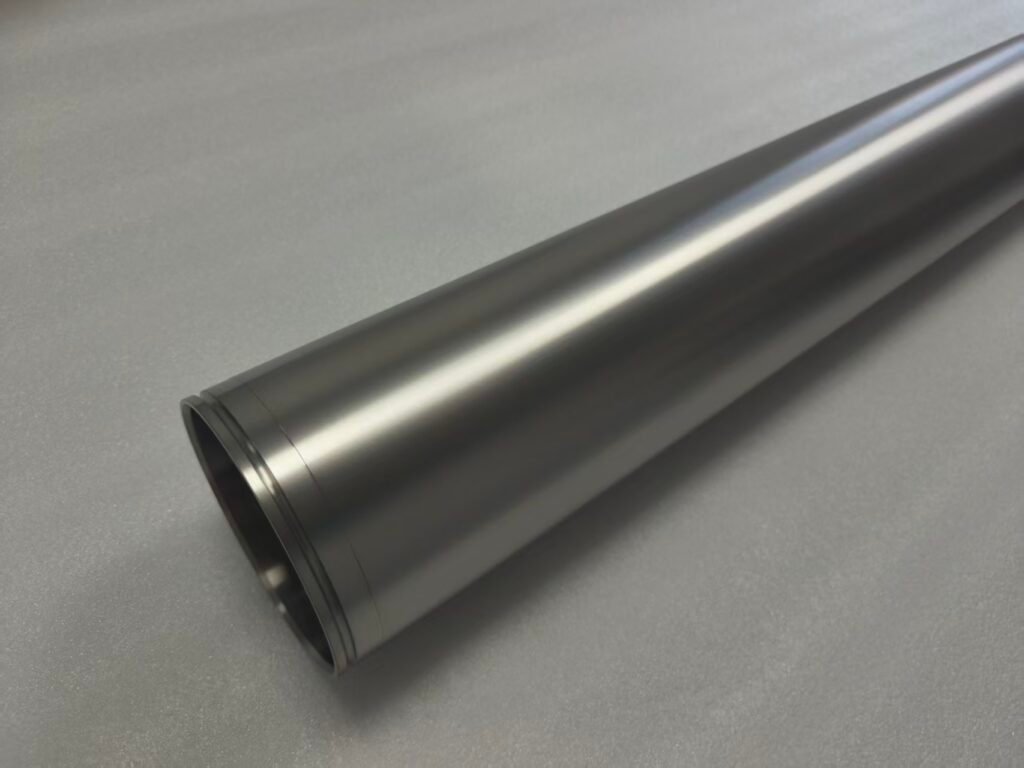
What Is Titanium Rotary Target?
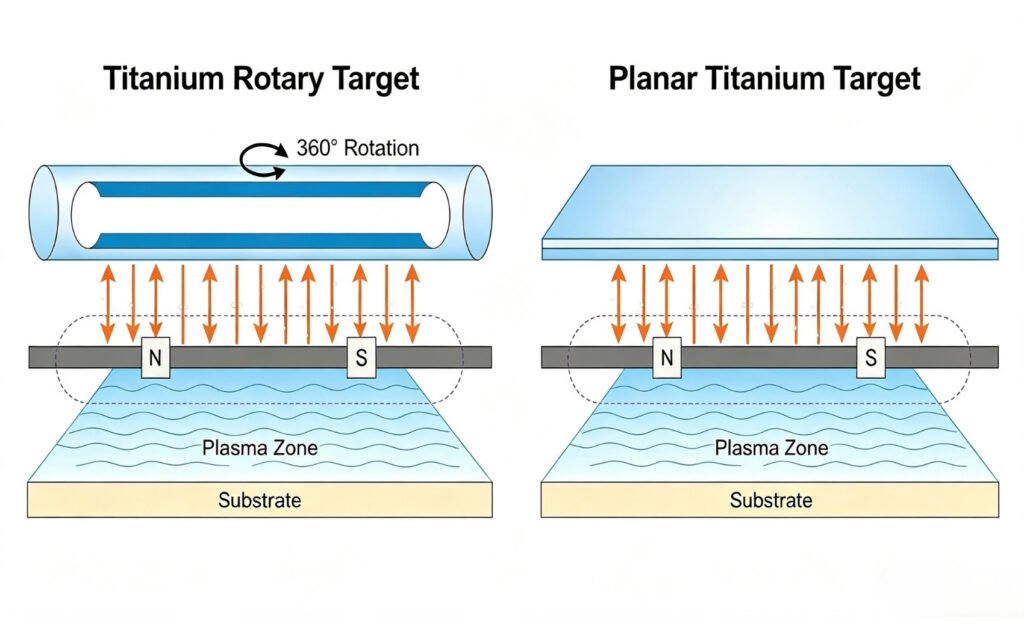
Titanium rotary target is a cylindrical sputtering target designed to rotate during the magnetron sputtering process.Unlike planar targets that remain fixed during deposition, rotary targets continuously rotate while being exposed to plasma. This rotating structure allows the sputtering process to occur across a larger target surface area and helps achieve more uniform material erosion.
Titanium rotary targets are commonly used in industrial sputtering systems that require:
- Stable long-term operation
- Large-area thin film deposition
- Consistent coating quality
- Efficient material utilization
Typical Specifications of Titanium Rotary Targets
| Item | Typical Information |
| Material | Titanium (Ti) |
| Purity | Common grades include 99.5%, 99.9%, and higher purity levels depending on application requirements |
| Target Type | Rotary sputtering target / Tube target |
| Shape | Cylindrical target designed for continuous rotation during sputtering |
| Sputtering Process | Magnetron sputtering, reactive sputtering, PVD coating |
| Applications | Decorative coatings, optical coatings, wear-resistant coatings, industrial thin films |
| Dimensions | Customized according to equipment requirements, including diameter, length, and wall thickness |
| Density & Microstructure | Controlled material structure to support stable sputtering performance and uniform erosion |
| Bonding Compatibility | Available with bonding solutions suitable for rotary sputtering systems |
| Customization | Customized specifications available according to coating system requirements |
Both titanium rotary targets and planar titanium targets are used for sputtering applications, but their designs are suitable for different production requirements.
Titanium Rotary Target vs Planar Titanium Target
| Factor | Titanium Rotary Target | Planar Titanium Target |
|---|---|---|
|
Target structure |
Cylindrical rotating design |
Flat plate design |
|
Material utilization |
Higher utilization through uniform erosion |
More unused material after erosion |
|
Coating area |
Suitable for large-area coating systems |
Commonly used for smaller systems |
|
Operation time |
Supports longer continuous operation |
Requires more frequent replacement |
|
Deposition stability |
Suitable for continuous industrial production |
Depends on process conditions |
|
Initial cost |
Higher equipment compatibility requirements |
Lower initial investment |
For industrial coating applications where continuous production and stable film quality are important, rotary titanium targets are often preferred.
Key Factors When Selecting Titanium Rotary Targets
Selecting a titanium rotary target requires consideration of the complete sputtering process rather than the material itself. The target specifications should be matched with the sputtering equipment, deposition conditions, and the performance requirements of the final coating.
Purity
Purity is one of the primary factors affecting titanium sputtering target performance. High-purity titanium materials help reduce potential contamination during deposition and provide more stable conditions for thin film formation.The required purity level depends largely on the intended application. For industrial PVD coatings, stable sputtering performance and cost efficiency are often the main considerations. Optical coating applications may require higher material consistency to achieve reliable film properties, while semiconductor-related processes generally require stricter control of material quality and impurities.When selecting a titanium rotary target, users should consider the available purity grades, material analysis methods, and quality consistency between different production batches.
Target Density and Microstructure
The internal structure of a titanium rotary target has an important influence on sputtering behavior and coating performance. Target density, grain structure, and material uniformity can affect erosion characteristics, particle generation, and deposition stability during operation.A well-manufactured target with consistent microstructure can contribute to more stable sputtering conditions and more uniform thin film deposition. For applications with strict coating requirements, the manufacturing process and quality control of the target should be carefully evaluated.
Target Dimensions and Equipment Compatibility
Unlike standard flat targets, rotary targets are closely related to the design of the sputtering equipment. The target dimensions must match the chamber configuration and installation requirements to ensure stable operation.Important parameters include target diameter, length, wall thickness, and connection design. Before purchasing a titanium rotary target, it is necessary to confirm these specifications with the equipment manufacturer or sputtering system requirements.Proper dimensional compatibility helps avoid installation issues and ensures efficient operation during the coating process.
Bonding Quality and Thermal Management
During magnetron sputtering, the target surface is continuously exposed to plasma bombardment, which generates heat during operation. For rotary targets, the bonding layer between the target tube and backing tube plays an important role in heat transfer and mechanical stability.High-quality bonding helps maintain effective thermal management, reduce operational risks, and support long-term sputtering performance. Therefore, bonding quality is an important consideration when evaluating titanium rotary targets for industrial coating applications.
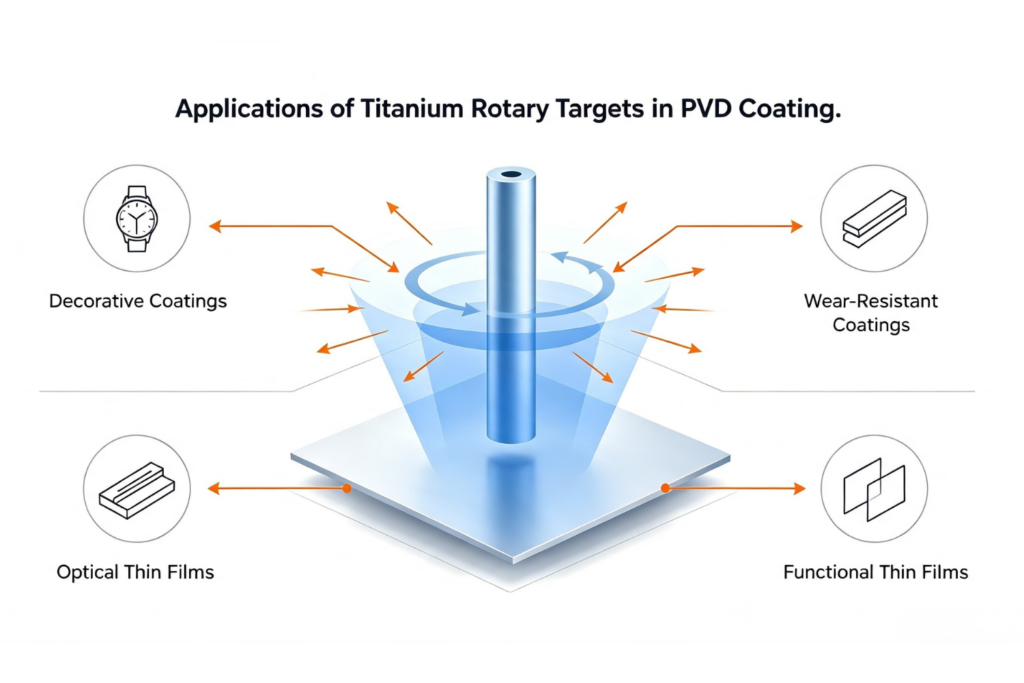
Applications of Titanium Rotary Targets in PVD Coating
Titanium rotary targets are used in a wide range of PVD coating applications where stable sputtering performance, consistent film quality, and reliable material properties are required. Depending on the coating purpose and substrate requirements, titanium thin films can provide decorative effects, surface protection, and functional properties.The following sections introduce several common application areas of titanium rotary targets.
Titanium rotary targets are widely used in decorative PVD coating systems for producing durable and visually attractive thin films. Titanium-based coatings are valued for their metallic appearance, corrosion resistance, and surface protection characteristics.These coatings are commonly applied to products such as watches, hardware components, consumer products, and architectural parts. In these applications, coating performance depends on multiple factors, including titanium target quality, sputtering parameters, coating thickness, and process control.
Wear-Resistant Coatings
Titanium sputtering targets are also used in protective coating applications where improved surface durability and wear resistance are required.Titanium-based thin films are applied to cutting tools, mechanical components, and industrial parts that require enhanced surface performance. The deposited coating layer can help improve resistance to wear, reduce surface damage, and extend the service life of coated components.For wear-resistant applications, the quality of the sputtering target and the stability of the deposition process are important factors affecting the final coating performance.
Optical and Functional Thin Films
Titanium thin films are also used in optical and functional coating systems where controlled film properties are required.These applications include optical components, protective films, and functional surface treatments. In such processes, consistent titanium material quality and stable sputtering conditions help achieve uniform film deposition and reliable coating performance.
Titanium Rotary Target Ordering Preparation Process
Before ordering titanium rotary target, customers usually need to provide several technical details to ensure the target is compatible with the sputtering system and meets application requirements.
Step 1. Define the Application Purpose
The coating application should be clarified first, including whether the target will be used for decorative coatings, optical films, protective coatings, or other thin film processes. The required film performance and production conditions also help determine the suitable target specifications.
Step 2. Provide Sputtering Equipment Information
The sputtering system details are important for rotary target design. Customers should confirm the equipment model, target installation position, available target dimensions, and cooling requirements to ensure proper compatibility.
Step 3. Confirm Target Dimensions
The required rotary target dimensions should be specified before quotation or production. Information such as target diameter, length, wall thickness, and connection design is needed to match the sputtering system.
Step 4. Specify Material Requirements
The required titanium material specifications should be confirmed according to the coating application. This may include titanium purity, material grade, and any specific quality requirements.
Step 5. Discuss Custom Requirements
For customized rotary targets, additional requirements should be communicated, such as special dimensions, packaging requirements, or application conditions that may affect target design.
Step 6. Confirm Technical Details Before Ordering
Before placing an order, the final specifications should be reviewed to avoid compatibility issues. Clear confirmation of application requirements, target dimensions, and material specifications helps ensure smooth installation and operation.
Frequently Asked Questions About Titanium Rotary Targets
Q1: What is a titanium rotary target?
A1: A titanium rotary target is a cylindrical sputtering target made from titanium (Ti) and used in rotary magnetron sputtering systems. During the sputtering process, the target rotates continuously, allowing more uniform erosion and supporting stable thin film deposition.
Q2: What are the advantages of rotatable titanium sputtering targets compared with planar titanium targets?
A2: Titanium rotary targets provide advantages for continuous PVD coating processes, including improved material utilization, stable sputtering operation, and more consistent coating performance. They are commonly selected for large-area coating systems and applications requiring long production cycles.
Q3: What specifications should be confirmed before ordering a titanium rotary target?
A3: Before ordering a titanium rotary target, customers should confirm the sputtering equipment requirements, target dimensions, titanium purity, connection design, cooling conditions, and coating application requirements. These details help ensure proper compatibility with the sputtering system.
Q4: How are titanium rotary target dimensions determined?
A4: The dimensions of a titanium rotary target are mainly determined by the sputtering equipment and installation requirements. Important specifications include target diameter, target length, wall thickness, and connection structure. Customized dimensions can be provided according to specific system requirements.
Q5: Can titanium rotary targets be customized for different sputtering systems?
A5: Yes. Titanium rotary targets can be customized according to different sputtering equipment and application requirements. Customization may include target size, purity level, structural design, and other specifications required for the deposition process.
Q6: What applications use titanium rotary targets?
A6: Titanium rotary targets are widely used in PVD coating applications, including decorative coatings, optical coatings, protective coatings, and functional thin films. They are suitable for processes requiring stable sputtering performance and consistent coating quality.
Q7: What information should be provided when requesting a titanium rotary target quotation?
A7: When requesting a quotation, customers should provide the sputtering system information, required target dimensions, material purity requirements, application details, and any specific technical requirements. Complete information helps suppliers recommend suitable specifications and avoid compatibility issues.
Conclusion
Titanium rotary targets provide an effective solution for continuous PVD coating processes where stable sputtering performance, efficient material utilization, and consistent film quality are required.Choosing the right titanium rotary target depends on several factors, including material purity, target dimensions, equipment compatibility, and coating requirements. A proper match between the target and sputtering system can help achieve more stable deposition results and improve process reliability.
Content Source and Expertise
This article is published by ULPMAT Materials, a technical resource platform focusing on sputtering targets, rotary targets, powders, and advanced materials for thin film deposition and material research.
ULPMAT Materials shares technical information related to material properties, sputtering technologies, application areas, and material selection considerations to support researchers, engineers, and industrial users in understanding advanced materials and coating processes.
The content is developed based on general knowledge of sputtering materials and thin film technologies. Specific material specifications, process conditions, and performance results may vary depending on equipment design and application requirements.