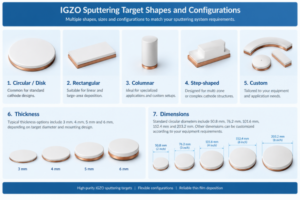


Zinc oxide materials are multifunctional inorganic materials based on zinc oxide (ZnO); owing to their unique electrical, optical, and chemical properties, they are widely used in fields such as semiconductors, optoelectronics, ceramics, coatings, and thin films. Depending on the end application requirements, zinc oxide materials are available in various forms, including high-purity zinc oxide powder, zinc oxide granules, zinc oxide pellets, and zinc oxide sputtering targets.
Although these materials share the same chemical composition, their physical forms and processing methods significantly influence their performance in different applications. Zinc oxide powder typically serves as a starting material for advanced material processing, whereas granules offer superior handling characteristics in specific manufacturing workflows. Through processes such as forming, pressing, sintering, and machining, zinc oxide materials can be further fabricated into sputtering targets for thin-film deposition. Understanding the relationships between zinc oxide powders, granules, and sputtering targets facilitates the selection of the most suitable material form for a specific application.
What Is Zinc Oxide Material?
Zinc Oxide (ZnO) is a multifunctional II-VI semiconductor compound composed of zinc and oxygen atoms, featuring a hexagonal wurtzite crystal structure. Its wide band gap, high exciton binding energy, optical transparency, and chemical stability make it an important material for semiconductor, optoelectronic, and thin-film applications.Unlike conventional ceramic oxides, ZnO exhibits both semiconductor and functional ceramic characteristics. These properties enable its use in transparent conductive films, sensors, piezoelectric devices, functional ceramics, and various thin-film deposition processes.
Key Properties of Zinc Oxide
| Property | Typical Value |
| Chemical Formula | ZnO |
| CAS Number | 1314-13-2 |
| Molecular Weight | 81.38 g/mol |
| Crystal Structure | Hexagonal Wurtzite |
| Appearance | White powder or solid |
| Band Gap | Approximately 3.37 eV |
| Electrical Property | n-type semiconductor |
| Exciton Binding Energy | Approximately 60 meV |
The combination of a wide band gap (~3.37 eV) and high exciton binding energy (~60 meV) allows ZnO to maintain strong optical and electronic performance, particularly in ultraviolet optoelectronic devices and semiconductor-related applications.
Zinc Oxide Powder: The Starting Material for Advanced ZnO Applications
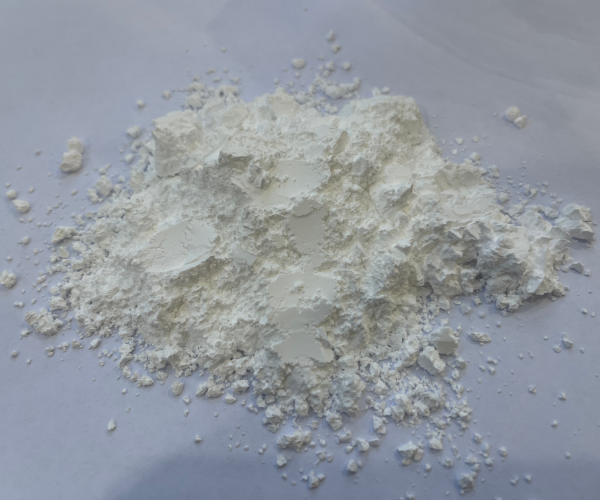
Zinc Oxide Powder is the primary raw material used for producing various ZnO-based materials and components, including ceramics, functional coatings, semiconductor materials, and sputtering targets.The performance of Zinc Oxide Powder depends strongly on its material characteristics, including purity, particle size distribution, morphology, and chemical composition. These factors influence powder processing behavior, sintering performance, and the quality of final ZnO products.
Key Factors of High-Purity Zinc Oxide Powder
1. Chemical Purity and Trace Impurity Control
For advanced applications, high-purity Zinc Oxide Powder is essential because trace impurities may affect electrical properties, optical performance, and thin-film characteristics.A representative production batch of ULPMAT Zinc Oxide Powder was analyzed using Glow Discharge Mass Spectrometry (GDMS). The measured ZnO purity reached:99.9985%.Selected trace element results are shown below:
| Element | Content (ppm ) |
| Cd | 0.18 |
| Pb | 2.8 |
| Fe | 0.14 |
| Si | 0.52 |
| Al | 0.23 |
| Cu | 0.22 |
| Ni | 0.55 |
The GDMS results demonstrate the low impurity level of this tested Zinc Oxide Powder batch.
Note: The above analytical data represent a specific tested batch and are provided as technical reference information. Actual product specifications may vary depending on production requirements.
2. Particle Size and Powder Morphology
Particle size distribution and powder morphology are important factors that influence the processing behavior of Zinc Oxide Powder.Smaller particle sizes generally provide higher surface area and can improve sintering activity, while particle size distribution affects powder packing behavior and the uniformity of compacted materials. Powder morphology also influences flowability, powder compaction, and the consistency of the final processed materialFor applications such as sputtering target production, controlled powder characteristics help optimize pressing, sintering, and the formation of a uniform target structure.
What Are Zinc Oxide Granules and How Are They Made?
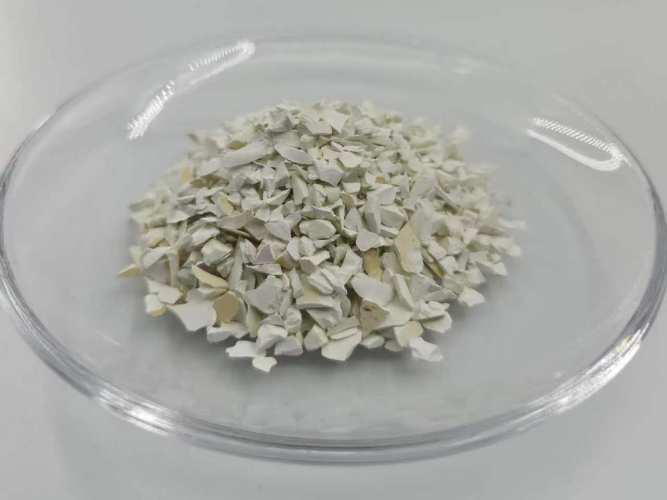
Zinc Oxide Granules are solid forms of Zinc Oxide produced from high-purity Zinc Oxide Powder through controlled forming and densification processes. Compared with fine powder, granular ZnO provides a controlled physical form with defined size, shape, density, and mechanical strength.
The production of Zinc Oxide Granules requires careful control of the starting powder characteristics and manufacturing parameters. Depending on product specifications, processes such as powder compaction, shaping, and thermal treatment may be used to obtain granules with the required physical properties.
The key quality factors of Zinc Oxide Granules include:
- Chemical purity: ensures controlled composition and low impurity levels.
- Particle size and shape: determine dimensional consistency and processing compatibility.
- Density and mechanical strength: affect durability during handling and transportation.
- Structural stability: influences the consistency of the final granular material.
The final characteristics of Zinc Oxide Granules depend on the relationship between raw material quality, forming conditions, and product requirements.
From Zinc Oxide Powder to Sputtering Target Production
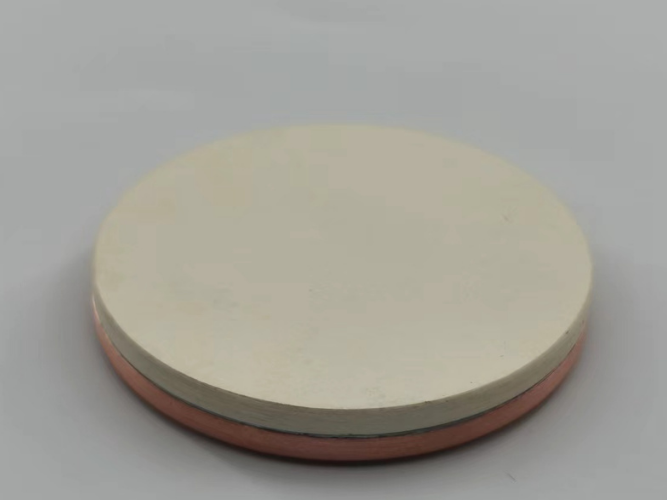
High-purity Zinc Oxide Powder is the starting material for manufacturing Zinc Oxide Sputtering Targets. During target production, the powder characteristics and subsequent processing conditions determine the final target properties, including density, microstructure, mechanical integrity, and dimensional accuracy.
A typical manufacturing route for Zinc Oxide Sputtering Targets can be summarized as follows:
High-Purity Zinc Oxide Powder→Raw Material Inspection→Powder Preparation→Forming & Compaction→Green Body Formation→Sintering & Densification→Precision Machining→Quality Inspection→Zinc Oxide Sputtering Target
Depending on the target design and manufacturing requirements, ZnO powder is processed through forming, densification, sintering, and precision machining steps. Forming processes establish the target geometry, while sintering promotes densification and structural development. After sintering, machining and surface finishing are performed to achieve the required dimensions and surface conditions for sputtering systems.
The quality of a Zinc Oxide Sputtering Target is therefore closely related to both the starting powder and the manufacturing process. Important factors include:
- Powder characteristics: purity, particle size distribution, and morphology influence forming behavior and sintering response.
- Densification behavior: affects target density and microstructural uniformity.
- Machining accuracy: ensures compatibility with specific sputtering equipment.
- Material consistency: supports stable sputtering performance during thin-film deposition.
Applications of Different Zinc Oxide Material Forms
Zinc Oxide materials are supplied in different forms, including Zinc Oxide Powder, Zinc Oxide Granules, Zinc Oxide Pellets, and Zinc Oxide Sputtering Targets. Each form is designed for different processing methods and application requirements. The selection of material form depends on factors such as purity, particle characteristics, physical structure, and the final manufacturing process.
What Is Zinc Oxide Powder Used For?
Zinc Oxide Powder is mainly used as a raw material for producing ZnO-based materials and components. Due to its high purity, controllable particle characteristics, and chemical stability, ZnO powder is widely used in material preparation and advanced processing.Common applications of Zinc Oxide Powder include:
- ceramic materials and functional ceramics;
- semiconductor and electronic material research;
- ZnO-based coatings and thin-film material preparation;
- manufacturing of Zinc Oxide Sputtering Targets.
For powder-based applications, properties such as purity, particle size distribution, morphology, and impurity control directly influence processing behavior and the performance of the final product.
What Are Zinc Oxide Granules and Pellets Used For?
Zinc Oxide Granules and Zinc Oxide Pellets are processed solid forms of ZnO designed for applications requiring controlled size, shape, and mechanical stability.Compared with fine Zinc Oxide Powder, granular materials provide a different physical form that is suitable for processes where consistent handling, loading, and material delivery are important.
Common applications include:
- evaporation materials;
- high-temperature processing;
- customized material feeding systems.
The performance of Zinc Oxide Granules and Pellets depends on factors such as purity, particle size, density, mechanical strength, and dimensional consistency.
What Are Zinc Oxide Sputtering Targets Used For?
Zinc Oxide Sputtering Targets are used as source materials for depositing ZnO thin films through physical vapor deposition (PVD) processes.ZnO sputtering targets are commonly used in applications including:
- transparent conductive oxide (TCO) films;
- semiconductor-related thin films;
- optoelectronic devices;
- sensor materials;
- functional coatings.
During sputtering, target properties such as purity, density, microstructure, and dimensional accuracy influence deposition stability and the quality of deposited ZnO films.
How to Select the Right Zinc Oxide Material?
The selection of Zinc Oxide material depends on the processing method, required material form, purity level, and final application. In practice, Zinc Oxide material selection is usually determined first by the processing method, followed by material form, quality requirements, and application conditions. Zinc Oxide Powder, Granules, Pellets, and Sputtering Targets are designed for different manufacturing processes and should be selected according to specific technical requirements.
| Processing Requirement | Recommended Zinc Oxide Form | Main Selection Parameters |
| Ceramic processing, material preparation, and further processing |
Zinc Oxide Powder |
Purity, particle size distribution, morphology, chemical composition |
| Evaporation and solid material feeding processes | Zinc Oxide Granules / Pellets | Purity, particle size, density, mechanical strength |
| Customized shaped material requirements | Zinc Oxide Granules / Pellets | Dimensions, structural stability, processing compatibility |
| Thin-film deposition by PVD | Zinc Oxide Sputtering Target | Purity, density, microstructure, dimensions, bonding requirements |
When selecting Zinc Oxide materials, key factors should be considered:
- Purity and impurity control: Important for semiconductor, optoelectronic, and thin-film applications where trace elements may influence material performance.
- Particle size and morphology: Affect powder processing behavior, packing characteristics, and sintering performance.
- Material form and process compatibility: The selected Zinc Oxide form should match the intended manufacturing process, such as powder processing, evaporation, or sputter deposition.
- Density and structural properties: Important for granules, pellets, and sputtering targets to ensure stable handling and processing performance.
For customized Zinc Oxide materials, specifications such as purity grade, particle size, dimensions, target configuration, and packaging requirements should be confirmed according to the intended application and processing conditions.
Conclusion
Zinc Oxide materials are supplied in different forms, including Zinc Oxide Powder, Granules, Pellets, and Sputtering Targets. Each form has different physical characteristics and is selected according to the required processing method and application requirements. Zinc Oxide Powder is commonly used as a starting material for further processing, while granules and pellets provide controlled solid forms for specific manufacturing processes. Through forming, sintering, machining, and other processing steps, Zinc Oxide materials can be manufactured into sputtering targets for thin-film deposition applications.Understanding the relationship between Zinc Oxide Powder, Granules, Pellets, and Sputtering Targets helps engineers select the appropriate material form based on purity requirements, physical properties, processing conditions, and final application needs.
FAQs
Zinc Oxide materials are commonly supplied as Zinc Oxide Powder, Granules, Pellets, and Sputtering Targets. The suitable form depends on the processing method, such as material preparation, evaporation, or thin-film deposition.
Zinc Oxide Powder is mainly used as a raw material for ceramic materials, functional materials, coatings, semiconductor-related research, and the production of Zinc Oxide Sputtering Targets. Its purity, particle size, and morphology are important factors affecting processing performance.
Zinc Oxide Powder is a fine raw material generally used for further processing, while Zinc Oxide Granules are solid forms with controlled size, shape, and density. The choice depends on the required manufacturing process and handling requirements.
Zinc Oxide Sputtering Targets are used as source materials for PVD processes to deposit ZnO thin films. They are commonly used in transparent conductive films, semiconductor-related thin films, optoelectronic devices, sensors, and functional coatings.
Zinc Oxide Sputtering Targets are manufactured from high-purity Zinc Oxide Powder through processes including powder preparation, forming, sintering, machining, and quality inspection. The final target properties depend on powder characteristics and manufacturing control.
The required Zinc Oxide purity depends on the deposition process and film performance requirements. High-purity ZnO materials are typically selected for semiconductor, optoelectronic, and thin-film applications because trace impurities may affect electrical and optical properties.
The selection should be based on the intended processing method. Zinc Oxide Powder is suitable for material preparation, Granules and Pellets are suitable for processes requiring solid material forms, and Zinc Oxide Sputtering Targets are used directly in PVD thin-film deposition systems.
Yes. Zinc Oxide materials can be customized according to requirements such as purity level, particle size, granule dimensions, target size, shape, density, bonding configuration, and packaging specifications.