

Introduction to YSZ Powder
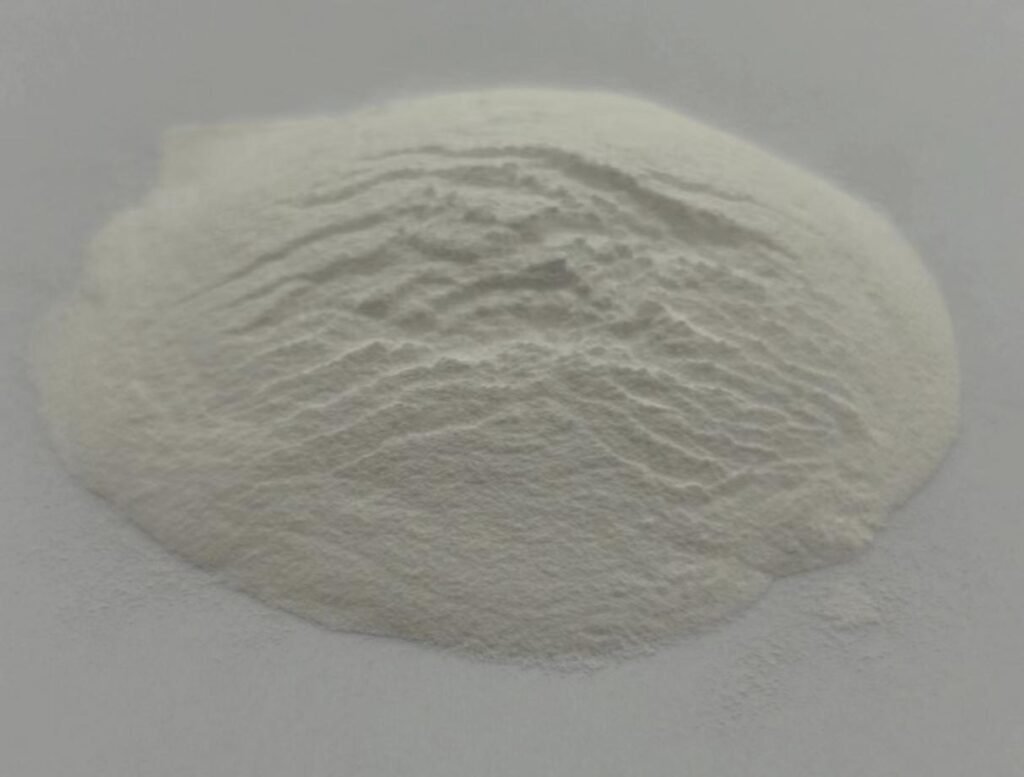
YSZ Powder (Yttrium-stabilized zirconia powder) is a high-performance advanced ceramic material produced by stabilizing zirconia (ZrO₂) with yttria (Y₂O₃) to improve phase stability, mechanical strength, and thermal performance.
By controlling yttria content and powder characteristics, YSZ materials can achieve different combinations of fracture toughness, thermal stability, and oxygen ion conductivity. These properties make YSZ powder widely used in thermal barrier coatings (TBCs), solid oxide fuel cells (SOFCs), oxygen sensors, aerospace components, and advanced structural ceramics.The performance of YSZ ceramics depends strongly on key powder characteristics, including purity, particle size distribution, phase composition, specific surface area, and agglomeration behavior. Therefore, understanding the manufacturing process and grade selection of YSZ powder is essential for ceramic engineers and industrial users.
This article introduces the manufacturing process of YSZ powder, including raw materials and synthesis methods, and explains how different YSZ grades and material properties influence their applications.ULPMAT supplies high-quality Yttria Stabilized Zirconia Powder with customized yttria content, particle size, and specifications for ceramic, coating, and energy-related applications.
What Is YSZ Powder?
YSZ Powder refers to zirconium oxide (ZrO₂) stabilized with yttrium oxide (Y₂O₃).Pure zirconia is not naturally stable across a wide temperature range. As temperature changes, zirconia undergoes several crystal phase transformations:
Monoclinic → Tetragonal → Cubic
The most problematic transformation occurs during cooling when tetragonal zirconia converts back to the monoclinic phase.This transition can generate approximately 3–5% volume expansion, creating internal stress that may cause cracking and catastrophic ceramic failure.To prevent this issue, yttrium oxide is added to stabilize the crystal structure.
Common YSZ grades include 3YSZ, 5YSZ, and 8YSZ, with different yttria contents designed for specific ceramic applications.Among these, 8YSZ Powder is widely used in thermal barrier coatings and SOFC electrolytes because of its stable cubic phase and excellent ionic conductivity.
YSZ Powder Grades: 3YSZ, 5YSZ and 8YSZ Comparison
| Grade | Y₂O₃ Content | Crystal Phase | Main Properties | Applications |
| 3YSZ | 3 mol% | Tetragonal | High fracture toughness and strength | Structural ceramics, dental ceramics |
| 5YSZ | 5 mol% | Tetragonal/Cubic balance | Balanced mechanical and thermal properties | Advanced ceramics |
| 8YSZ | 8 mol% | Cubic | High oxygen ion conductivity | SOFC electrolytes, TBC coatings |
Why Yttria Stabilization Is Necessary?
The success of YSZ Powder comes from its stabilized crystal structure.Without yttria, zirconia experiences severe phase instability at elevated temperatures. By replacing some Zr⁴⁺ ions with Y³⁺ ions, oxygen vacancies are created inside the crystal lattice.
These oxygen vacancies provide two important benefits:
- Improved phase stability
- Enhanced oxygen-ion conductivity
This is the reason YSZ has become the dominant electrolyte material in many solid oxide fuel cell systems.Research has shown that increasing yttria content influences thermal expansion behavior and phase stability, making composition control one of the most important factors during powder production.
Raw Materials Used to Produce YSZ Powder
Industrial YSZ Powder production typically starts with high-purity zirconium and yttrium compounds.
Common raw materials include:
- Zirconium oxychloride (ZrOCl₂·8H₂O)
- Zirconium nitrate
- Zirconium oxide (ZrO₂)
- Yttrium oxide (Y₂O₃)
- Yttrium nitrate
- High-purity deionized water
For advanced ceramic applications, impurity control is critical.Typical impurity specifications are often maintained below:
- Fe₂O₃ < 0.01 wt%
- SiO₂ < 0.05 wt%
- Na₂O < 0.05 wt%
Even trace contamination can affect electrical properties, grain growth, and phase stability during sintering.
How to Make YSZ Powder?
There are various production processes. Each process produces powders with different properties, and the appropriate process should be selected based on the end use.
Co-Precipitation Method
Coprecipitation is one of the most widely used industrial production methods. The basic process includes:
Zirconium & Yttrium Precursors → Co-precipitation → Filtration & Washing → Drying → Calcination → YSZ Powder
Advantages include:
- Excellent compositional uniformity
- High chemical uniformity
- Easy to scale up production
- Relatively low production cost
For large-volume production of YSZ powder, coprecipitation remains the primary method.
Sol-Gel Method
The sol-gel method is widely used for producing high-purity and nano-sized YSZ powder.This process typically includes:
Zirconium precursor+ Yttrium precursor → Sol formation → Gelation → Drying → Calcination → YSZ powder
Advantages include:
- Nano-sized particles
- Uniform yttria distribution
- High chemical purity
- Excellent compositional control
Typical particle sizes after calcination can range from:20–100 nm.However, higher precursor costs and more complex processing steps often limit its use in large-scale industrial production.
Hydrothermal Synthesis
The hydrothermal method is commonly used to produce highly crystalline YSZ powder with controlled particle morphology.This process typically includes:
Zirconium precursor+ Yttrium precursor → Solution preparation → Hydrothermal reaction → Filtration → Drying → Calcination → YSZ powder
Advantages include:
- High crystallinity
- Reduced particle agglomeration
- Narrow particle size distribution
- Good powder dispersion
Hydrothermal synthesis is often selected for advanced ceramic applications that require precise microstructural control and high powder quality.
Spray Pyrolysis
The spray pyrolysis method is a continuous powder production process suitable for large-scale manufacturing.This process typically includes:
Zirconium precursor solution + Yttrium precursor solution → Atomization → Thermal decomposition → Particle formation → Collection → YSZ powder
Advantages include:
- Continuous production
- Uniform chemical composition
- Spherical particle morphology
- Good powder flowability
Because of these characteristics, spray pyrolysis is widely used for producing feedstock powders for plasma spraying and thermal barrier coating applications.
The Most Critical Step: Calcination
Regardless of the synthesis route, calcination is one of the most important manufacturing stages.Typical calcination temperatures range between:600°C–1200°C,depending on precursor chemistry and desired powder characteristics.
The objectives of calcination are:
- Removal of residual organics
- Crystallization of zirconia
- Development of cubic or tetragonal phases
However, excessive calcination can cause:
- Particle coarsening
- Lower surface area
- Reduced sintering activity
As a result, manufacturers must carefully balance temperature, holding time, and atmosphere.
Why Powder Characteristics Matter?
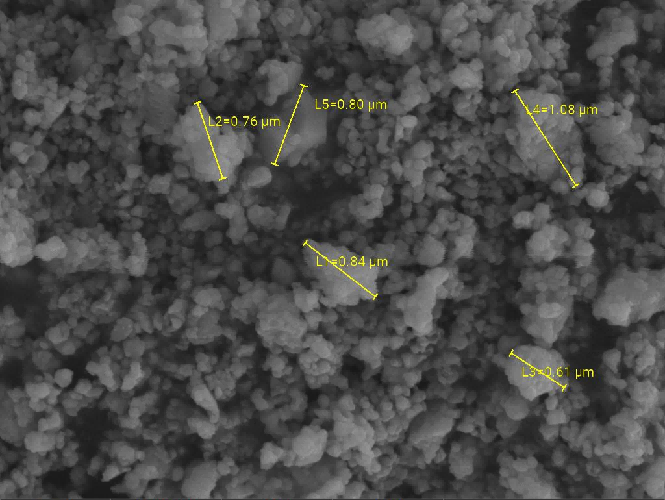
The performance of YSZ Powder (Yttria Stabilized Zirconia Powder) is strongly influenced by its particle size, surface area, phase composition, and morphology. Commercial YSZ powders typically have a particle size (D50) of 0.2–2 μm and a specific surface area of 5–15 m²/g, both of which affect sintering behavior and densification.
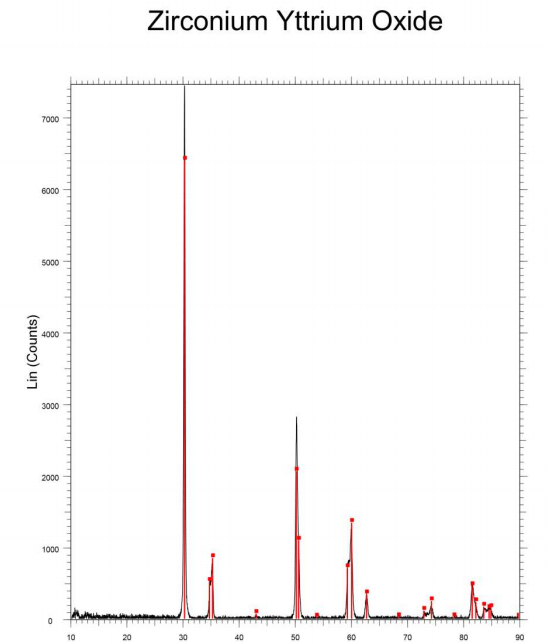
Crystal phases are commonly analyzed by XRD, while particle morphology and agglomeration are evaluated using SEM. Proper control of these characteristics helps improve phase stability, microstructural uniformity, and the overall performance of advanced ceramic components.
Applications of YSZ Powder
Thanks to its excellent thermal stability, oxygen-ion conductivity, and mechanical strength, YSZ Powder (Yttria Stabilized Zirconia Powder) is widely used in several advanced ceramic applications.
Thermal Barrier Coatings (TBCs)
YSZ is the most widely used thermal barrier coating material for gas turbines and aircraft engines. Its low thermal conductivity, typically 1.2–2.8 W/m·K, helps protect metal components operating at temperatures above 1000°C. This property makes YSZ essential for improving engine efficiency and durability.
Solid Oxide Fuel Cells (SOFCs)
YSZ is commonly used as an electrolyte material in SOFC systems. The oxygen vacancies created by yttria stabilization enable efficient oxygen-ion transport at high temperatures, making YSZ an important material for fuel cell and hydrogen energy technologies.
Oxygen Sensors
YSZ ceramics are widely used in automotive oxygen sensors due to their stable ionic conductivity at elevated temperatures. These sensors help optimize fuel combustion and reduce vehicle emissions.
Structural Ceramics
Partially stabilized zirconia is also used in structural ceramic components such as ceramic bearings, wear-resistant parts, cutting tools, and dental ceramics. Its high fracture toughness and excellent wear resistance make it suitable for demanding industrial applications.
ULPMAT Yttria-Stabilized Zirconia Powder Grades
ULPMAT supplies high-quality Yttria-Stabilized Zirconia Powder (YSZ ) with different yttria (Y₂O₃) contents for advanced ceramics, thermal barrier coatings, SOFC electrolytes, and other high-performance applications.
Available YSZ powder grades include:
- 3YSZ (3 mol% Y₂O₃ stabilized zirconia)
High mechanical strength and fracture toughness, suitable for structural ceramics, dental ceramics, and wear-resistant components. - 5YSZ (5 mol% Y₂O₃ stabilized zirconia)
Balanced mechanical properties, phase stability, and thermal performance for advanced ceramic applications. - 8YSZ (8 mol% Y₂O₃ stabilized zirconia)
High oxygen ion conductivity and thermal stability, widely used in SOFC electrolytes, oxygen sensors, and thermal barrier coatings. - 2YSZ / 2.5YSZ / 4YSZ
Available for applications requiring customized thermal stability, toughness, phase control, and coating performance. - Custom YSZ Solutions
ULPMAT provides customized YSZ powders with adjustable yttria content, particle size distribution, purity, and powder morphology according to customer requirements.
Future Trends of YSZ Powder
Future development of YSZ Powder is moving toward:
- Higher purity materials
- Lower agglomeration powders
- Improved control of particle size and microstructure
- Application-specific powder design
- Advanced granulation for coating processes
These trends are driven by increasing demand from aerospace, hydrogen energy, semiconductor, and advanced ceramic industries, where consistent powder quality is becoming a key performance factor.
FAQ
Q1:What does YSZ stand for?
YSZ stands for Yttria Stabilized Zirconia, a zirconia ceramic stabilized using yttrium oxide.
Q2:Why is yttria added to zirconia?
Yttria stabilizes zirconia crystal phases and prevents destructive phase transformations that can cause cracking.
Q3:What is the most common YSZ composition?
8YSZ is one of the most commonly used grades for thermal barrier coatings and solid oxide fuel cells.
Q4:Why is particle size important in YSZ Powder?
Particle size directly influences sintering behavior, density, grain growth, and final ceramic performance.
Q5: What is the difference between 3YSZ and 8YSZ Powder?
3YSZ provides higher mechanical strength and fracture toughness, while 8YSZ offers higher oxygen ion conductivity and is widely used in SOFC electrolytes and thermal barrier coatings.
Q6: Can YSZ composition be customized?
Yes. YSZ can be customized by adjusting yttria content, particle size distribution, purity, and other specifications according to application requirements.
Q7: What is the difference between YSZ and zirconia powder?
YSZ powder is zirconia stabilized with yttria, while pure zirconia lacks the same phase stability at high temperatures.
Conclusion
YSZ Powder (Yttria Stabilized Zirconia Powder) is a key material in advanced ceramics, where performance strongly depends on precise control of purity, particle size, phase composition, and morphology.At ULPMAT, we focus on consistent powder quality through controlled synthesis routes and strict process monitoring, enabling stable batch-to-batch performance for demanding applications.
Whether used in thermal barrier coatings, SOFCs, oxygen sensors, or structural ceramics, high-quality YSZ powder remains the foundation of reliable ceramic performance and continues to be in strong demand across advanced industries.