

Ultra-high temperature ceramics (UHTCs) are a class of advanced ceramic materials designed to maintain excellent mechanical, thermal, and chemical performance under extreme temperature conditions. With melting points typically above 3000°C, these materials are widely investigated for aerospace components, semiconductor processing equipment, thermal protection systems, protective coatings, and other high-temperature applications.
Compared with traditional ceramics, ultra-high temperature ceramic materials provide exceptional resistance to thermal shock, oxidation, wear, and chemical corrosion. Among them, refractory compounds such as tantalum carbide (TaC), hafnium carbide (HfC), zirconium diboride (ZrB₂), and boron nitride (BN) have attracted significant attention due to their unique combinations of hardness, thermal stability, and functional properties.
What Are Ultra-High Temperature Ceramics?
Ultra-high temperature ceramics are advanced inorganic ceramic materials that can withstand extremely high temperatures while maintaining structural stability.Most UHTCs belong to refractory ceramic families, including:Carbides,Borides.Nitrides.
These compounds typically exhibit:
- High melting temperatures
- Excellent hardness
- Low vapor pressure
- Good chemical stability
- Resistance to thermal degradation
Unlike conventional ceramic materials, UHTCs are designed for applications where metals and traditional ceramics cannot meet performance requirements.
Key Properties of Ultra-High Temperature Ceramic Materials
The outstanding performance of UHTC materials comes from their strong chemical bonds and stable crystal structures.
Important properties include:
- Extremely High Melting Temperature
Many UHTC materials have melting points exceeding 3000°C, allowing them to maintain structural integrity in extreme thermal environments.These characteristics make them suitable for aerospace thermal protection and high-temperature ceramic components.
For example:
Hafnium carbide (HfC): approximately 3890°C melting point
Tantalum carbide (TaC): approximately 3880°C melting point
Zirconium diboride (ZrB₂): approximately 3246°C melting point
- High Hardness and Wear Resistance
Carbide-based UHTCs have strong covalent bonding, providing:
1.High hardness
2.Excellent abrasion resistance
3.Improved component lifetime
These properties are valuable for protective coatings and wear-resistant ceramic applications.
- Thermal and Chemical Stability
Ultra-high temperature ceramics maintain performance under:
1.High temperature exposure
2.Reactive environments
3.Thermal cycling conditions
This makes them attractive for semiconductor manufacturing equipment, furnace components, and high-temperature coatings.
Common Ultra-High Temperature Ceramic Materials
Different UHTC materials provide different performance advantages depending on application requirements.
| Material | Chemical Formula | Main Characteristics | Typical Applications |
|---|---|---|---|
|
Tantalum Carbide |
TaC |
Extremely high melting point, hardness, thermal stability |
UHTC ceramics, coatings, semiconductor components |
|
Hafnium Carbide |
HfC |
One of the highest melting point ceramic materials |
Aerospace, thermal protection systems |
|
Zirconium Diboride |
ZrB₂ |
High electrical conductivity and oxidation resistance |
Structural ceramics, electrodes |
|
Silicon Carbide |
SiC |
Excellent oxidation resistance and thermal conductivity |
High-temperature components |
|
Boron Nitride |
BN |
High thermal conductivity and electrical insulation |
Semiconductor, thermal management |
Tantalum Carbide (TaC): A Representative UHTC Material
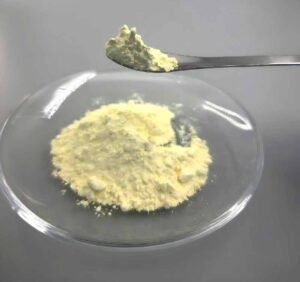
Tantalum Carbide (TaC): As a typical ultra-high temperature ceramic (UHTC), tantalum carbide (TaC) powder is a leading candidate for extreme-temperature service. Featuring superior intrinsic properties and versatile applicability.
- Core material properties: TaC exhibits an ultra-high melting point of approximately 3880°C, a Mohs hardness of 9–10, outstanding thermal stability and excellent chemical inertness, enabling reliable performance in harsh extreme environments.
- Main application fields: Benefiting from its exceptional properties, TaC is extensively investigated for ultra-high temperature ceramics, aerospace structural components, protective coatings and high-precision semiconductor applications.
- Key factors affecting performance: TaC powder quality is strongly governed by purity, particle size distribution, powder morphology, oxygen content and surface features. High-purity, size-controlled TaC powder effectively facilitates ceramic densification and boosts the overall performance of final functional components.
More about tantalum carbide: How is High Purity Tantalum Carbide Powder Made? Synthesis Methods, Properties and Applications
Hafnium Carbide (HfC): Extreme Temperature Performance
Hafnium carbide (HfC) serves as a reliable material for extreme thermal environments:
- Core material properties: HfC features an ultra-high melting temperature, superior hardness and reliable thermal stability, endowing it with excellent resistance to harsh high-temperature conditions.
- Main application fields: Leveraging its exceptional thermal resistance, HfC is extensively studied for hypersonic vehicles, aerospace thermal protection systems and high-temperature structural components.
- Material advantages: In contrast to conventional ceramics, HfC delivers optimized structural stability and superior adaptability in severe extreme thermal environments.
Zirconium Diboride (ZrB2): Conductive High-Temperature Ceramic
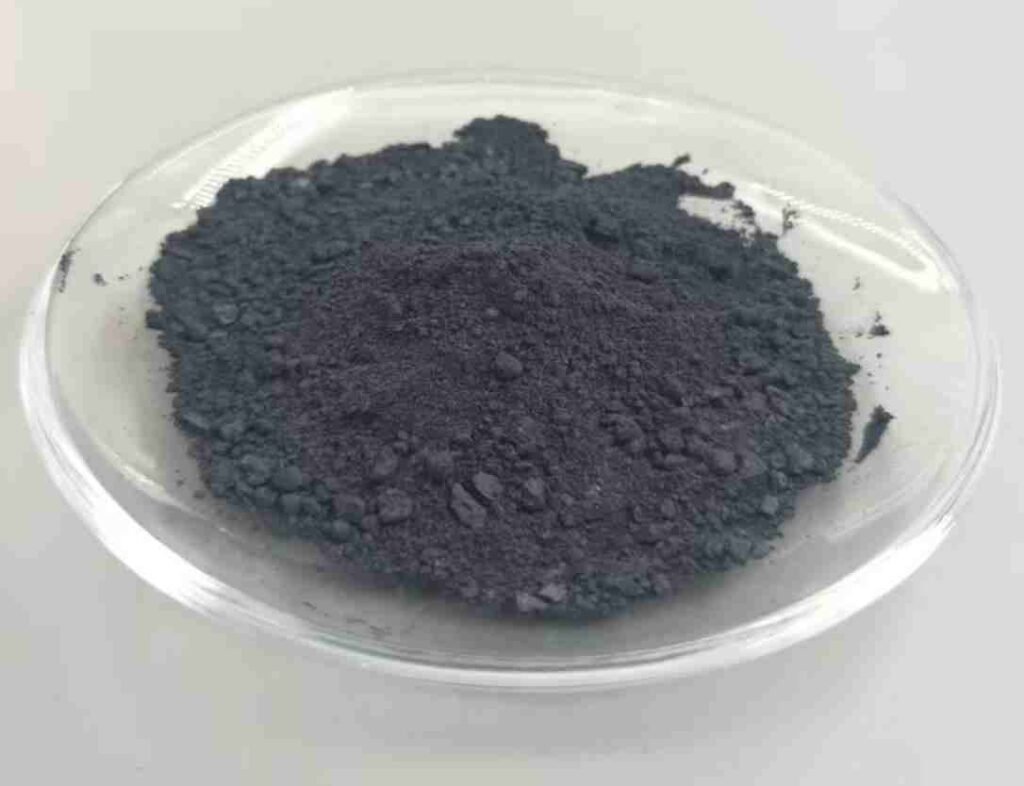
Zirconium diboride (ZrB2) combines ceramic stability and electrical conductivity.
- Core material properties: ZrB₂ has a high melting point, good thermal conductivity, excellent oxidation resistance and electrical conductivity.
- Main application fields: It is suitable for electrodes, ceramic composites and high-temperature structural components.
- Material advantages: Blending ZrB2 with other ceramics improves its oxidation resistance and mechanical performance.
More about: Zirconium Boride (ZrB₂) Powder: Properties, Synthesis, Processing and Applications
Boron Nitride (BN): Thermal Management Ceramic Material
Different from carbide and boride ceramics, hexagonal boron nitride (h-BN) features excellent thermal performance and reliable electrical insulation. Its core properties and applications are summarized as follows:
- Core material properties: h-BN has high thermal conductivity, low dielectric constant, great chemical stability and favorable machinability.
- Main application fields: It is widely used for semiconductor heat dissipation parts, electrical insulation materials, high-temperature crucibles and advanced ceramic composites.
More about boron nitride: Why Hexagonal Boron Nitride Is Used in Semiconductor Equipment
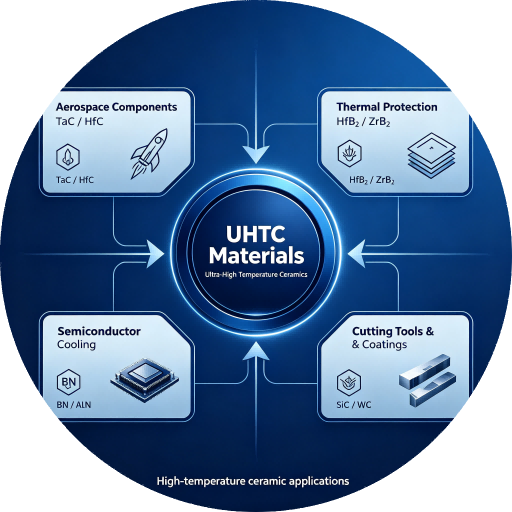
Applications of Ultra-High Temperature Ceramic Materials
Ultra-high temperature ceramics are widely used in industries that require exceptional thermal stability, mechanical strength, and chemical resistance.
Aerospace and Hypersonic Applications
In aerospace environments, UHTC materials such as TaC and HfC are being investigated for components exposed to extreme aerodynamic heating, thermal shock, and oxidation conditions, including leading edges, thermal protection systems, and rocket components.
Semiconductor and Advanced Manufacturing Applications
Due to their high purity, thermal stability, and chemical resistance, advanced ceramic materials are increasingly used in semiconductor processing equipment, high-temperature components, and protective coatings where reliable performance under demanding conditions is required.
How to Select Ultra-High Temperature Ceramic Powder?
When selecting UHTC powder for research or industrial applications, key factors include purity, particle size, characterization data, and supplier capability.
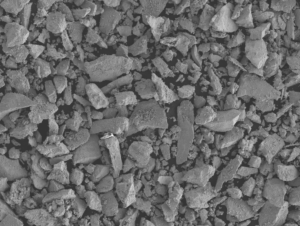
High-purity powder with controlled impurities and oxygen content can help improve material reliability. Particle size and distribution influence powder processing, sintering performance, and final ceramic density, while micron, submicron, or customized sizes may be selected according to application requirements.Technical information such as SEM images, XRD patterns, particle size distribution, COA, and SDS helps evaluate powder quality. A reliable supplier should also provide stable quality, technical documentation, customized specifications, and professional support.
Future Development Trends of UHTC Materials
Research on ultra-high temperature ceramics continues to focus on:
- Improving oxidation resistance
- Developing ceramic composites
- Enhancing fracture toughness
- Optimizing powder processing technologies
Composite systems combining carbides, borides, and nitrides are expected to expand applications in aerospace, semiconductor, and advanced manufacturing fields.
FAQs
Q1: What are ultra-high temperature ceramics?
A1: Ultra-high temperature ceramics are advanced ceramic materials designed to maintain performance at temperatures above 3000°C. They include carbides, borides, and nitrides such as TaC, HfC, ZrB₂, and BN.
Q2: Which ceramic material has the highest melting point?
A2: Hafnium carbide and tantalum carbide are among the ceramic materials with the highest melting temperatures, both approaching 3900°C.
Q3: What is tantalum carbide powder used for?
A3: Tantalum carbide powder is mainly used in ultra-high temperature ceramics, protective coatings, semiconductor components, and high-performance ceramic composites.
Q4: Are UHTC materials suitable for semiconductor applications?
A4: Yes. Some UHTC materials provide excellent thermal stability, chemical resistance, and high-temperature performance required in semiconductor processing environments.
Q5: Can UHTC powder particle size be customized?
A5: Yes. Particle size, morphology, and purity can often be customized according to application requirements.