

Manganese dioxide (MnO₂) and manganese oxide (Mn₃O₄) are different manganese compounds with different oxidation states and crystal structures. MnO₂ contains Mn⁴⁺ and is widely used in primary batteries due to its stable electrochemical performance. Mn₃O₄ contains mixed Mn²⁺/Mn³⁺ states and is mainly studied for catalysts, supercapacitors, and advanced energy applications.
Key Differences Between Manganese Dioxide and Manganese Oxide
The performance differences between Manganese Dioxide vs Manganese Oxide originate mainly from oxidation state and crystal structure.
MnO2 contains manganese exclusively in the +4 state. This single oxidation state results in a relatively stable lattice and predictable electrochemical behavior. Its rutile or tunnel structures provide ion diffusion channels that are beneficial for battery discharge reactions.
In contrast, Mn3O4 contains both Mn²⁺ and Mn³⁺ ions. The coexistence of these two states introduces electron hopping mechanisms between lattice sites, which enhances conductivity and catalytic activity but reduces structural simplicity.
These differences can be summarized as follows:
| Property | Manganese Dioxide (MnO₂) | Manganese Oxide (Mn₃O₄) |
| Chemical Formula | MnO₂ | Mn₃O₄ |
| Oxidation State | Mn⁴⁺ | Mn²⁺ / Mn³⁺ |
| Crystal Structure | Rutile or tunnel-type structures | Spinel structure |
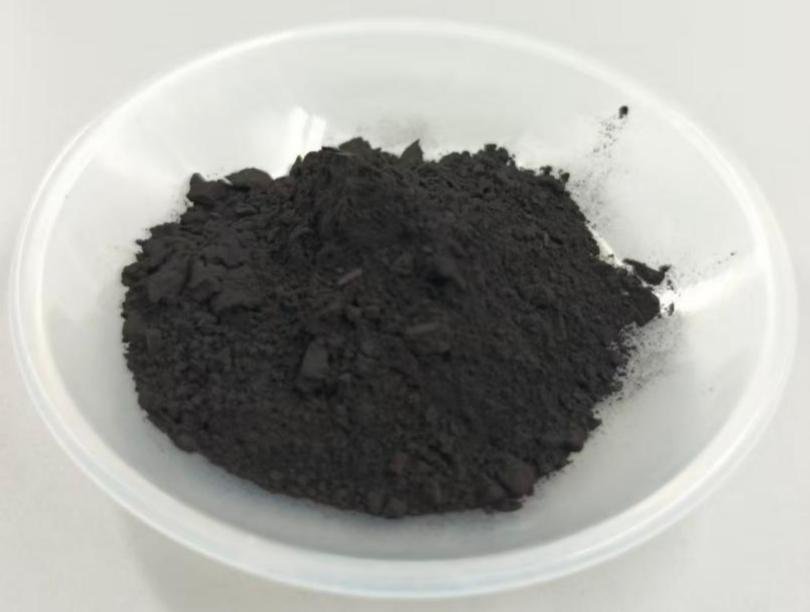
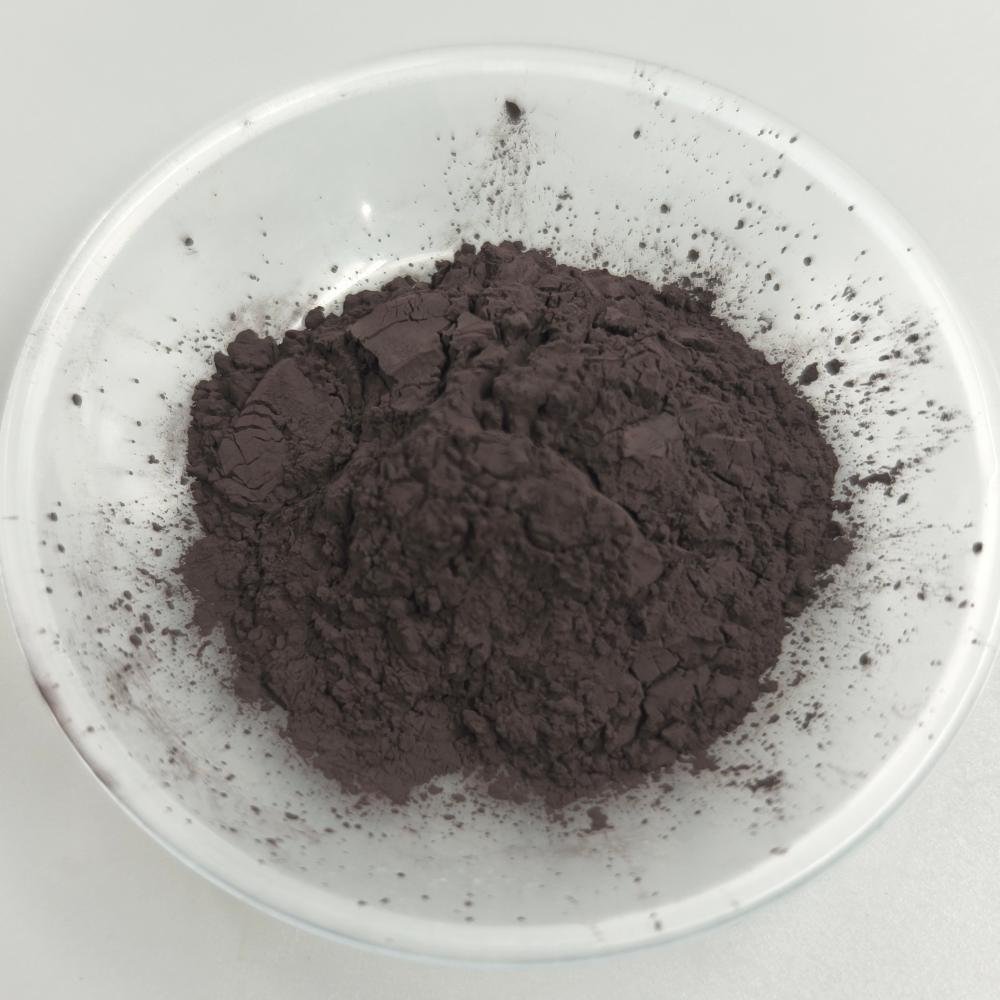
| Appearance | Black or dark brown powder | Brown to black powder |
| Density | Approximately 5.0–5.1 g/cm³ | Approximately 4.8–4.9 g/cm³ |
| Main Applications | Primary batteries, catalysts, water treatment | Catalysts, supercapacitors, advanced energy materials |
| Electrochemical Advantage | Stable reaction behavior and reliable discharge performance | Mixed-valence structure with enhanced redox flexibility |
| Common Selection Focus | Battery performance, purity, crystal structure | Catalytic activity, conductivity, redox performance |
What Is Manganese Dioxide?
Manganese dioxide (MnO2) is an inorganic manganese compound where manganese is in the +4 oxidation state. It is widely found in nature as the mineral pyrolusite and is one of the most important industrial manganese oxides.
From a physical standpoint, MnO2 typically appears as a black or dark brown powder. Its density is around 5.0–5.1 g/cm³, depending on crystal form and purity. The material commonly exists in rutile-type or tunnel-type structures such as β-MnO2, which is the most stable polymorph under ambient conditions.
In electrochemical applications, manganese dioxide is widely used in primary batteries. The most common form is electrolytic manganese dioxide (EMD), which is produced under controlled electrolysis conditions. Industrial EMD typically contains ≥90–95% MnO₂ purity, and its specific surface area is often in the range of 30–60 m²/g, depending on production process.
A key electrochemical reaction in alkaline batteries is:
MnO₂ + H₂O + e⁻ → MnOOH + OH⁻
This reaction provides a stable discharge potential of about 1.1–1.5 V vs Zn/Zn²⁺ system in alkaline batteries, making MnO2 highly suitable for commercial primary cells.
What Is Manganese Oxide?
Manganese oxide (commonly Mn3O4) is a mixed-valence oxide containing both Mn²⁺ and Mn³⁺ ions. It belongs to the spinel crystal system and has a more complex electronic structure compared with MnO2.Mn3O4 typically has a density of about 4.8–4.9 g/cm³, slightly lower than MnO2 due to its different crystal packing. The material shows semiconductor behavior with a band gap generally reported in the range of ~1.2 to 2.0 eV.
Because Mn3O4 contains two oxidation states, it exhibits multiple electron transfer pathways, which significantly enhances redox flexibility. This makes it attractive in electrochemical systems where fast charge transfer is required, such as supercapacitors and catalytic reactions.However, compared with MnO2, Mn3O4 is less stable in strongly oxidative environments and therefore less commonly used in large-scale primary battery production.
Manufacturing Differences Between MnO2 and Mn3O4
The preparation routes of Manganese Dioxide vs Manganese Oxide are significantly different and directly determine their purity and particle characteristics.
MnO2 is mainly produced via electrochemical and chemical oxidation routes. Electrolytic manganese dioxide (EMD) is the most important industrial grade. In this process, Mn²⁺ ions are oxidized under controlled current density, forming MnO₂ deposits on the anode surface. This method allows precise control of oxidation state and particle morphology.
The simplified process is:
Mn²⁺ → electrochemical oxidation → MnO₂ deposition → drying & milling → EMD powder
Industrial EMD typically achieves MnO₂ purity above 90–95%, with controlled particle morphology and moderate surface area optimized for battery discharge reactions.
Mn3O4 production is more sensitive and requires controlled thermal or partial oxidation conditions. It is often synthesized by heating MnO or Mn(OH)2 in controlled oxygen environments.
Process flow:
Mn precursor → partial oxidation / thermal decomposition (300–600°C) → spinel phase formation → Mn₃O₄ powder
A key challenge is avoiding over-oxidation to MnO2 or reduction to MnO. Even small variations in oxygen partial pressure can shift phase equilibrium significantly.
Why MnO2 Is Widely Used in Batteries?
MnO2 remains one of the most widely used cathode materials in primary batteries, especially alkaline systems.The discharge voltage of MnO2-based alkaline batteries is typically around 1.5 V per cell, which is stable throughout most of the discharge cycle. Its theoretical specific capacity in alkaline systems is about 308 mAh/g, although practical values are lower depending on morphology and conductivity.
- Its advantages include:Stable electrochemical reaction mechanism
- High theoretical capacity (~308 mAh/g)
- Abundant raw material availability
- Low cost compared with cobalt or nickel-based cathodes
- Long shelf life in sealed systems
These properties make MnO2 highly reliable for large-scale industrial battery production.
Why Mn3O4 Is Important in Advanced Applications?
Mn3O4 has attracted increasing attention in electrochemical research due to its mixed-valence structure.The coexistence of Mn²⁺ and Mn³⁺ enables electron hopping mechanisms, improving charge transfer kinetics. This is particularly useful in systems requiring fast redox reactions.Experimental studies show that Mn₃O₄-based composite electrodes can reach pseudocapacitance values in the range of 200–300 F/g, depending on morphology, particle size, and carbon support.
It is commonly investigated in:
- Supercapacitor electrodes
- Zinc-ion battery systems
- Oxygen reduction reaction (ORR) catalysts
- Electrochemical sensing materials
However, due to lower structural stability compared with MnO2, it is typically used in composite or modified forms rather than as a standalone bulk cathode material.
Application Comparison
MnO2 is mainly used in stable industrial systems such as alkaline batteries, zinc-carbon batteries, and water treatment processes. Its key advantage is predictable long-term electrochemical behavior.
Mn3O4 is more commonly used in catalytic systems and emerging electrochemical technologies where rapid electron transfer and high redox activity are more important than structural simplicity.
| Application Area | MnO2 | Mn3O4 |
|---|---|---|
|
Alkaline Batteries |
Excellent |
Limited |
|
Zinc Batteries |
Excellent |
Limited |
|
Lithium-ion Systems |
Good |
Good |
|
Supercapacitors |
Moderate |
High |
|
Catalytic Reactions |
Good |
Excellent |
|
Water Treatment |
Excellent |
Moderate |
|
Sensor Materials |
Good |
Excellent |
How to Select Between MnO₂ and Mn₃O₄?
Choosing between manganese dioxide (MnO₂) and manganese oxide (Mn₃O₄) depends on the final application requirements, including electrochemical performance, crystal structure, purity, and particle characteristics.
For battery applications, MnO₂ is commonly selected because of its stable Mn⁴⁺ oxidation state, reliable discharge behavior, and mature industrial production process. High purity, suitable crystal structure, and controlled particle size are important factors for battery-grade MnO₂.
For catalytic applications, supercapacitors, and advanced energy materials, Mn₃O₄ may be preferred because its mixed Mn²⁺/Mn³⁺ oxidation states provide higher redox flexibility and enhanced electron transfer capability.
When selecting manganese-based materials, key factors include:
- Purity: affects electrochemical and catalytic performance.
- Particle size: influences reaction kinetics and processing behavior.
- Crystal structure: determines ion transport and material stability.
- Surface area: important for catalytic and energy storage applications.
- Application requirements: determines the most suitable manganese compound.
ULPMAT provides manganese-based materials with controlled purity, particle characteristics, and customized specifications for different research and industrial applications.
Conclusion
Manganese dioxide (MnO2) and manganese oxide (Mn3O4) are both important manganese-based materials, but their roles in industry are fundamentally different.
MnO2 is a stable, high-purity, and industrially mature material with a well-defined Mn⁴⁺ oxidation state. It remains the dominant cathode material in primary battery systems due to its predictable electrochemical behavior and scalable production routes.Mn3O4, with its spinel structure and mixed Mn²⁺/Mn³⁺ oxidation states, provides higher redox flexibility and enhanced catalytic activity. It is more suitable for advanced electrochemical systems such as supercapacitors and catalytic applications.Understanding these differences is essential when selecting manganese oxide materials for specific industrial requirements.
FAQs
No. Manganese dioxide (MnO₂) is a specific manganese oxide compound with manganese in the +4 oxidation state. Manganese oxide is a broader term that refers to different compounds containing manganese and oxygen, including MnO, Mn₂O₃, Mn₃O₄, and MnO₂.
The main difference between manganese dioxide (MnO₂) and manganese oxide (Mn₃O₄) is their chemical composition, oxidation state, and applications. MnO₂ contains Mn⁴⁺ and is widely used in batteries because of its stable electrochemical performance, while Mn₃O₄ contains mixed Mn²⁺/Mn³⁺ oxidation states and is mainly used in catalysts, supercapacitors, and advanced energy materials.
MnO₂ and Mn₃O₄ differ mainly in oxidation state and crystal structure. MnO₂ contains Mn⁴⁺ and usually has tunnel or rutile-type structures, while Mn₃O₄ has a spinel structure containing both Mn²⁺ and Mn³⁺. These structural differences influence their electrochemical and catalytic performance.
Manganese dioxide (MnO₂) is one of the most widely used manganese-based materials in primary batteries, especially alkaline batteries. Its stable electrochemical behavior, availability, and mature manufacturing process make it suitable for large-scale battery applications.
Manganese dioxide (MnO₂) is mainly used in batteries, catalysts, and water treatment applications. High-purity MnO₂ materials are also studied for advanced electrochemical systems such as zinc-based energy storage technologies.
Manganese oxide (Mn₃O₄) is mainly investigated for catalytic materials, supercapacitors, battery electrode research, and other advanced energy applications because of its mixed-valence structure and redox flexibility.
The selection depends on the final application requirements, including purity, particle size, crystal structure, surface area, and electrochemical performance. MnO₂ is generally selected for stable battery applications, while Mn₃O₄ is considered for catalytic and advanced energy applications.
The performance of manganese oxide materials depends on purity, particle size distribution, crystal structure, morphology, surface area, and production process. These factors influence reaction activity, stability, and suitability for specific applications.