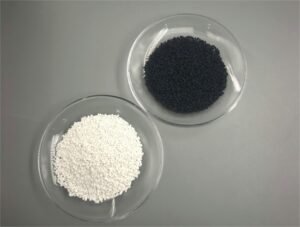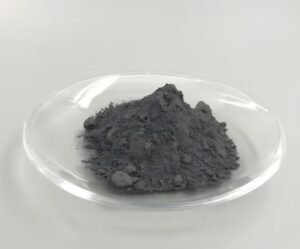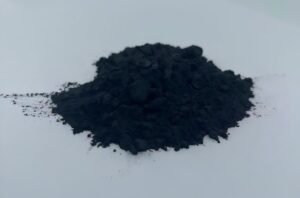


ZnS thin-film deposition is widely used in optical coatings, infrared-related components, and semiconductor structures. Yet achieving consistent film quality is not simply a matter of choosing zinc sulfide as the source material. Differences in deposition methods, material forms, film composition, thickness control, and substrate conditions can all affect film uniformity, optical performance, and process stability.
One important decision is selecting the right ZnS material for the intended deposition route. ZnS powder, evaporation granules, and sputtering targets serve different purposes. Choosing an unsuitable material form can create unnecessary processing difficulties and make it harder to achieve consistent deposition results.
This guide compares ZnS evaporation and sputtering, examines common causes of film composition and quality variations, and explains what engineers and material buyers should check before selecting ZnS deposition materials. It also provides a practical purchasing checklist to help match the material form to the deposition process and application requirements.
Key Takeaways
Deposition method matters: ZnS evaporation and sputtering involve different material requirements and deposition considerations.
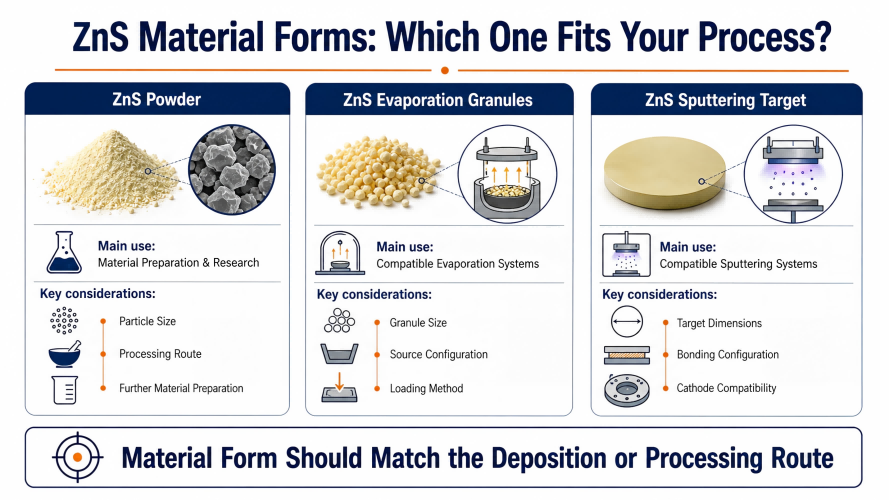
Material forms are not interchangeable: ZnS powder, evaporation granules, and sputtering targets serve different processing purposes.
Film composition affects performance: Composition variations can influence the optical and structural properties of ZnS thin films.
Film quality requires more than thickness control: Uniformity, substrate condition, microstructure, and process stability also need attention.
Material selection should match the process: Particle size, granule dimensions, target geometry, and equipment compatibility should be confirmed before purchasing.
1. Why ZnS Thin-Film Deposition Quality Depends on More Than Material Selection
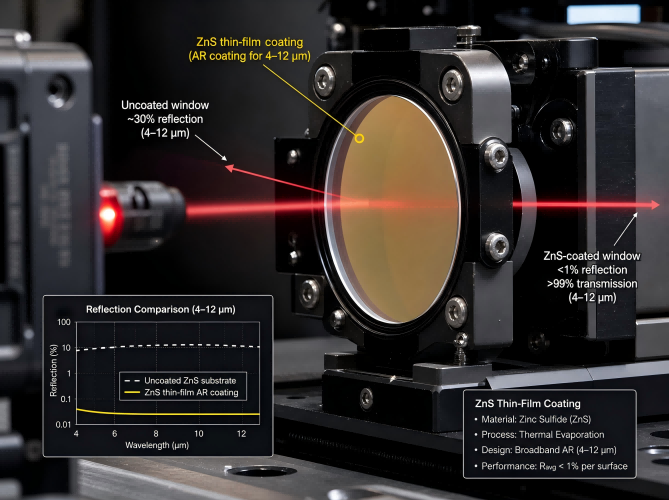
Zinc sulfide is used in thin-film systems because of its optical and semiconductor-related properties. However, the performance of a deposited ZnS film depends on the complete deposition system rather than the chemical formula alone.
Several factors need to be considered together:
Material composition: Changes in the Zn-to-S ratio can affect the chemical and optical characteristics of the deposited film.
Deposition method: Evaporation and sputtering transfer material to the substrate through different mechanisms, resulting in different process considerations.
Film thickness: Thickness influences optical transmission, interference behavior, and the intended function of the coating.
Substrate condition: Surface cleanliness, roughness, temperature, and compatibility can influence film adhesion and uniformity.
Process stability: Variations in source behavior, deposition rate, or equipment conditions can lead to differences between coating runs.
For buyers, this means that selecting ZnS should start with the intended deposition process and film requirements. A material specification that is suitable for one deposition route may not be appropriate for another.
2. ZnS Evaporation: Source Behavior and Film Uniformity
Thermal evaporation is used to deposit thin films by heating a source material until material enters the vapor phase and condenses on a substrate. For ZnS evaporation, source behavior, material loading, and coating uniformity are important considerations.
2.1 Source Stability and Film Composition
A stable evaporation source helps maintain more consistent material delivery during deposition. However, the behavior of a compound source should not be evaluated only by its nominal chemical formula.
Differences in source condition, heating behavior, loading configuration, and process conditions can influence the deposited film. For compound materials such as ZnS, engineers should consider whether the deposition process maintains the required film composition rather than assuming that the source composition will automatically translate into an identical film composition.
When evaluating a ZnS evaporation process, useful points to review include:
Whether the source material is suitable for the evaporation equipment and heating configuration
Whether the material can be loaded and handled consistently
Whether the deposition rate remains sufficiently stable for the intended coating
Whether the deposited film composition is checked when composition control is critical
2.2 Thickness Control and Coating Uniformity
Film thickness is a key parameter in optical coating design. Even when the source material is suitable, thickness variation across the substrate can affect optical response and coating consistency.
The distribution of deposited material depends on factors such as source geometry, source-to-substrate arrangement, substrate movement, and equipment configuration. These factors should be considered when investigating differences between the center and edge of a coated substrate.
Thickness monitoring should be combined with measurements at relevant substrate positions. A single measurement point may not represent the uniformity of the entire coated area.
2.3 Surface Defects and Adhesion
Surface defects in an evaporated ZnS film may be associated with several parts of the coating system. Particles, contamination, substrate preparation, source condition, and process instability can all contribute to visible defects or poor adhesion.
When defects appear, it is useful to distinguish between:
Particles or inclusions that may originate from the source, chamber, or handling process
Poor adhesion associated with substrate cleanliness or surface condition
Thickness or appearance variations related to source geometry and coating distribution
Film damage introduced during handling or subsequent processing
Changing the source material alone may not resolve a problem caused by substrate preparation or chamber contamination. A systematic review of the full deposition process is more useful than treating every surface defect as a material-quality issue.
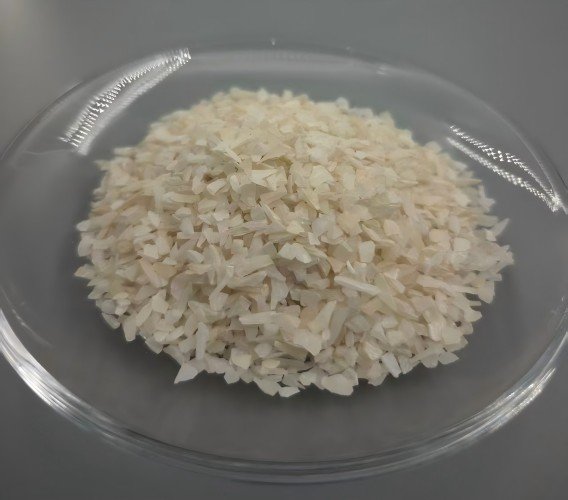
For evaporation applications, [ZnS evaporation granules] (Internal link: ZnS Granules product page) are a material form to evaluate. Confirm the required granule dimensions and compatibility with the evaporation source before ordering.
3. ZnS Sputtering: Composition, Structure, and Process Consistency
Sputtering is a physical vapor deposition method in which energetic ions bombard a target and eject material that can deposit onto a substrate. For ZnS thin films, the sputtering target, deposition conditions, substrate, and film characterization all contribute to the final result.
3.1 Why can ZnS films become sulfur-deficient?
A ZnS film may show a Zn-to-S ratio different from the ideal compound ratio. This is important because film composition can influence its structural and optical characteristics.
Sulfur deficiency should not automatically be attributed to the starting target. The final film composition is affected by the deposition system and conditions, and the relationship between target composition and deposited-film composition needs to be evaluated for the specific process.
In one reported RF magnetron sputtering dataset, a Zn/S ratio of approximately 0.99 was obtained for a particular ZnS film. The same dataset reported visible-region transmittance of around 80% for that film. These values describe a specific deposited film and should not be treated as universal ZnS film specifications or guaranteed results for other systems.
When composition is important, buyers and engineers should consider how the deposited film will be evaluated. Composition measurements should be interpreted alongside structural and optical results rather than used as the only indicator of film quality.
3.2 Microstructure and Optical Response
The microstructure of a ZnS film can influence its optical behavior. Crystallinity, crystallite size, surface morphology, and defects may affect how light interacts with the deposited layer.
Reported ZnS thin-film results include crystallite sizes ranging from approximately 11.5 to 48.5 nm in one investigated RF-sputtering system. Visible-region transmittance above 80% was also reported for the films in that dataset. These values are specific to the investigated films and are not general performance specifications for all ZnS coatings.
It is also important to distinguish between crystallite size and grain size. Crystallite size is associated with coherently diffracting crystalline domains, while grain size refers to the dimensions of visible or microstructural grains. The two measurements are related but are not interchangeable.
Optical transmission should also be interpreted within its measurement range and film configuration. A reported visible-region transmittance value does not establish performance across the infrared range. For infrared-related applications, the relevant wavelength range and optical requirements need to be evaluated directly.
3.3 Target Dimensions and Equipment Compatibility
The sputtering target must match the geometry and requirements of the cathode system. Target diameter, thickness, backing-plate configuration, bonding requirements, and equipment compatibility should be confirmed before purchase.
A target that does not fit the cathode assembly can create installation difficulties or prevent the intended process from being carried out. Buyers should therefore provide the equipment or cathode requirements rather than selecting a target based only on material name and nominal composition.
For sputtering applications, ZnS Sputtering Target should be evaluated against the dimensions and mounting requirements of the intended system.
4. ZnS Evaporation vs. ZnS Sputtering: What Is the Difference?
Both evaporation and sputtering can be used to deposit ZnS thin films, but they involve different source forms, equipment configurations, and process considerations.
| Comparison point | ZnS evaporation | ZnS sputtering |
| Typical source form | Evaporation granules or suitable source material | Sputtering target |
| Material transfer | Material is vaporized by heating and condenses on the substrate | Ions bombard the target and eject material toward the substrate |
| Main material considerations | Granule dimensions, loading behavior, source compatibility | Target dimensions, thickness, bonding, and cathode compatibility |
| Process considerations | Source heating, deposition rate, source geometry, coating distribution | Target condition, plasma stability, deposition conditions, substrate response |
| Film evaluation | Thickness, uniformity, composition, adhesion, optical response | Thickness, composition, structure, morphology, optical response |
| Procurement priority | Confirm material form and evaporation-source requirements | Confirm target geometry and sputtering-system requirements |
Neither method is universally better. The appropriate route depends on the coating design, equipment, substrate, required film properties, and process objectives. A buyer should first identify the deposition method and equipment configuration, then select the corresponding ZnS material form.
5. Common ZnS Thin-Film Problems and How to Investigate Them
When a ZnS coating does not meet its intended requirements, the problem should be investigated systematically. The same visible defect can have more than one possible cause, so it is important to combine process records with film characterization.
| Observed issue | Possible factors to review | Useful checks |
| Film composition differs from the target material | Deposition behavior, process conditions, measurement method | Analyze deposited-film composition and compare results across runs |
| Non-uniform film thickness | Source geometry, substrate position, movement, deposition distribution | Measure thickness at multiple substrate positions |
| Low or inconsistent optical transmission | Film thickness, composition, defects, surface condition, wavelength range | Review transmission spectra and film thickness together |
| Poor adhesion | Substrate cleanliness, surface condition, film stress, handling | Inspect substrate preparation and adhesion behavior |
| Particles or surface defects | Source condition, chamber contamination, handling, substrate particles | Inspect the source, chamber, substrate, and film surface |
| Differences between coating batches | Material handling, source condition, equipment stability, process variation | Compare batch records, process records, and film measurements |
This troubleshooting approach helps separate material-related issues from equipment, substrate, and process-related problems. Replacing the source material without identifying the cause may not improve the coating result.
6. What Should Be Measured After ZnS Deposition?
The appropriate characterization methods depend on the intended application and the acceptance criteria for the film. No single measurement can describe every aspect of ZnS thin-film quality.
Common evaluation areas include:
Film thickness: Confirms whether the deposited layer meets the design requirement. Measurements at multiple positions help assess uniformity.
Chemical composition: Evaluates whether the Zn-to-S ratio is consistent with the intended film composition.
Crystal structure: Helps identify the crystalline phase and structural characteristics of the deposited layer.
Surface morphology: Reveals particles, roughness, cracks, or other visible surface features.
Optical properties: Transmission, reflection, and other relevant optical measurements should be evaluated over the wavelength range required by the application.
Adhesion and stability: Helps determine whether the film remains suitable during handling and subsequent processing.
For optical coatings, measurements should be connected to the actual design wavelength and coating structure. A visible-transmission result alone is not enough to establish suitability for an infrared application.
7. ZnS Material Selection: What Should Buyers Confirm Before Ordering?
The correct ZnS material form depends on the deposition route. Powder, evaporation granules, and sputtering targets should be specified according to their intended use rather than treated as interchangeable products.
7.1 ZnS Powder
ZnS powder is generally considered as a feedstock for research, material preparation, or other processes that require powder-form material. It should not be assumed to be a direct substitute for a ready-to-use sputtering target or evaporation granules.
Before ordering ZnS powder, confirm:
Required particle-size range and size distribution
Whether the size requirement refers to primary particles, agglomerates, or a measured distribution
Intended application and subsequent processing route
Required quantity and packaging
Whether additional documentation is needed for material evaluation
For powder-related requirements, see [ZnS powder] (Internal link: ZnS Powder product page).
7.2 ZnS Evaporation Granules
ZnS evaporation granules are intended for evaporation-source applications. Their dimensions and physical form should be considered in relation to the source configuration and material-loading requirements.
Before ordering, confirm:
Required granule dimensions and acceptable size range
Evaporation method and source configuration
Crucible or liner requirements, where applicable
Material loading and handling requirements
Quantity required for the intended coating process
For evaporation applications, see [ZnS evaporation granules] (Internal link: ZnS Granules product page).
7.3 ZnS Sputtering Targets
ZnS sputtering targets must be compatible with the cathode and target assembly. Geometry and mounting requirements are therefore essential parts of the purchasing specification.
Before ordering, confirm:
Target diameter, length, width, or other required geometry
Target thickness
Bonding requirements and backing-plate configuration
Cathode and equipment compatibility
Required quantity and delivery schedule
For sputtering applications, see [ZnS sputtering targets] (Internal link: ZnS Sputtering Target product page).
7.4 A Practical ZnS Procurement Checklist
The following checklist can help reduce specification gaps before a purchase order is issued.
| Material form | Information to confirm |
| ZnS powder | Particle-size range, measurement definition, intended application, further processing requirements, quantity |
| ZnS evaporation granules | Granule dimensions, evaporation method, source or crucible configuration, loading requirements, quantity |
| ZnS sputtering target | Target geometry, thickness, bonding requirements, backing-plate dimensions, cathode compatibility, quantity |
For all three forms, buyers should also confirm the required documentation, product identification, packaging, delivery expectations, and any project-specific acceptance criteria. Providing the intended application and deposition route at the inquiry stage helps suppliers understand the actual requirement and reduces the risk of selecting an unsuitable material form.
FAQs
ZnS evaporation uses heat to vaporize the source material, which then condenses on a substrate. ZnS sputtering uses ion bombardment to eject material from a target. The two methods require different source forms and equipment configurations.
Powder and sputtering targets are different material forms. Powder should not be assumed to be a ready-to-use target. A sputtering target must meet the geometry, structural, and mounting requirements of the sputtering system.
Optical properties can vary with film thickness, composition, crystallinity, morphology, substrate condition, and deposition conditions. The source material alone does not determine the final optical response.
No. Visible-region transmittance does not establish infrared performance. The film must be evaluated over the wavelength range relevant to the intended application and coating design.
Confirm the intended evaporation method, required granule dimensions, source or crucible configuration, loading requirements, and quantity. These details help determine whether the material form is suitable for the equipment.
Provide the required target dimensions, thickness, bonding or backing-plate requirements, cathode configuration, quantity, and any project-specific documentation requirements.
Selecting ZnS Materials for Your Deposition Process
Selecting the right ZnS material involves matching the material form to your deposition method, equipment configuration, and application requirements. Whether you are working with powder, evaporation granules, or sputtering targets, understanding these differences helps you define the right material specifications for your project.
Explore ULPMAT’s ZnS materials and related material options, or contact our team to discuss your specific requirements.
References
- 1. Hwang, D. H., Ahn, J. H., Hui, K. N., Hui, K. S., and Son, Y. G. “Structural and optical properties of ZnS thin films deposited by RF magnetron sputtering.” Nanoscale Research Letters, 7, 26 (2012).
- 2. Samba Vall, C. M., Chaik, M., Ait Dads, H., El Aakib, H., Elyaagoubi, M., Aggour, M., and Outzourhit, A. “Effect of RF power on the structural and optical properties of ZnS thin films prepared by RF-sputtering.” Journal of Semiconductors, 39(12), 123001 (2018).