

Ti3AlC2 MAX Phase is one of the most widely studied MAX phase materials, attracting significant attention because it combines many characteristics of both ceramics and metals.Unlike traditional ceramic materials that usually exhibit high hardness but limited machinability and low electrical conductivity, Ti3AlC2 shows a unique balance of properties, including excellent electrical conductivity, thermal stability, damage tolerance, and relatively good machinability.
This combination originates from its layered crystal structure and unique bonding characteristics. Ti3AlC2 belongs to the Mn+1AXn family of layered ternary carbides, where M represents a transition metal, A represents a main-group element, and X represents carbon or nitrogen.Among various MAX phase materials, Ti3AlC2 is considered one of the most important representatives due to its excellent combination of mechanical, thermal, and electrical properties, making it suitable for applications in high-temperature materials, protective coatings, electromagnetic absorption, energy storage, and advanced ceramic composites.
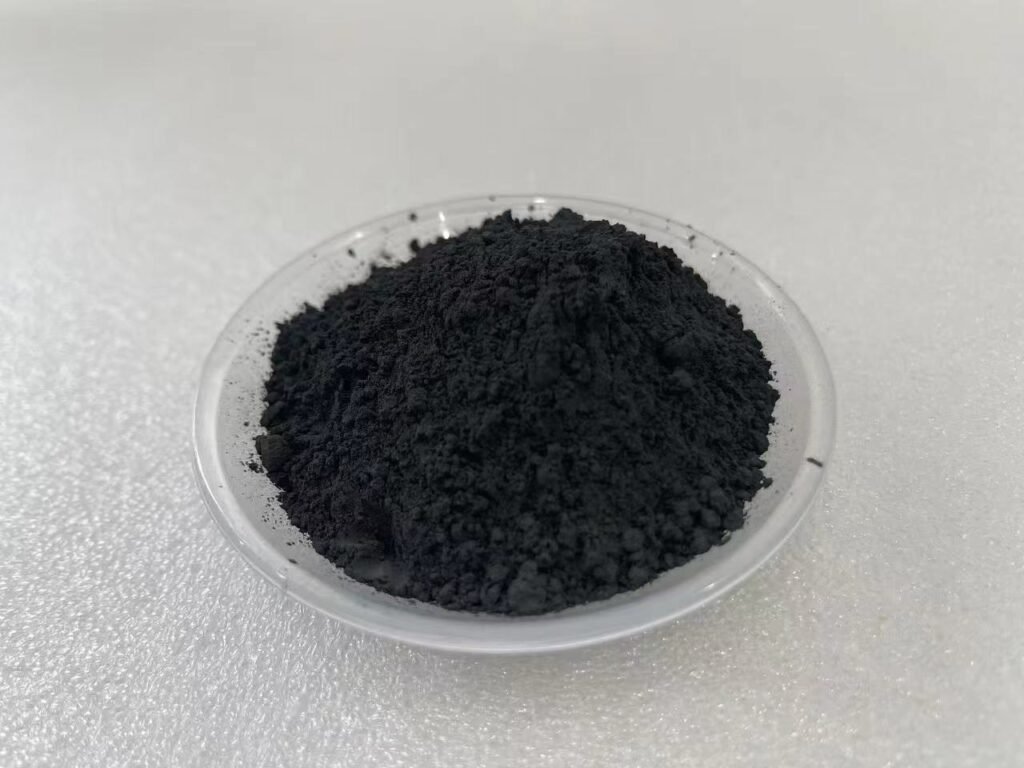
What Is Ti3AlC2 MAX Phase?
Titanium Aluminum Carbide is a typical MAX phase ceramic material with the chemical formula Ti3AlC2.The general formula of MAX phases is:Mn+1AXn
M = transition metal element
A = group IIIA or IVA main-group element
X = carbon (C), nitrogen (N), or boron (B)
n = 1, 2, or 3
For Ti₃AlC₂:
M = Titanium (Ti)
A = Aluminum (Al)
X = Carbon (C)
n = 2
Therefore, Ti3AlC2 belongs to the M3AX2 type MAX phase.The crystal structure consists of Ti-C layers strongly bonded together, separated by relatively weakly bonded aluminum atomic layers. This special layered structure gives Ti₃AlC₂ properties that are uncommon in conventional ceramics.
Why Does Ti3AlC2 Combine Ceramic and Metallic Properties?
The unique performance of Ti3AlC2 comes from the coexistence of different bonding characteristics.
Strong Ti-C Bonding Provides Ceramic-Like Properties
The Ti-C layers are mainly connected through strong covalent and ionic bonds.These strong bonds contribute to:
- High temperature stability
- High elastic modulus
- Good oxidation resistance
- Excellent structural stability
Similar to ceramic materials, Ti3AlC2 can maintain its structure under extreme temperature conditions.
Ti-Al Bonding Provides Metallic-Like Behavior
The Ti-Al layers contain relatively weaker bonding characteristics with metallic bonding features.This structure enables:
- Electrical conductivity
- Thermal conductivity
- Damage tolerance
Easier machining compared with traditional ceramics.Because of this combination, Ti3AlC2 is often described as a “metal-like ceramic” or “machinable ceramic.”
Key Properties of Ti3AlC2 MAX Phase
| Property | Value |
| Chemical formula | Ti3AlC2 |
| Purity | 99% (Customized) |
| Particle size | -325mesh (Customized) |
| Crystal morphology | Layered structure |
| Density | 4.5 g/cm³ |
| Vickers hardness | 2.5–3.5 GPa |
| Compressive strength | 764 MPa |
| Flexural strength | 320–375 MPa |
| Fracture toughness | 6.9–9.5 MPa·m¹ᐟ² |
| Young’s modulus | 297 GPa |
| Shear modulus | 124 GPa |
| Electrical resistivity | 0.23–0.387 μΩ·m |
| Thermal expansion coefficient | 8.3–9.0 ×10⁻⁶ K⁻¹ |
Crystal Structure and Bonding Characteristics of Ti3AlC2
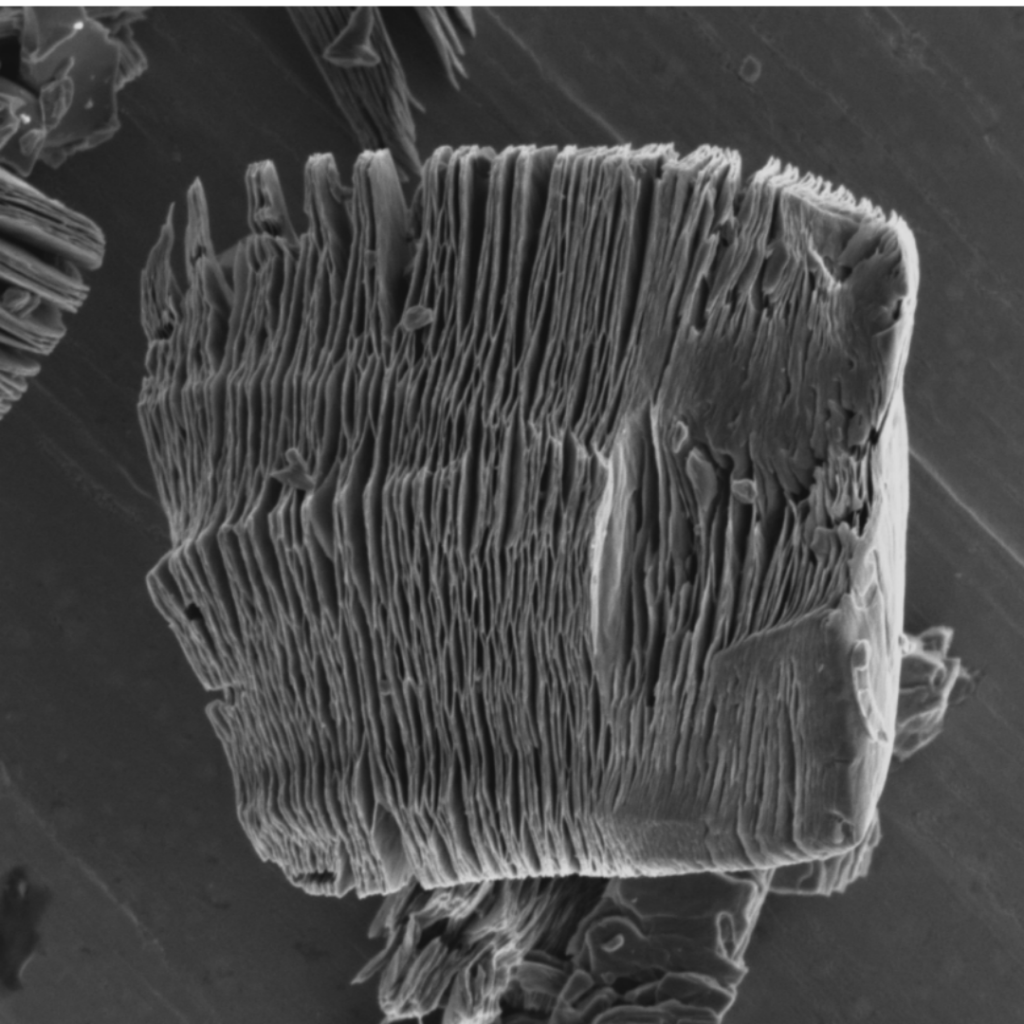
Ti3AlC2 has a hexagonal layered structure.The material consists of repeated Ti-C-Ti-Al atomic layers. The Ti-C layers provide mechanical strength, while the aluminum layers act as weak interfaces.This layered arrangement leads to several unique behaviors:
Damage Tolerance
The weakly bonded aluminum layers can absorb mechanical energy and help prevent catastrophic brittle fracture.
Machinability
Compared with conventional ceramic materials such as Al₂O₃ or Si₃N₄, Ti3AlC2 can be processed using conventional machining methods under suitable conditions.
Selective Etching Capability
The aluminum layers can be selectively removed through chemical treatment, producing Ti₃C₂ MXene nanosheets.
This conversion from MAX phase to MXene has become an important research direction in energy storage, electromagnetic absorption, and electronic materials.
Preparation Methods of Ti3AlC2 MAX Phase
Ti3AlC2 is typically prepared using a high-temperature solid-state synthesis method, with raw materials including titanium-containing materials, aluminum, and a carbon source. These raw materials are precisely weighed, thoroughly mixed, and heated under controlled conditions to promote the formation of the layered Ti₃AlC₂ MAX phase. The phase composition and final purity are significantly influenced by various factors, such as raw material quality, stoichiometry, sintering temperature, holding time, and furnace atmosphere. For applications requiring high-density bulk materials, pressure-assisted techniques such as hot pressing (HP) or spark plasma sintering (SPS) are commonly used to increase density and reduce the formation of the second phase. By optimizing the synthesis process, high-purity Ti₃AlC₂ powder and bulk ceramics with stable microstructures can be obtained.
Preparation Flowchart:Titanium Source+Aluminum+Carbon Source→Powder Mixing→
High-Temperature Sintering→Ti3AlC2 MAX Phase(Powder,Bulk Ceramic)
The Connection Between MAX Phase and Two-Dimensional Materials
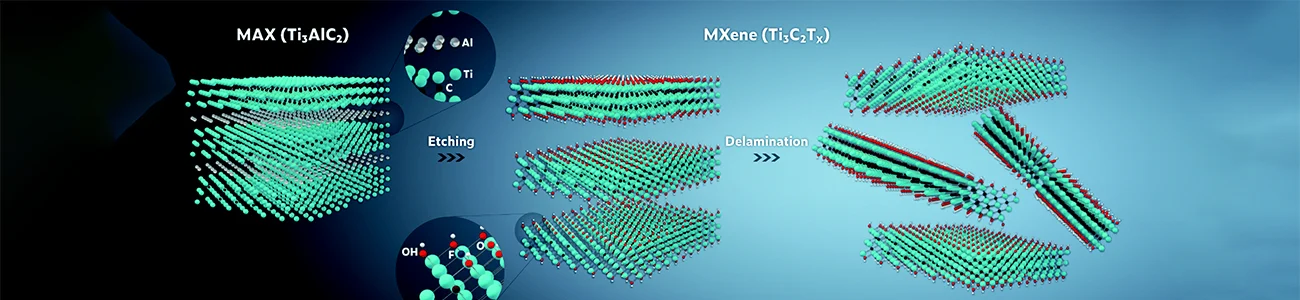
Ti3AlC2 is a representative MAX phase material and an important precursor for the preparation of Ti₃C₂ MXene.MAX phases consist of alternating layers of transition metal carbide or nitride (M-X layers) and A element layers. In the Ti₃AlC₂ structure, the bonding between Al layers and Ti-C layers is relatively weak, allowing the Al layers to be selectively removed through chemical etching.
The transformation process can be summarized as:
Ti3AlC2 MAX Phase
↓
Selective removal of Al layers
↓
Ti3C2 MXene nanosheets
After removing the Al layers, Ti₃C₂ MXene exhibits a two-dimensional layered structure with a higher specific surface area and more exposed active sites. At the same time, it retains the excellent electrical conductivity originating from the Ti-C framework of Ti₃AlC₂.Due to these structural advantages, Ti₃AlC₂ powder is widely investigated as a precursor material for MXene-related applications, including lithium-ion batteries, supercapacitors, sensors, and electromagnetic interference (EMI) shielding materials.
Applications of Ti3AlC2 MAX Phase
High-Temperature Structural Materials: Ti₃AlC₂ retains excellent structural stability at elevated temperatures, making it suitable for demanding environments where conventional materials may fail. Its combination of thermal stability, oxidation resistance, and damage tolerance has led to its use in high-temperature structural ceramics, thermal protection systems, and components designed for harsh service conditions.
Electromagnetic Absorption Materials: The layered crystal structure and relatively high electrical conductivity of Ti₃AlC₂ make it a promising material for electromagnetic wave absorption. Current research focuses on improving impedance matching through surface modification, ceramic coatings, composite design, and hybrid structures, enabling better microwave absorption performance while maintaining thermal stability.
MXene Precursor Materials: One of the most important applications of Ti₃AlC₂ is as the precursor for Ti₃C₂ MXene. By selectively removing the aluminum layers through chemical etching, the layered MAX phase can be converted into two-dimensional MXene nanosheets. These materials have attracted considerable interest because of their high electrical conductivity, large specific surface area, and excellent electrochemical properties.
Energy Storage and Functional Composites: MXene materials derived from Ti₃AlC₂ are widely studied for lithium-ion batteries, supercapacitors, conductive composites, and other advanced functional materials. At the same time, Ti₃AlC₂ itself is increasingly explored as a reinforcing phase in ceramic matrix composites and multifunctional materials that require a combination of mechanical strength and electrical conductivity.
Protective Coatings: Thanks to its oxidation resistance, electrical conductivity, and thermal stability, Ti₃AlC₂ is also considered a promising material for high-temperature protective coatings. It can serve either as a standalone coating material or as a functional component in composite coating systems designed for extreme operating environments.
Conclusion
FAQs
Ti3AlC2 MAX Phase is a layered ternary carbide composed of titanium, aluminum, and carbon. Its crystal structure combines strong Ti-C bonds with weaker Ti-Al bonds, giving the material both ceramic-like thermal stability and metallic electrical conductivity.
Unlike conventional ceramics, Ti3AlC2 exhibits good electrical conductivity, thermal conductivity, machinability, and damage tolerance while maintaining high-temperature stability and oxidation resistance. These combined properties are characteristic of MAX phase materials.
Yes. By selectively removing the aluminum atomic layers through chemical etching, Ti₃AlC₂ can be transformed into Ti₃C₂ MXene, a two-dimensional material widely investigated for energy storage, electromagnetic shielding, sensors, and conductive coatings.
ULPMAT supplies Ti₃AlC₂ powder with particle sizes below 10 μm as a standard specification. Customized particle sizes may also be available depending on application requirements.
Yes. Material characterization such as XRD phase analysis and SEM morphology images can be provided according to product availability. Additional technical documentation may also be available upon request.
Technical Note
The material properties presented in this article are based on the typical specifications of Ti₃AlC₂ powder supplied by ULPMAT and publicly available scientific knowledge of MAX phase materials. Actual performance may vary depending on purity, particle size, processing conditions, and application requirements.