NMFP Cathode Material: Olivine Structure, Properties, and Powder Customization
NMFP cathode material may have the same general chemical formula across different suppliers, but that does not mean every powder is suitable for the same battery research or electrode development project. The Mn/Fe ratio, crystal phase, phase purity, particle size, and carbon coating can all influence material characteristics and determine whether a particular grade meets specific experimental requirements. For researchers sourcing olivine-type NMFP, choosing the right powder involves looking beyond chemical composition and purity to understand its structural and physical properties.
Sodium manganese iron phosphate has the general chemical formula NaMnₓFe₁₋ₓPO₄, where x represents the manganese proportion and 1−x represents the iron proportion. In olivine-type NMFP, the combination of iron and manganese provides a basis for investigating composition-dependent electrochemical properties in sodium-ion batteries.
This guide focuses specifically on olivine-type NMFP, covering its crystal structure, Mn/Fe ratio, phase purity, electrochemical characteristics, particle properties, carbon coating, and practical considerations for powder selection.
For researchers looking for NMFP powder with customized composition, crystal phase, phase purity, particle size, and carbon coating, visit the ULPMAT Sodium Manganese Iron Phosphate product page.
1. What Is Sodium Manganese Iron Phosphate (NMFP)?
Sodium manganese iron phosphate (NMFP) is a phosphate-based cathode material investigated for sodium-ion batteries. Its general chemical formula is NaMnₓFe₁₋ₓPO₄, representing a family of compositions in which manganese and iron share the transition-metal positions.
The Mn/Fe ratio is an important compositional variable. Adjusting the relative amounts of manganese and iron allows researchers to investigate changes in crystal chemistry, redox behavior, and electrochemical properties.
NMFP is compositionally related to lithium manganese iron phosphate (LMFP), LiMnₓFe₁₋ₓPO₄. Both contain manganese and iron in a phosphate-based framework, but their different alkali-metal ions result in differences in crystal structure, ion transport, and electrochemical behavior.
For olivine-type NMFP, the Fe²⁺/Fe³⁺ and Mn²⁺/Mn³⁺ redox couples are particularly relevant to understanding its electrochemical response. The contribution of each redox couple depends on composition and testing conditions.
2. Olivine Crystal Structure of NMFP
The olivine structure is an important framework for investigating phosphate-based cathode materials. In olivine-type NMFP, sodium ions occupy sites within a phosphate-based crystal framework containing transition-metal and phosphate groups.
The arrangement of these structural units influences sodium-ion transport and the electrochemical behavior of the material.
Several structural characteristics are relevant when evaluating olivine-type NMFP:
Crystal structure: The olivine framework defines the arrangement of sodium ions, transition-metal sites, and phosphate groups.
Transition-metal composition: The Mn/Fe ratio influences the local chemical environment and redox behavior.
Sodium-ion transport: Ion migration is related to the crystal structure, defects, particle dimensions, and synthesis conditions.
Phase composition: X-ray diffraction (XRD) can be used to identify the crystalline phase and evaluate the presence of secondary phases.
For material development, confirming the olivine phase is important. A chemical formula alone does not establish the crystal structure of a powder. XRD data should therefore be considered when comparing NMFP materials intended for olivine-type cathode research.
3. Mn/Fe Ratio and Its Influence on NMFP Properties
The general formula NaMnₓFe₁₋ₓPO₄ allows different manganese-to-iron ratios to be investigated.
The variable x represents the manganese proportion, while 1−x represents the iron proportion. For example, NaMn₀.₆₆Fe₀.₃₄PO₄ contains a higher manganese proportion than iron proportion.
Changing the Mn/Fe ratio can influence several material characteristics:
Redox behavior: Iron and manganese participate in different redox processes. Their relative contributions can affect the voltage profile during charge and discharge.
Electrochemical response: Composition can influence reversible capacity, operating voltage, and cycling behavior. These properties should be evaluated using data obtained under comparable testing conditions.
Crystal chemistry: Changes in transition-metal composition can influence lattice parameters and local structural environments.
Material development: Different Mn/Fe ratios provide researchers with options for investigating the relationship between composition and electrochemical performance.
There is no single Mn/Fe ratio that is automatically optimal for every application. The appropriate composition depends on the research objective, electrode formulation, and electrochemical testing conditions.
4. Crystal Phase and Phase Purity
Crystal phase and phase purity are important considerations when selecting olivine-type NMFP powder. Even when two powders have the same nominal chemical formula, differences in their crystalline structures or secondary-phase content may affect their suitability for a particular research project.
4.1 Crystal Phase
Crystal phase describes the specific crystalline structure present in a material. For projects requiring olivine-type NMFP, the target crystal structure should be clearly specified before production.
Factors such as precursor selection, synthesis conditions, reaction temperature, and heat-treatment procedures can influence phase formation. Appropriate process control is therefore important when preparing NMFP with a specified crystal structure.
4.2 Phase Purity
Phase purity refers to the proportion of the intended crystalline phase relative to other crystalline phases present in the material.
Secondary phases may arise from incomplete reactions, precursor impurities, or differences in synthesis conditions. Their presence should be considered when evaluating the structural quality of NMFP powder.
X-ray diffraction (XRD) is a key method for identifying crystalline phases and assessing phase composition. Depending on the material and analytical method, quantitative phase analysis can provide additional information about the relative amounts of different crystalline phases.
For research projects with specific structural requirements, both the target crystal phase and acceptable phase-purity criteria should be defined in advance.
5. Electrochemical Properties of Olivine-Type NMFP
The electrochemical characteristics of olivine-type NMFP are associated with sodium-ion storage and the redox activity of iron and manganese.
5.1 Fe and Mn Redox Couples
The Fe²⁺/Fe³⁺ and Mn²⁺/Mn³⁺ redox couples provide two transition-metal redox contributions for investigation.
Their relative contributions depend on the Mn/Fe ratio, crystal structure, and electrochemical conditions. As a result, the voltage profile of NMFP should be interpreted in relation to its actual composition rather than treated as a fixed property of the entire material family.
5.2 Reported Electrochemical Performance
A 2024 study, Olivine NaMn₀.₆₆Fe₀.₃₄PO₄ as a Cathode Material for Advanced Sodium Ion Batteries, investigated a specific olivine-type composition.
The study reported:
An average potential of approximately 3.2 V versus Na⁺/Na.
A reversible capacity of approximately 75 mAh/g at a C/20 rate.
Fe-related and Mn-related electrochemical contributions in different voltage regions.
These values belong to the specific composition and experimental conditions reported in that study. They should not be treated as guaranteed performance specifications for all NMFP powders.
For researchers evaluating NMFP, electrochemical results should always be considered alongside composition, phase identification, particle characteristics, electrode formulation, and testing conditions.
6. NMFP Compared with Other Sodium-Ion Battery Cathode Materials
NMFP is one of several phosphate-based materials investigated for sodium-ion batteries. NFPP and NVP are also studied for their respective structural and electrochemical characteristics.
| Material | Chemical Formula | Main Characteristics |
| NMFP | NaMnₓFe₁₋ₓPO₄ | Contains Fe and Mn redox-active components; composition-dependent properties |
| NFPP | Na₄Fe₃(PO₄)₂P₂O₇ | Mixed phosphate-pyrophosphate framework; investigated for sodium storage |
| NVP | Na₃V₂(PO₄)₃ | NASICON-type phosphate framework; known for its sodium-ion transport characteristics |
The materials differ in chemical composition, crystal structure, operating voltage, and electrochemical behavior. Their performance should be compared using consistent testing conditions, including current density, voltage range, electrode loading, and cycle number.
For material developers, the choice between NMFP, NFPP, and NVP depends on the intended battery chemistry and research objectives.
7. Particle Size, Morphology, and Carbon Coating
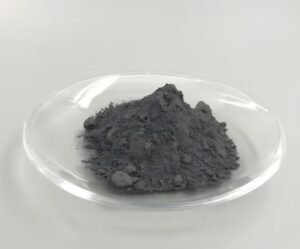
In addition to chemical composition and crystal structure, physical characteristics are important when selecting NMFP cathode powder.
7.1 Particle Size
Particle size can influence powder processing, electrode preparation, and electrochemical behavior.
Important parameters include:
D10, D50, and D90 particle-size distribution
Primary particle size and secondary particle size
Particle agglomeration
Particle-size consistency
A smaller particle size may shorten sodium-ion diffusion distances, but it can also increase surface area and affect powder handling. The appropriate particle size depends on the electrode preparation process and target application.
7.2 Particle Morphology
Particle morphology affects powder packing, dispersion, and electrode processing.
Scanning electron microscopy (SEM) can help examine particle shape, surface features, agglomeration, and morphological consistency.
When comparing NMFP powders, SEM images provide useful information that cannot be obtained from a purity value or particle-size distribution alone.
7.3 Carbon-Coated NMFP
Carbon coating is commonly investigated as a strategy to improve the electronic conductivity of phosphate-based cathode materials.
For NMFP, carbon coating may help establish conductive pathways around active material particles. Its effectiveness depends on coating uniformity, carbon content, particle characteristics, and preparation conditions.
Uncoated and carbon-coated NMFP powders may therefore be suitable for different research requirements.
When selecting carbon-coated material, researchers should consider:
Carbon content
Coating uniformity
Particle-size distribution
Crystalline phase
Compatibility with electrode preparation
The choice between uncoated and carbon-coated NMFP should be based on the intended electrode formulation and experimental objectives.
8. How to Select NMFP Cathode Powder
Selecting an appropriate NMFP powder requires evaluating both chemical specifications and physical characterization data.
The following parameters are useful when comparing suppliers and product grades.
| Parameter | What to Check | Why It Matters |
| Chemical formula | NaMnₓFe₁₋ₓPO₄ | Defines the material composition |
| Mn/Fe ratio | Actual manganese and iron proportions | Influences composition-dependent properties |
| Purity | Reported purity and its measurement basis | Helps evaluate chemical quality |
| Crystal phase | Target olivine structure and XRD pattern | Confirms the intended crystalline structure |
| Phase purity | Secondary-phase content and acceptance criteria | Helps evaluate phase composition |
| Particle size | D10, D50, D90 | Supports powder and electrode processing |
| Morphology | SEM images | Shows particle shape and agglomeration |
| Carbon coating | Coating type, uniformity, and carbon content | Helps evaluate conductive modification |
| Documentation | TDS, SDS, COA, and available characterization data | Supports technical evaluation and purchasing |
Questions to Ask Before Purchasing
Before ordering NMFP powder, researchers and purchasing teams should clarify several points:
What Mn/Fe ratio is required for the experiment?
Is a specific olivine crystal phase required?
What phase-purity level or secondary-phase limit is acceptable?
What particle-size range is suitable for the electrode preparation process?
Is uncoated or carbon-coated NMFP preferred?
Are relevant PSD, SEM, XRD, and chemical composition data available?
Can the supplier provide a batch-specific Certificate of Analysis (COA)?
These details help reduce uncertainty when comparing NMFP powder grades and evaluating their suitability for research and development.
Customized NMFP Powder from ULPMAT
ULPMAT supplies Sodium Manganese Iron Phosphate (NMFP) Powder for sodium-ion battery research and material development. In addition to standard powder specifications, customized options are available to meet different technical requirements.
Customization options include:
Mn/Fe Ratio: Customized manganese-to-iron composition.
Crystal Phase: Customized crystalline structure according to the target material requirements.
Phase Purity: Customized phase-purity requirements, with target specifications defined according to project needs.
Particle Size: Adjustable particle-size specifications for different powder processing and electrode preparation needs.
Carbon Coating: Uncoated and carbon-coated NMFP powders, with coating customization available upon request.
XRD, PSD, and SEM characterization can support the evaluation of crystal phase, phase composition, particle-size distribution, and morphology. Specific characterization requirements and acceptance criteria can be discussed before production.
For available specifications and customized NMFP powder solutions, visit the ULPMAT Sodium Manganese Iron Phosphate product page.
9. Applications of Olivine-Type NMFP
Olivine-type NMFP is primarily investigated as a cathode material for sodium-ion batteries.
Its research applications include:
Sodium-ion battery cathode development: Evaluation of sodium storage behavior and transition-metal redox activity.
Composition optimization: Investigation of how different Mn/Fe ratios influence electrochemical properties.
Crystal-phase research: Study of the relationship between olivine structure, phase composition, and electrochemical behavior.
Electrode material research: Evaluation of particle size, morphology, and carbon coating.
Phosphate cathode development: Exploration of composition and structure relationships in sodium-based phosphate materials.
The suitability of a particular NMFP powder depends on its composition, crystalline phase, phase purity, physical characteristics, and the requirements of the target electrode system.
Frequently Asked Questions About NMFP Cathode Material
The general chemical formula of sodium manganese iron phosphate (NMFP) is NaMnₓFe₁₋ₓPO₄, where x represents the manganese proportion and 1−x represents the iron proportion.
Olivine-type NMFP is a phosphate-based cathode material with an olivine crystal structure, investigated for sodium-ion batteries.
The Mn/Fe ratio affects material composition, redox behavior, and electrochemical properties. Different ratios can be selected for specific research requirements.
Crystal phase identifies the material’s crystalline structure, while phase purity indicates the proportion of the intended phase. XRD analysis helps identify the crystal phase and evaluate secondary phases.
Not necessarily. Carbon coating can improve electronic conductivity, but the choice depends on electrode formulation and research requirements.
Yes. ULPMAT offers customization of Mn/Fe ratio, crystal phase, phase purity, particle size, and carbon coating according to project requirements. Relevant XRD, PSD, and SEM characterization can also be discussed.
Conclusion
Selecting the right olivine-type NMFP cathode material requires careful consideration of composition, crystal phase, phase purity, particle characteristics, and carbon coating. The best specifications depend on your research objectives and electrode development requirements. Whether you need a specific Mn/Fe ratio, controlled crystal phase, customized particle size, or carbon-coated NMFP powder, ULPMAT can work with you to define suitable material specifications. Contact ULPMAT to discuss your NMFP requirements and request a customized powder solution. Visit our Sodium Manganese Iron Phosphate product page for more information.