

3YSZ Vs 8YSZ is an important material selection question for advanced ceramics because yttria content determines their crystal structure, mechanical properties, and ionic conductivity. 3YSZ is generally selected when strength and fracture toughness are priorities, while 8YSZ is mainly chosen when oxygen ion conductivity is required.The main difference between 3YSZ and 8YSZ is yttria content, which determines their crystal structure, mechanical properties, and ionic conductivity.3YSZ is generally selected when strength and fracture toughness are priorities, while 8YSZ is mainly chosen when oxygen ion conductivity is required.Although both materials belong to the yttria stabilized zirconia (YSZ) family, they are not interchangeable. The correct YSZ grade depends on whether the application requires mechanical durability, thermal stability, or electrochemical performance.
YSZ materials are produced by adding yttria (Y₂O₃) into zirconia (ZrO₂) to stabilize zirconia crystal phases and prevent harmful phase transformations.
Different yttria concentrations create different YSZ grades with different performance advantages. For a broader overview of YSZ powder grades, preparation methods, and material characteristics, please refer to our detailed guide on YSZ powder.
For industrial ceramic applications, ULPMAT provides yttria stabilized zirconia (YSZ) powder with different stabilization grades, including 3YSZ and 8YSZ, to meet various requirements in mechanical ceramics and high-temperature applications.
3YSZ vs 8YSZ: Key Differences in Composition and Crystal Structure
The main difference between 3YSZ and 8YSZ is the amount of yttria added to zirconia.
| Property | 3YSZ | 8YSZ |
| Y₂O₃ content | Approximately 3 mol% | Approximately 8 mol% |
| Crystal phase | Mainly tetragonal | Mainly cubic |
| Mechanical performance | Higher toughness | Lower toughness |
| Ionic conductivity | Lower | Higher |
| Primary selection reason | Mechanical reliability | Oxygen ion transport |
| Typical applications | Structural ceramics | SOFC electrolytes |

3YSZ vs 8YSZ: Differences in Mechanical Properties
When comparing 3YSZ vs 8YSZ mechanical properties, the main difference is the balance between mechanical performance and ionic conductivity. 3YSZ contains a higher proportion of tetragonal zirconia phase, which enables transformation toughening. Under mechanical stress, the tetragonal-to-monoclinic phase transformation can help absorb energy and slow down crack propagation, improving fracture resistance.
Due to its higher toughness and strength, 3YSZ is commonly used in applications where mechanical durability is important, such as dental ceramics, structural ceramic components, and wear-resistant ceramic parts. In contrast, 8YSZ contains a higher yttria content and is typically selected for applications where oxygen ion conductivity is more important than mechanical toughness.
Previous studies on yttria stabilized zirconia have shown that lower yttria stabilized zirconia grades, such as 3YSZ, provide higher fracture toughness, while higher yttria contents improve ionic conductivity and high-temperature phase stability.
Why Is 8YSZ Preferred for Oxygen Ion Conductivity Applications?
The main advantage of 8YSZ is its relatively high oxygen ion conductivity, which makes it suitable for high-temperature electrochemical applications. Compared with 3YSZ, 8YSZ contains a higher yttria concentration, resulting in a greater number of oxygen vacancies within the zirconia lattice. These oxygen vacancies provide pathways for oxygen ion migration, enabling ionic transport at elevated temperatures.
Due to this characteristic, 8YSZ is widely used in applications where oxygen ion conduction is required, particularly as an electrolyte material in solid oxide fuel cells (SOFCs), oxygen sensors, and other high-temperature electrochemical systems. The combination of chemical stability, thermal resistance, and ionic conductivity has made 8YSZ one of the most established electrolyte materials for SOFC applications.
However, the higher yttria content that improves ionic conductivity also changes the zirconia phase structure, reducing the transformation toughening effect typically associated with 3YSZ. Therefore, 8YSZ is generally selected for functional ceramic applications rather than applications where maximum mechanical strength is the primary requirement.
3YSZ vs 8YSZ: Which Grade Should You Choose?

The selection between 3YSZ and 8YSZ depends on the primary performance requirement of the final ceramic application. Although both materials belong to the yttria stabilized zirconia family, their different yttria concentrations result in different phase structures and functional advantages.
| Selection Requirement | Recommended Grade | Main Reason |
| High fracture toughness and mechanical strength | 3YSZ | Higher tetragonal phase content enables transformation toughening |
| Wear resistance and structural durability | 3YSZ | Better resistance to crack propagation under mechanical stress |
| Dental and structural ceramic applications | 3YSZ | Suitable where mechanical reliability is critical |
| Oxygen ion conductivity | 8YSZ | Higher oxygen vacancy concentration improves ionic transport |
| Solid oxide fuel cell (SOFC) electrolyte | 8YSZ | Established electrolyte material with stable ionic conductivity |
| Oxygen sensors and electrochemical devices | 8YSZ | Suitable for high-temperature oxygen ion conduction |
In practical applications, 3YSZ is generally selected when mechanical performance is the priority, while 8YSZ is preferred when oxygen ion conductivity and high-temperature electrochemical performance are required. Neither material is universally superior; the appropriate YSZ grade depends on the required balance between strength, toughness, conductivity, operating temperature, and processing conditions.
What Should Be Considered When Selecting 3YSZ and 8YSZ Powder?

Selecting the appropriate YSZ grade involves more than choosing between 3YSZ and 8YSZ based on yttria content. The final ceramic performance also depends on powder characteristics, processing compatibility, and manufacturing requirements.
- Particle Size Distribution and Powder Morphology
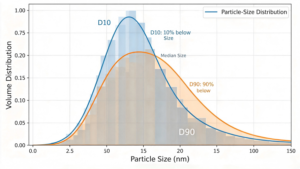
Particle size distribution affects powder packing behavior, sintering kinetics, and the microstructure of the final ceramic. A well-controlled particle size distribution can improve packing efficiency and promote uniform densification during sintering.
However, particle size alone does not determine powder performance. Agglomeration behavior, particle morphology, and dispersion characteristics also influence processing consistency and final ceramic quality.
- Purity and Impurity Control
High-purity YSZ powder is important for maintaining stable phase composition and predictable ceramic properties. Trace impurities may affect grain growth, phase stability, electrical performance, and long-term reliability.
For 8YSZ used in electrochemical applications, impurity control is especially important because unwanted elements may influence oxygen ion conductivity and operating stability. For 3YSZ used in structural ceramics, impurity levels may affect grain structure and mechanical performance.
- Sintering Compatibility
The final properties of YSZ ceramics are influenced not only by composition but also by sintering conditions. Parameters such as sintering temperature, holding time, heating profile, and target density requirements can affect grain size, density, and mechanical or electrical properties.
Therefore, selecting between 3YSZ and 8YSZ should consider both material composition and powder quality to achieve the required performance in the final application.
FAQs
The main difference between 3YSZ and 8YSZ is the yttria (Y₂O₃) concentration and the resulting crystal structure. 3YSZ contains approximately 3 mol% yttria and mainly maintains a tetragonal zirconia phase, providing higher mechanical strength and fracture toughness. 8YSZ contains approximately 8 mol% yttria and has a higher cubic phase content, which improves oxygen ion conductivity for high-temperature electrochemical applications.
Yes, 3YSZ generally provides higher mechanical strength and fracture toughness than 8YSZ because its tetragonal phase enables transformation toughening. When mechanical durability, wear resistance, and crack resistance are important, 3YSZ is usually preferred. 8YSZ is mainly selected when ionic conductivity is the primary requirement.
8YSZ is widely used in solid oxide fuel cells (SOFCs) because its higher yttria content creates oxygen vacancies in the zirconia lattice. These oxygen vacancies enable oxygen ion transport at high temperatures, allowing 8YSZ to function as a stable electrolyte material.
No. Although both materials belong to the yttria stabilized zirconia family, 3YSZ and 8YSZ have different phase structures and performance characteristics. 3YSZ is typically selected for structural ceramic applications requiring strength and toughness, while 8YSZ is selected for electrochemical applications requiring oxygen ion conductivity.
The selection between 3YSZ and 8YSZ should consider the required mechanical properties, ionic conductivity, operating temperature, processing conditions, and final application requirements. 3YSZ is suitable when strength and fracture resistance are priorities, while 8YSZ is preferred when oxygen ion conductivity and high-temperature electrochemical performance are required.
Beyond yttria content, YSZ powder selection should consider purity, particle size distribution, powder morphology, agglomeration behavior, and sintering compatibility. These factors influence powder processing behavior, ceramic densification, and final material performance.
3YSZ is commonly used in dental ceramics, structural ceramic components, and wear-resistant parts where mechanical reliability is important. 8YSZ is widely used in SOFC electrolytes, oxygen sensors, and other high-temperature electrochemical ceramic applications where oxygen ion conductivity is required.
Scientific References
- 1. Heiroth, S., Lippert, T., Wokaun, A., Döbeli, M. Yttria-stabilized zirconia thin films by pulsed laser deposition: Microstructural and compositional control Journal of the European Ceramic Society, 2010.
- 2. Badwal, S. P. S. Zirconia-based solid electrolytes: Microstructure, stability and ionic conductivity Solid State Ionics, 1992.
- 3. Ingel, R. P., Lewis, D. III. Lattice parameters and density for yttria stabilized zirconia Journal of the American Ceramic Society, 1986.