

Perovskite sputtering target manufacturing process is a controlled powder-metallurgy route that transforms high-purity raw materials into dense, uniform targets for thin-film deposition. The typical process includes powder preparation, composition control, compaction, sintering, precision machining, backing-plate bonding, and final quality inspection.
In perovskite solar cell and optoelectronic research, sputtering targets are mainly used for functional layers such as transparent conductive oxides (ITO, FTO, AZO), transport layers (NiOₓ, SnO₂, TiO₂), and emerging compound materials. The quality of the target directly influences sputtered film properties, including thickness uniformity, electrical conductivity, optical performance, and long-term device stability.Unlike conventional metal targets produced by melting and casting, most perovskite-related ceramic targets require powder processing because oxide and compound materials generally have high melting points and complex phase requirements.
Why Does the Perovskite Sputtering Target Manufacturing Process Matter?
The manufacturing process of a sputtering target determines more than its final shape; purity, density, and microstructure directly influence sputtering stability and thin-film quality. During plasma deposition, variations in target composition or internal structure can affect erosion behavior, film uniformity, and device performance.
High-purity raw materials are essential to minimize contamination during deposition. Depending on the material system and application requirements, sputtering targets are commonly produced from 4N (99.99%) or higher purity materials, with impurity levels verified by techniques such as ICP-MS or GDMS.
For ceramic targets, density and microstructure are critical for stable sputtering performance. Residual pores may contribute to particle generation or unstable discharge, while a uniform grain structure helps maintain consistent erosion and deposition rates. During target production, key parameters are typically verified through density measurement, XRD phase analysis, and SEM microstructure characterization.
Manufacturing Process of Perovskite-Related Sputtering Targets
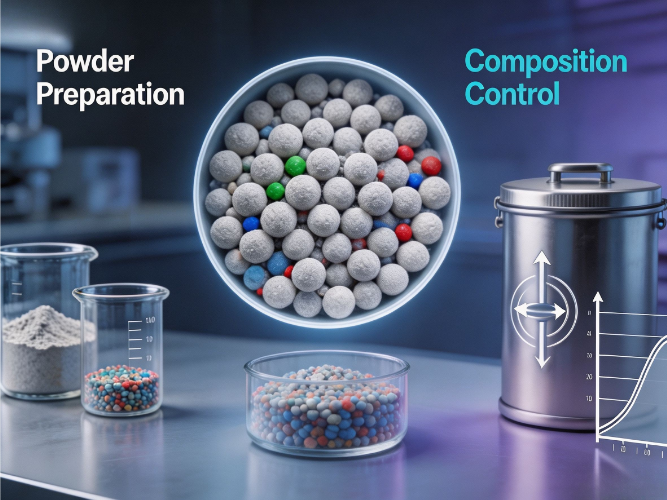
The manufacturing process of perovskite-related sputtering targets follows a controlled powder metallurgy route. From raw material selection to final packaging, each stage influences target purity, density, microstructure, and sputtering performance.
Raw Material Selection → Powder Preparation → Mixing & Doping → Compaction → Sintering → Machining → Bonding → Quality Inspection → Packaging
The complete manufacturing route can be divided into four major stages: powder preparation, densification, target assembly, and final quality verification.
1. Powder Preparation and Composition Control
Including: Raw Material Selection → Powder Preparation → Mixing & Doping
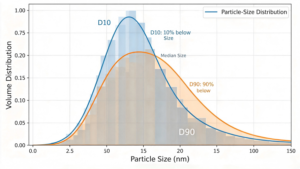
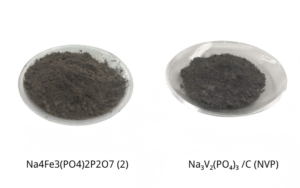
The process begins with high-purity raw materials selected according to the target composition and application requirements. Typical materials used in perovskite-related sputtering applications include ITO, FTO, and AZO for transparent conductive layers, NiOₓ for hole transport layers, and SnO₂ or TiO₂ for electron transport layers.Before fabrication, powders are evaluated for chemical purity, particle size distribution, moisture content, and impurity levels. Precise powder weighing, mixing, and doping ensure composition uniformity, which directly influences sputtering stability, erosion behavior, and deposited film performance.
2. Compaction and Sintering
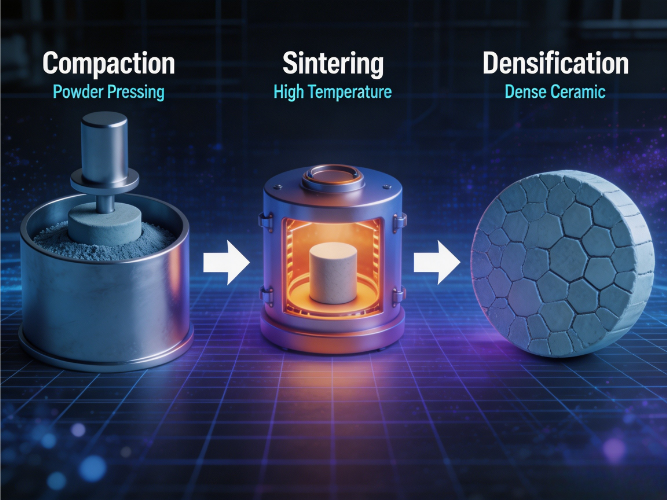
Including: Compaction → Sintering & Densification
After powder preparation, the blended material is compacted into a green body using forming methods such as uniaxial pressing or cold isostatic pressing (CIP). Uniform pressure distribution helps improve density consistency, especially for large ceramic targets.The green body is then densified through suitable sintering technologies, including conventional sintering, hot pressing (HP), or hot isostatic pressing (HIP). Sintering conditions are optimized according to the material system. For example, oxide targets such as ITO and AZO require careful atmosphere control, while halide-based materials require controlled temperature and moisture conditions due to their sensitivity.
3. Machining and Target Assembly
Including: Machining → Surface Finishing → Backing Plate Bonding
After sintering, the dense ceramic block is precision machined into the required target geometry, including planar and rotary configurations. CNC machining, grinding, and polishing processes ensure dimensional accuracy and a smooth sputtering surface.Because ceramic targets have limited mechanical strength and experience thermal stress during sputtering, they are commonly bonded to copper or aluminum backing plates. Bonding methods such as indium bonding, elastomer bonding, and vacuum brazing improve mechanical support and heat transfer during operation.
4. Quality Inspection, Documentation and Packaging
Including: Quality Inspection → COA Release → Packaging
Before shipment, each sputtering target undergoes comprehensive quality evaluation to verify material consistency, structural integrity, and production reliability. Typical quality control items include:
| Inspection Parameter | Evaluation Method |
| Chemical purity | ICP-MS / GDMS |
| Phase composition | XRD |
| Density | Archimedes method |
| Microstructure | SEM |
| Electrical properties | Four-point probe measurement |
| Dimensions | Precision measurement |
| Bond integrity | Ultrasonic inspection |
Manufacturing Challenges for Different Perovskite-Related Sputtering Targets
Different sputtering target materials require different manufacturing strategies due to variations in chemical stability, densification behavior, and application requirements.
ITO and AZO targets require precise composition control, high density, and stable electrical properties. ITO is particularly challenging to densify because residual pores or composition deviations may affect sputtering stability and film uniformity. Optimized powder processing, sintering conditions, and atmosphere control are essential for achieving reliable target performance.
NiOₓ targets used in perovskite solar cell hole transport layers require a balance between density and electrical properties. Proper doping and sintering optimization can improve densification and deposition consistency.
Halide-based targets such as CsBr, CsI, PbBr₂, and PbI₂ are sensitive to moisture and temperature. They require controlled handling environments, moisture-resistant packaging, and appropriate storage conditions to maintain material stability.
How to Select a Reliable Perovskite Sputtering Target Supplier?
Selecting a sputtering target supplier requires evaluating not only product availability but also material expertise, quality control capability, and customization support. Key factors include:
| Evaluation Factor | What to Check |
|---|---|
|
Material Capability |
Ability to supply oxide ceramic targets, compound targets, and customized materials for different applications, such as ITO, AZO, NiOₓ, SnO₂, TiO₂, and halide-related materials |
|
Quality Documentation |
Availability of COA, purity analysis, density data, XRD results, SEM characterization, dimensional inspection, and other quality records |
|
Manufacturing Capability |
Control over powder processing, sintering, machining, bonding, and batch-to-batch consistency |
|
Customization Support |
Capability to provide customized compositions, target sizes, geometries, and bonding solutions according to equipment and research requirements |
When selecting a supplier, buyers should consider whether the supplier can provide consistent material quality, complete technical documentation, and flexible customization options. A supplier with strong process control can help ensure stable sputtering performance and reliable thin-film deposition results.
FAQs
The manufacturing process of a perovskite sputtering target typically includes high-purity powder preparation, powder mixing, compaction, sintering, precision machining, backing plate bonding, quality inspection, and packaging. Each step influences target purity, density, microstructure, and sputtering performance.
Common materials include ITO, FTO, AZO, NiOₓ, SnO₂, TiO₂, and halide compounds such as CsBr, CsI, PbBr₂, and PbI₂. Different materials are selected according to their functions, including transparent conductive layers, hole transport layers, electron transport layers, and perovskite-related research applications.
Target density affects sputtering stability and film quality. Higher-density ceramic targets contain fewer internal pores, reducing the risk of unstable discharge and particle generation during sputtering. Density evaluation is commonly performed using methods such as the Archimedes method.
Typical quality evaluations include chemical purity testing by ICP-MS or GDMS, phase analysis by XRD, microstructure observation by SEM, density measurement, dimensional inspection, and bonding quality testing. A Certificate of Analysis (COA) is usually provided to verify production consistency.
A reliable supplier should provide appropriate material capability, quality documentation, customization options, and consistent production control. Important factors include target composition, purity data, density information, inspection records, bonding capability, and experience with application-specific requirements.
Ceramic sputtering targets, such as ITO, AZO, NiO, and oxide compounds, are generally manufactured through powder metallurgy processes involving pressing and sintering. Metal targets are commonly produced through melting and casting processes. Ceramic targets require additional control of density, phase composition, and microstructure.
Sintering and hot isostatic pressing (HIP) improve ceramic target density and structural stability by reducing internal pores. The optimal process depends on the material system, because oxide and halide targets have different thermal and chemical requirements.
Halide materials such as CsBr, CsI, PbBr₂, and PbI₂ require careful handling because moisture exposure can affect material stability. Controlled environments, moisture-resistant packaging, and proper storage conditions help maintain target quality before deposition.
Conclusion
The manufacturing process of perovskite sputtering targets is a highly controlled powder metallurgy process involving raw material selection, powder preparation, densification, precision machining, bonding, and quality verification. Each stage influences the final target properties, including purity, density, microstructure, and sputtering stability.With experience in high-purity sputtering targets and inorganic materials, ULPMAT (UltraPurMat Group Co., Ltd.) provides customized target solutions with controlled material specifications, quality documentation, and application-oriented support. Reliable target consistency helps researchers and manufacturers achieve stable deposition performance and reproducible thin-film results for advanced perovskite-related applications.
References
- 1. Ohring, M. Materials Science of Thin Films: Deposition and Structure. Academic Press.
- 2. Anders, A. “Plasma-Based Deposition and Ion Etching.” Thin Solid Films.
- 3. Minami, T. “Transparent Conducting Oxide Semiconductors for Transparent Electrodes.” Semiconductor Science and Technology.
- 4. Utsumi, K. et al. “Properties of Indium Tin Oxide Thin Films Prepared Using High-Density ITO Targets.” Thin Solid Films.
- 5. Fortunato, E. et al. “Transparent Conducting Oxides for Photovoltaics.” MRS Bulletin.