

High purity tantalum carbide powder (TaC) is an advanced refractory ceramic material known for its extremely high melting point, excellent hardness, thermal stability, and chemical resistance. As one of the most important transition metal carbides, TaC powder plays an increasing role in ultra-high-temperature ceramics, semiconductor manufacturing, protective coatings, and advanced engineering materials.The performance of tantalum carbide powder is strongly influenced by its synthesis method, purity, particle size, morphology, and crystal structure. Different preparation routes can produce TaC powders with different characteristics, making powder selection an important consideration for researchers and industrial users.
This article introduces the major methods used for producing tantalum carbide powder, compares their advantages and limitations, explains key material properties, and provides a practical purchasing guide for selecting high purity TaC powder.
What Is High Purity Tantalum Carbide Powder (TaC)?
Tantalum carbide (TaC) is a refractory ceramic compound consisting of tantalum and carbon with the chemical formula TaC.It belongs to the ultra-high-temperature ceramic (UHTC) family and has a cubic face-centered cubic (FCC) crystal structure with a sodium chloride (NaCl)-type arrangement.The strong bonding between tantalum and carbon atoms gives TaC several outstanding properties:
- Extremely high melting point
- High hardness
- Excellent thermal stability
- Good chemical resistance
- Resistance to high-temperature deformation
Because of these characteristics, TaC powder is widely used as a raw material for advanced ceramic components, semiconductor processing materials, hard coatings, and high-temperature applications.
How Is Tantalum Carbide Powder Made?
The preparation method of tantalum carbide powder significantly affects the properties of the final powder. Commonly used synthesis methods include carbothermal reduction, direct carburizing, sol-gel method, mechanical alloying, and chemical vapor deposition.
Among these methods, carbothermal reduction is one of the most widely used methods for producing tantalum carbide powder due to its scalability and cost-effectiveness.
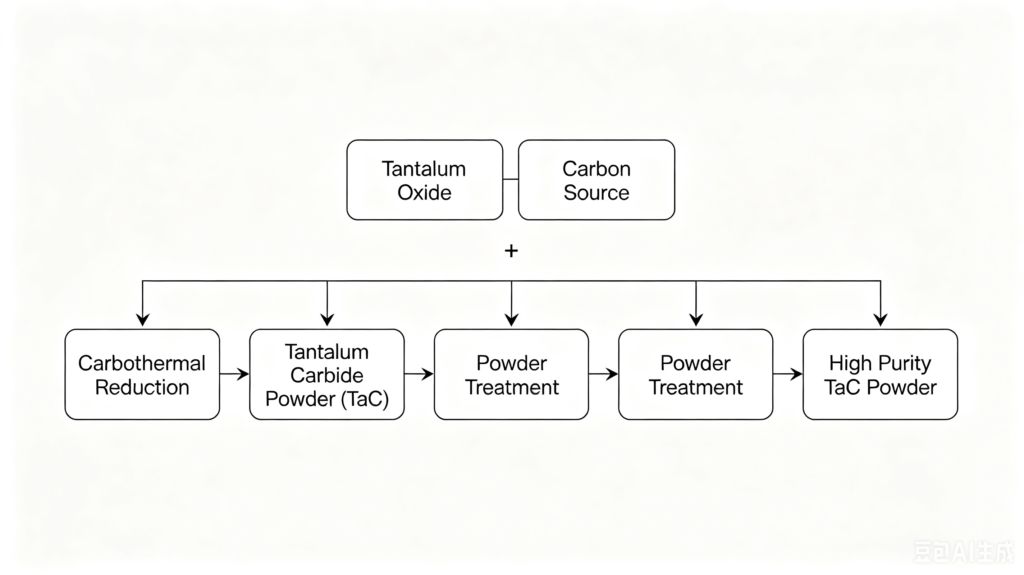
1. Carbothermal Reduction
Carbothermal reduction is one of the most commonly used methods for preparing tantalum carbide powder. The reaction formula is:
Ta₂O₅ + C → TaC + CO
In this process, tantalum oxide reacts with carbon at high temperature to form tantalum carbide.
Carbothermal reduction is suitable for large-scale production of tantalum carbide (TaC) ceramic powder. It offers high-cost-performance raw materials and mature processing technology. This process requires high-temperature reaction and precise control of carbon content, often necessitating additional purification processes. Relying on its excellent scalability for mass production, it is considered one of the most practical methods for producing tantalum carbide powder.
2. Direct Carburizing Method
Direct carburizing refers to the direct reaction between tantalum metal and carbon:
Ta + C → TaC
This method generates tantalum carbide (TaC) through the direct combination of elemental tantalum and carbon.
The direct carburizing method has a simple reaction process and can produce high-purity tantalum carbide powder, suitable for special applications. Its disadvantages are the high cost of tantalum raw materials and the need for precise control of reaction conditions. It is often chosen when products have high standards for purity and material properties.
3. Sol-Gel Method
The sol-gel method is a chemical synthesis method that allows for excellent control over composition and particle characteristics.
In this process, the tantalum-containing precursor is converted into a gel structure, which is then carbonized to obtain TaC powder. The sol-gel method has advantages such as uniform chemical composition, the ability to produce fine particles, and easy precise control of composition. Its disadvantages are a complex process, high cost, and unsuitability for large-scale production. It is mostly used in scientific research and advanced materials development.
4. Mechanical Alloying Method
The mechanical alloying method utilizes high-energy ball milling to promote the reaction between tantalum powder and carbon powder. Mechanical alloying, with its lower synthesis temperature than many traditional methods, can produce fine and nanostructured powders, making it suitable for research applications. However, it carries the risk of grinding media contamination, is time-consuming to process, and is difficult to scale up for production. It is primarily used in laboratory research and the development of specialty powders.
5. Chemical Vapor Deposition (CVD)
CVD is mainly used to prepare TaC coatings, rather than bulk powders. In semiconductor applications, CVD TaC coatings are commonly used in graphite components for high-temperature processes (such as silicon carbide crystal growth). CVD can produce dense coatings with excellent surface protection, making it suitable for the semiconductor field. Its limitation is that this process is primarily for coating preparation and cannot be used for powder production.
Comparison of TaC Powder Synthesis and Production Methods
| Method | Advantages | Limitations | Typical Application |
|---|---|---|---|
|
Carbothermal Reduction |
Scalable, economical, industrially practical |
High-temperature process |
Commercial TaC powder |
|
Direct Carburization |
Simple route, high purity potential |
Higher raw material cost |
Specialty materials |
|
Sol-Gel Method |
Good composition control, fine particles |
Complex and expensive |
Research materials |
|
Mechanical Alloying |
Fine powder production |
Contamination risk |
Laboratory research |
|
CVD |
High-quality TaC coating |
Not mainly powder production |
Semiconductor coatings |
Physical Properties of High Purity Tantalum Carbide Powder
| Property | Value |
| Chemical Formula | TaC |
| CAS Number | 12070-06-3 |
| EC Number | 235-118-3 |
| Molecular Weight | 192.96 g/mol |
| Purity | Customizable |
| Crystal Structure | Cubic FCC (NaCl-type) |
| Density | 14.3–14.5 g/cm³ |
| Melting Point | Approximately 3880°C |
| Hardness | Mohs 9–10 |
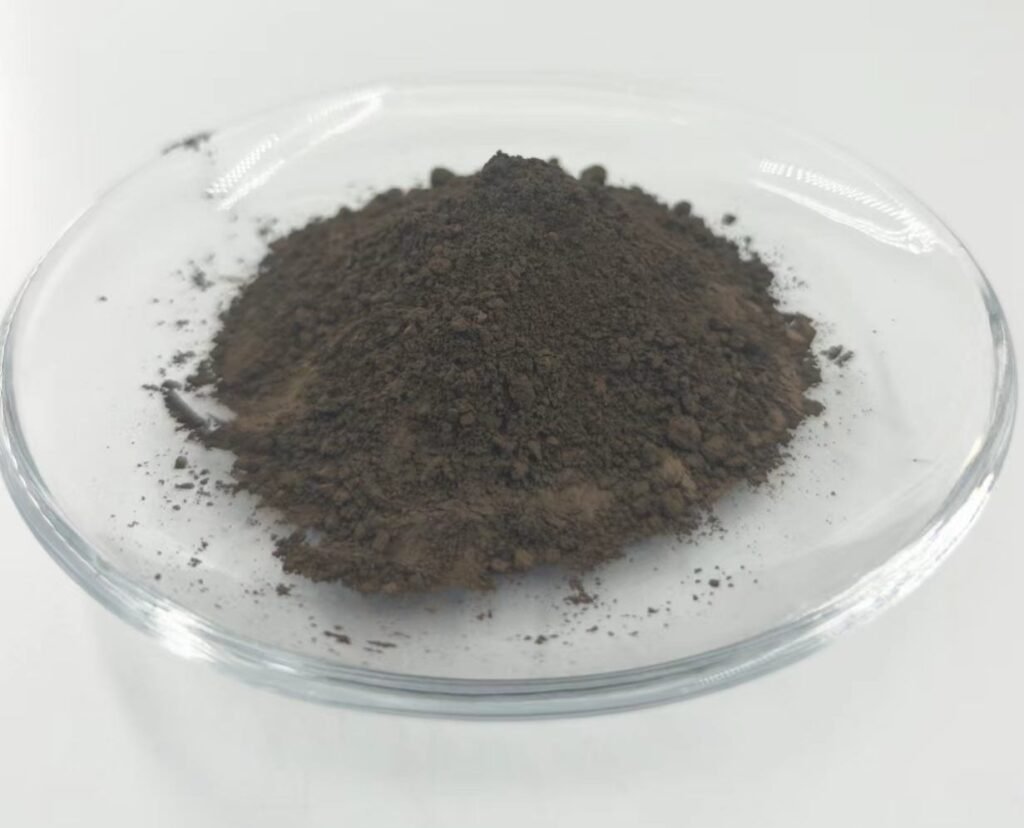
| Appearance | Dark gray / Gray-black powder |
| Particle Size | Customizable |
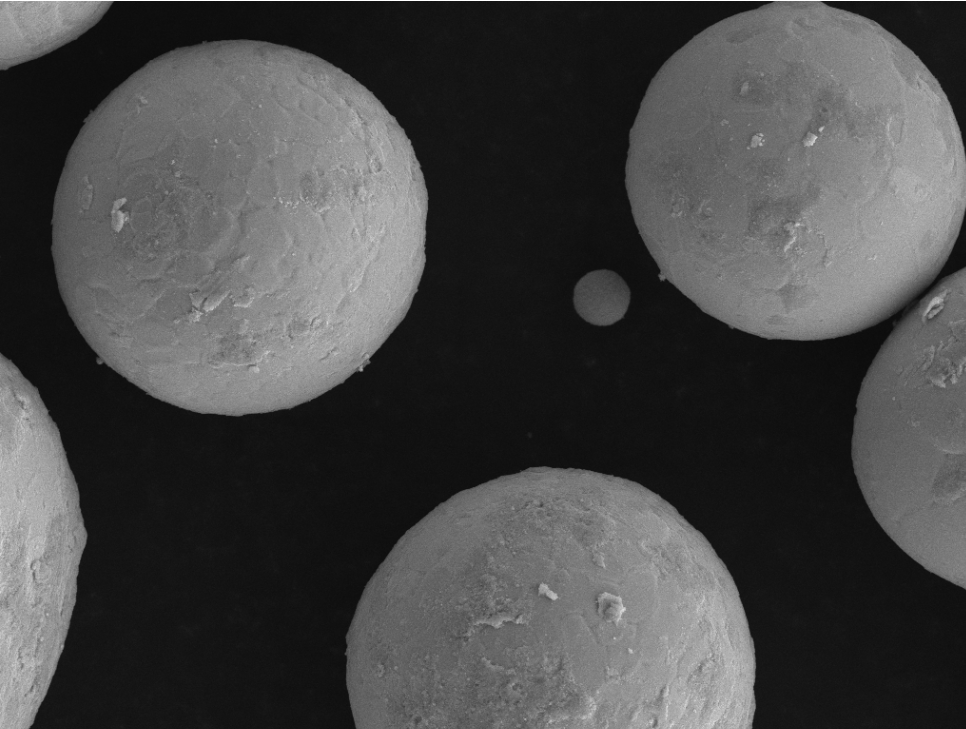
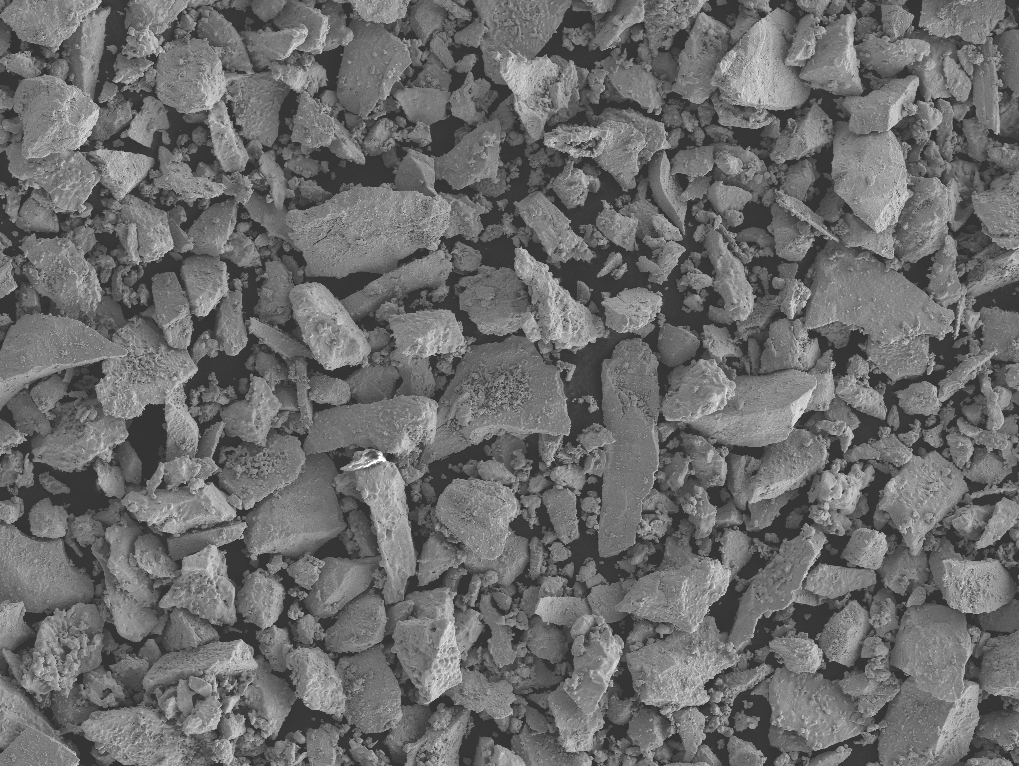
| Morphology | Irregular / Spherical powder |
Applications of High Purity Tantalum Carbide Powder
Semiconductor Crystal Growth Components:TaC coatings are widely used on graphite components in SiC crystal growth equipment. Their excellent high-temperature resistance and chemical stability help improve component durability under extreme processing conditions.
Ultra-High-Temperature Ceramics (UHTCs):As an ultra-high-temperature ceramic, TaC maintains structural stability at extreme temperatures. It is used in:High-temperature ceramics:Furnace components Thermal protection materials
Cutting Tools and Hard Materials:TaC improves the hardness, wear resistance, and high-temperature performance of cemented carbides and other hard materials.
Protective Coatings:TaC coatings provide resistance against abrasion, thermal stress, and chemical corrosion, extending the service life of critical components.
Aerospace Materials:Due to its extremely high melting point and thermal stability, TaC is being explored for thermal protection systems and hypersonic aerospace applications.
How to Select High Purity Tantalum Carbide Powder? A Purchasing Guide
1. Application Requirements
Identify the end use:
• Semiconductor
• Advanced ceramics
• Coatings
• Powder metallurgy
2. Purity Selection
Evaluate:
• TaC content
• Metallic impurities
• Oxygen level
3. Particle Size Selection
Match processing needs:
• Fine powder → Sintering applications
• Larger particles → Better flowability
4. Morphology Selection
Irregular Powder→ Ceramics & powder metallurgy
Spherical Powder→ Coatings & advanced processing
5. Supplier Evaluation
Check:
• Quality control
• Custom specifications
• Packaging options
• Technical support
• Global shipping
6. Right TaC Powder Solution
Select powder based on:
✓ Application
✓ Processing method
✓ Performance requirements
FAQs
High purity tantalum carbide powder (TaC) is a refractory ceramic material composed of tantalum and carbon. It is known for its high melting point, hardness, and thermal stability.
Tantalum carbide powder can be produced through several methods, including carbothermal reduction, direct carburization, sol-gel synthesis, and mechanical alloying. Carbothermal reduction is one of the most common industrial production methods.
The melting point of tantalum carbide is approximately 3880°C, making it one of the highest melting point ceramic materials.
TaC powder is used in semiconductor components, high-temperature ceramics, cutting tools, protective coatings, and aerospace materials.
ULPMAT provides tantalum carbide powder with -325 mesh particle size and supports customized specifications.
Tantalum carbide powder is typically dark gray or gray-black in appearance.
Both TaC and WC are hard carbide materials. TaC provides better high-temperature stability, while WC is widely used in cutting tools.
Yes. ULPMAT supports customized particle sizes, packaging options, and flexible order quantities.