

What Is Bismuth Oxide Powder and Why Does Purity Matter?
High-Purity Bismuth Oxide Powder (Bi2O3) is an inorganic functional oxide widely used in electronic ceramics, optical glass, catalysts, sensors, and lead-free material systems.
Basic physical properties
- Chemical formula Bi₂O₃
- Molecular weight 465.96 gmol
- CAS 1304-76-3
- Density ~8.9–9.2 gcm³
- Melting point ~817°C
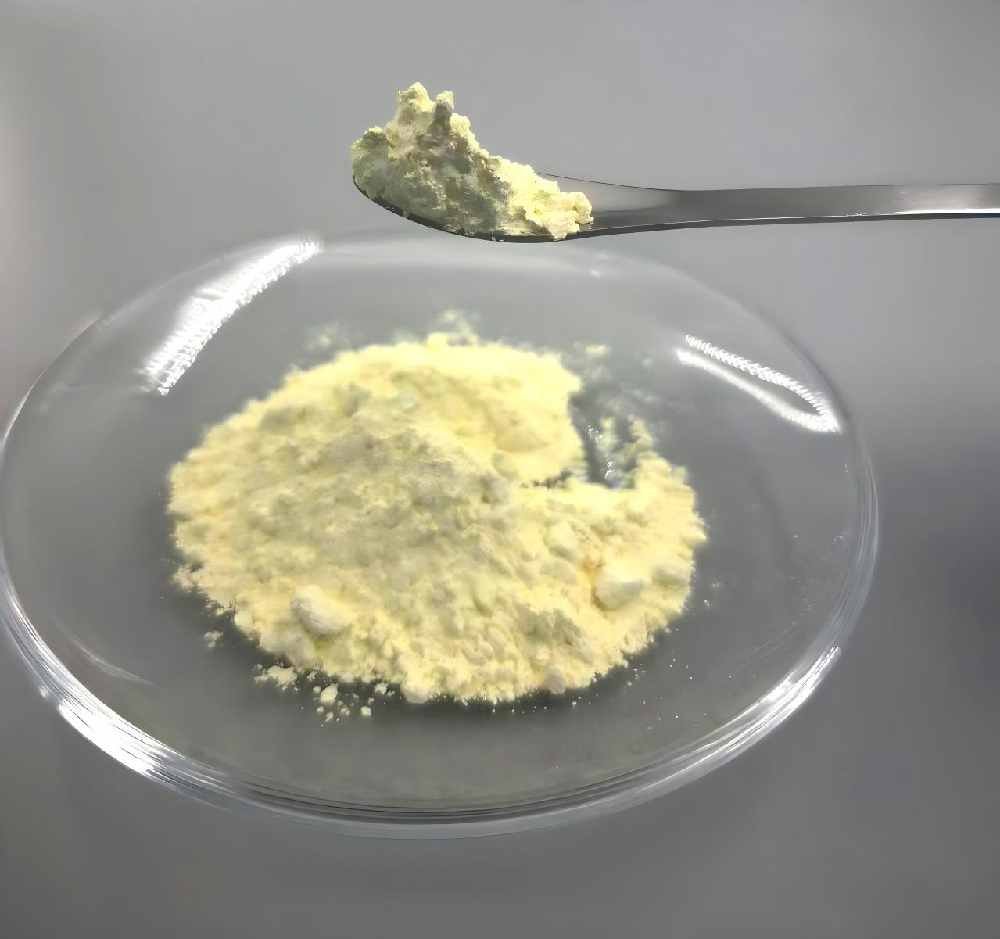
- Color yellow to yellow-green
- Crystal phases α, β, γ, δ (temperature-dependent)
Even with identical chemical formula, performance of Bi2O3 varies significantly depending on purity, particle size, and crystal phase.This is why users focus on High-Purity grades (99.9%–99.999%), not basic chemical grade.
How Is High-Purity Bismuth Oxide Powder Manufactured?
Manufacturing Flow:
Raw Material Selection→ Controlled Oxidation→ Calcination Process→Milling & Particle Size Control →Classification→Quality Control
Core manufacturing steps:
1.Raw Material Selection: High-purity bismuth metal is used as the starting point. Impurities (Fe, Pb, Cu, Al) must be minimized at this stage.
2.Controlled Oxidation:Bismuth is oxidized under controlled oxygen atmosphere.
Key parameters:
- temperature control
- oxygen partial pressure
- reaction time
This step defines initial crystal nucleation.
3.Calcination Process: Calcination stabilizes crystal structure and removes residual volatile impurities.
Typical range:500°C – 800°C,This step strongly affects:
- phase composition
- crystallinity
- particle growth
4.Milling & Particle Size Control:Mechanical grinding ensures uniform particle distribution.
5.Classification: Air classification or sieving ensures narrow PSD distribution.
6.Quality Control (QC)
Advanced analytical methods:
- ICP-OES → impurity ppm detection
- XRD → crystal phase identification
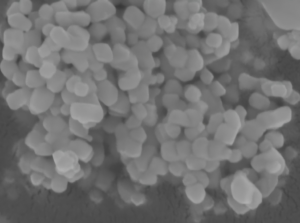
- SEM → morphology analysis
- Laser diffraction → particle size distribution
Why Impurities Matter in High-Purity Bismuth Oxide Powder?
Even trace-level impurities in high-purity bismuth oxide (Bi₂O₃) can significantly influence electrical, thermal, and structural performance in advanced ceramic and electronic applications. In most industrial systems, impurity control is managed at the ppm level, especially for electronic ceramics and functional oxide materials.
Impurity Impact
| Impurity | Primary Effect | Material Impact | Risk Level |
| Fe | Increases dielectric loss | Reduced dielectric stability in ceramic systems | High |
| Cu | Affects conductivity stability | Electrical property fluctuation | High |
| Pb | Violates lead-free compliance | Regulatory non-compliance (RoHS risk) | Critical |
| Si | Alters sintering behavior | Reduced densification and higher porosity | Medium |
| Al | Changes grain growth behavior | Microstructure inconsistency | Medium |
| Overall ppm-level impurities | Cumulative interaction effect | Phase instability and inconsistent performance | High |
Where Is High-Purity Bismuth Oxide Powder Used?
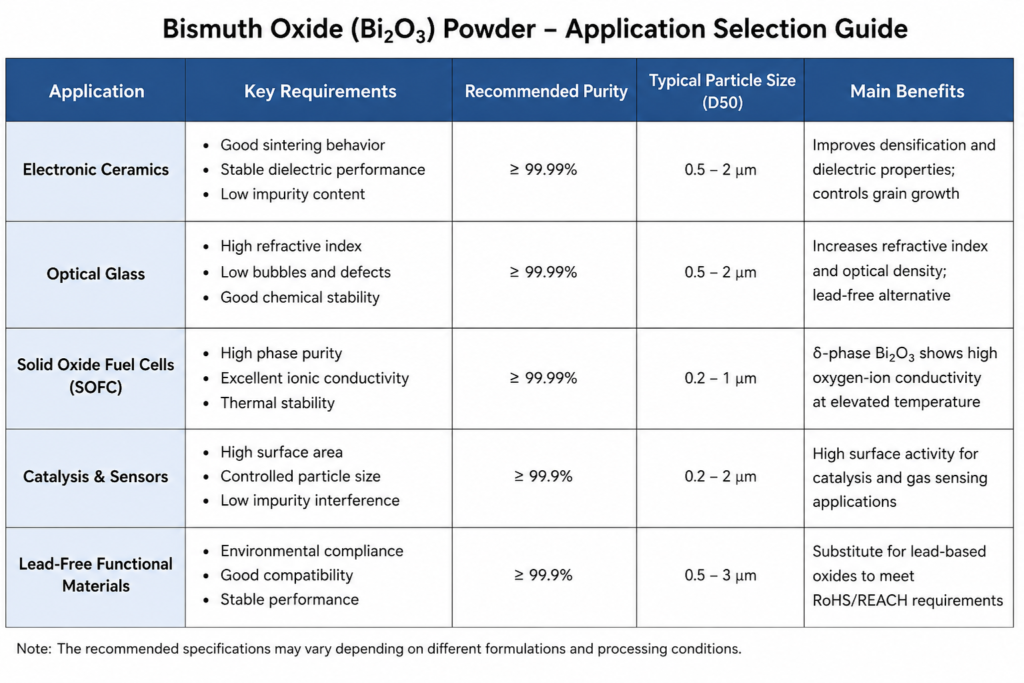
Electronic ceramics: High-purity bismuth oxide (Bi2O3) is used as a sintering aid and dielectric modifier to improve densification and dielectric performance.
Optical glass: Bi2O3 increases refractive index and optical density while serving as a lead-free alternative to traditional lead-based glass additives.
Solid oxide fuel cells (SOFC): Doped bismuth oxide phases, especially the δ-phase, are studied for their high oxygen-ion conductivity at elevated temperatures.
Catalysis & sensors: Bi2O3 is applied due to its surface activity and ability to promote oxidation reactions in gas sensing and catalytic systems.
Lead-free materials: It is widely used as a substitute for lead-based oxides to comply with RoHS and REACH environmental regulations.
What Should You Check Before Buying High-Purity Bismuth Oxide Powder?
For industrial procurement, selecting high-purity bismuth oxide (Bi2O3) is not only about purity percentage. Engineers typically evaluate multi-parameter performance consistency, since powders with identical purity grades can still behave very differently in real processing conditions.
Key specification checklist:
- Purity (99%, 99.9%, 99.99%, 99.999%)
- Particle Size Distribution (D10 / D50 / D90)
- Crystal Phase (α/β/γ/δ)
- Specific Surface Area (BET)
- Impurity profile (ICP analysis)
- Moisture content
- Bulk density
- Batch-to-batch consistency
important selection factor:Powder performance is strongly affected by particle size distribution width, even at the same purity level.Agglomeration level directly influences sintering behavior and final density.Crystal phase stability can significantly impact thermal and electrical properties during processing.This is why manufacturing process control is as important as purity specification when selecting high-performance bismuth oxide powders.
How to Select the Right Grade for Your Application
Instead of choosing ”highest purity available”, users should match material grade with process requirement.
Application-based selection guide:
| Application | Recommended Grade | Key Focus |
| Electronic ceramics | 99.99% | particle size + purity stability |
| Optical glass | ≥99.9% | low metallic impurities |
| SOFC electrolytes | 99.99%+ | crystal phase control |
| Catalysts | 99%–99.9% | surface area optimization |
| Research use | 99.999% | ultra-low impurity control |
FAQs
Q1: Is high-purity bismuth oxide powder always better?
A1:Not necessarily. In many applications of high-purity bismuth oxide powder (Bi₂O₃), controlled impurity levels can actually improve sintering behavior and phase stability, depending on the ceramic or glass system design.
Q2: What particle size is typical for bismuth oxide powder?
A2: Most industrial-grade bismuth oxide powder (Bi₂O₃) typically ranges from 0.5 μm to 5 μm (D50), depending on whether it is optimized for electronic ceramics, optical glass, or catalyst applications.
Q3: Can bismuth oxide powder replace lead oxide completely?
A3:In many systems, bismuth oxide (Bi₂O₃) can partially or fully replace lead oxide in lead-free materials, but formulation adjustment is required due to differences in melting behavior, diffusion characteristics, and processing window.
Q4: Why does crystal phase matter in bismuth oxide powder?
A4:Different crystal phases of bismuth oxide powder (α, β, γ, δ-Bi₂O₃) exhibit different conductivity, thermal stability, and structural behavior, which directly affect performance in electronic ceramics and energy materials.
Q5: What is the most critical factor in high-purity bismuth oxide powder performance?
A5:For industrial users, the most critical factors of high-purity bismuth oxide powder are particle size distribution and impurity control, which are often more important than nominal purity alone when evaluating processing stability and final material performance.
Conclusion
High-purity bismuth oxide powder is not a simple chemical product, but a functionally engineered material system.
Its performance is determined by:
- manufacturing process control
- impurity management
- particle size engineering
- crystal phase stability
For advanced applications such as electronic ceramics, optical glass, and energy materials, selecting the right grade is as important as selecting the right supplier.Consistent quality control and stable production capability are key factors for reliable industrial performance.