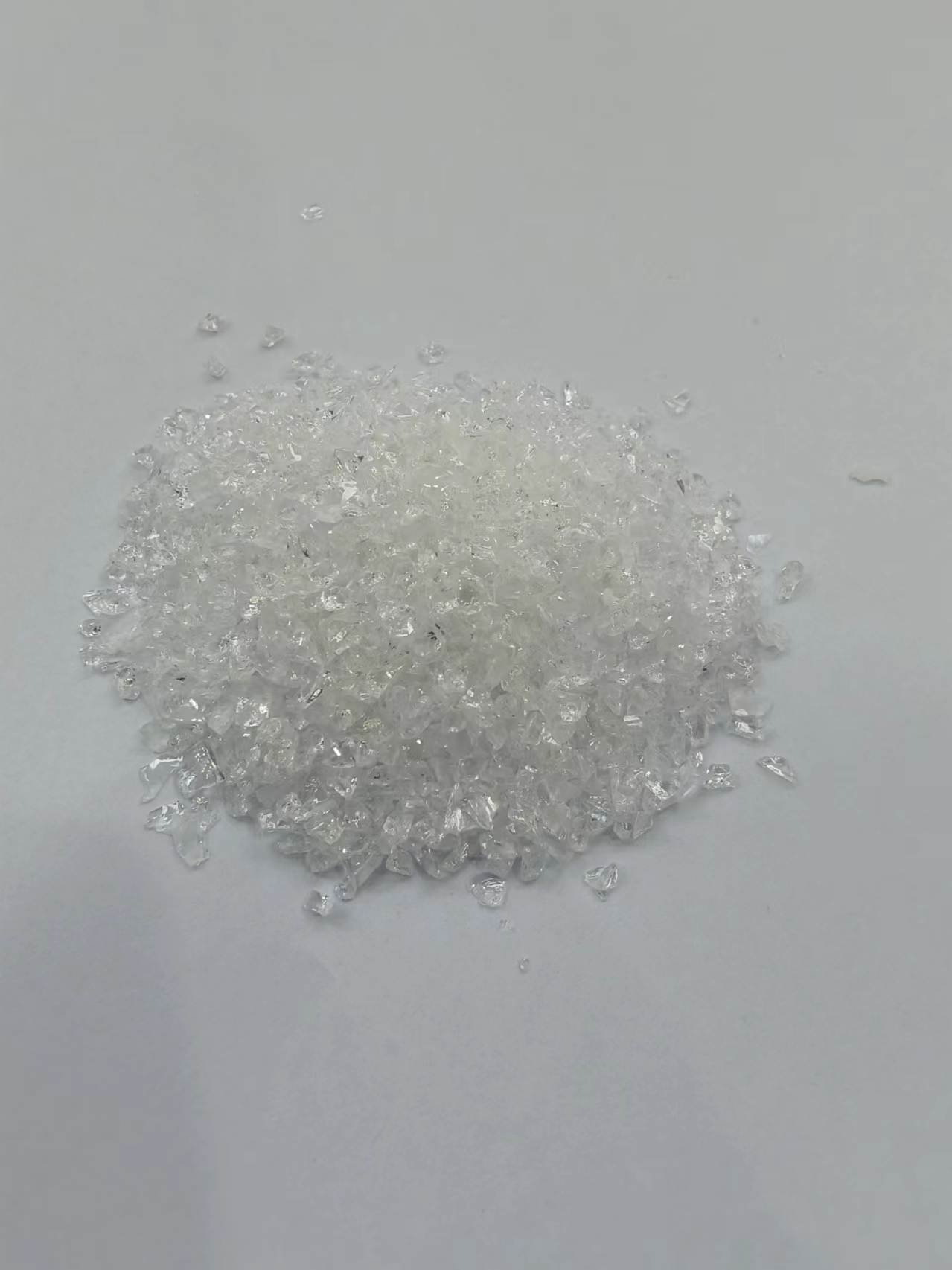
Gallium Nitride Granules Overview
Gallium nitride is a third-generation wide bandgap semiconductor material with the chemical formula GaN. It exists as gray-black crystalline particles under normal conditions, featuring a wide direct bandgap of approximately 3.4 eV, exceptionally high thermal conductivity, electron saturation drift velocity, and breakdown electric field. As a core foundational material for manufacturing high-efficiency optoelectronic devices, high-frequency/high-power RF components, and next-generation power electronic systems, it is hailed as the “cornerstone” material underpinning future information communications, energy conversion, and smart lighting.
We offer high-quality gallium nitride Granules in multiple purity grades, particle size specifications, and conductivity types. Contact us for customized solutions.
Product Highlights
Wide Bandgap Semiconductor (~3.4 eV)
Ultra-High Electron Mobility and Saturation Velocity
Excellent Thermal and Chemical Stability
High Breakdown Electric Field Strength
High Direct Bandgap Luminescence Efficiency
Applications of Gallium Nitride Granules
Optoelectronics and Semiconductor Lighting: Serves as epitaxial substrate material for manufacturing high-efficiency blue/green/white LEDs, laser diodes, and UV LED chips.
RF and Microwave Communications: Used in high-power, high-efficiency RF power amplifiers for 5G/6G communication base stations, satellite communications, and radar systems.
Power Electronics and Fast Charging: Used in manufacturing high-efficiency, compact power conversion devices widely applied in new energy vehicles, data center power supplies, and GaN fast chargers.
Semiconductor Device Substrates: Serves as a substrate material for homogeneous epitaxy to grow high-quality GaN epitaxial layers for manufacturing high-performance electronic devices.
Q1: What are the main differences between GaN and SiC particles?
A1: GaN offers higher electron mobility, making it more suitable for high-frequency applications (e.g., 5G RF); SiC provides superior thermal conductivity, making it more suitable for ultra-high-voltage power applications (e.g., electric vehicle main drives).
Q2: What purity level is required for GaN particles?
A2: Depends on the application. High-end epitaxial growth typically requires 5N (99.999%) purity or higher; certain sintering or additive uses may accept 4N (99.99%) grade.
Q3: How should the product be stored?
A3: Store in a sealed container at room temperature in a dry environment. Avoid contact with corrosive chemicals like acids or alkalis to prevent oxidation and contamination.
Q4: Why is GaN material relatively expensive?
A4: The core reasons include the high difficulty, significant technical barriers, and substantial energy consumption involved in producing high-quality single crystals. Additionally, the current industrial scale remains relatively small compared to traditional materials like silicon.
Report
Each batch is supplied with:
Certificate of Analysis (COA)
Technical Data Sheet (TDS)
Material Safety Data Sheet (MSDS)
Third-party testing reports available upon request
Why Choose Us?
Leveraging our deep technical expertise in third-generation semiconductor materials, we provide you with reliable, high-performance GaN particles in a comprehensive range of specifications, along with professional technical selection support.