

What Are Spherical Powder Materials?
Spherical powders refer to particulate materials with precisely controlled spherical or nearly spherical morphology, and they outperform irregular powders by delivering superior flowability, higher packing density, more stable processing performance and fewer manufacturing defects, making them indispensable raw materials for 3D printing, powder metallurgy and thermal spray coating industries.
Types of Spherical Powders
Metal spherical powders: materials cover Ti, Ni, CoCr alloys and stainless steel, applied in additive manufacturing (3D printing), aerospace components and medical implants;
Ceramic spherical powders: materials include Al2O3, ZrO2, YSZ and SiC, used for thermal barrier coatings, wear-resistant coatings and insulation layers;
Functional oxide powders: materials consist of SiO2, TiO2 and HfO2, suitable for electronics, optical coatings and semiconductor insulation layers.
Key Properties of Spherical Powders
| Property | Typical Range | Importance |
|---|---|---|
|
Particle size (D50) |
10–150 μm |
process compatibility |
|
Sphericity |
0.90–0.98 |
flow behavior |
|
Tap density |
2.5–5.5 g/cm³ |
packing efficiency |
|
Flowability |
10–25 s/50g |
feeding stability |
|
Oxygen content (metal) |
<0.15 wt% |
material purity |
For additive manufacturing, common PSD ranges are 15–45 μm or 45–75 μm
How Are Spherical Powders Produced?
Three main processes are used to produce spherical powders:
Gas atomization (the most common process): High-pressure inert gas breaks molten metal into tiny droplets that rapidly solidify into spherical particles, with typical operating parameters including 3–8 MPa gas pressure, a cooling rate of 10³–10⁵ K/s, and a spherical powder yield of 70–90%.
Plasma atomization: Metal wire is melted by plasma torches and split into fine droplets; this method delivers sphericity above 0.95, low oxygen impurity, and is ideal for reactive metals such as Ti, Nb and Ta.
Ceramic spheroidization: Irregular ceramic raw powders are remolded into spherical form via high-temperature plasma or flame treatment.
Production Process Flow
Raw Material Selection → Melting / Feedstock Preparation → Gas or Plasma Atomization → Droplet Solidification → Sieving & Particle Classification → Heat Treatment (Optional) → Quality Testing (PSD / SEM / Flowability / Oxygen) → Final Packaging (Inert Atmosphere)
Main Applications
Additive Manufacturing (3D Printing)
Spherical metal powders serve as core raw materials for powder bed fusion (PBF) and directed energy deposition (DED) forming processes, which need to meet three key indicators: excellent flowability, narrow particle size distribution and low oxygen impurity content.
Thermal Spray Coatings
Spherical ceramic powders are widely applied to plasma spraying and HVOF spraying equipment. Common materials include wear-resistant alumina (Al2O3), zirconia (ZrO2) for thermal barrier use, and YSZ with outstanding high-temperature insulation performance;.
Electronics & Functional Materials
A range of spherical functional oxide powders are adopted to manufacture dielectric and insulating thin films, with differentiated application advantages: SiO2 features a low dielectric constant, TiO2 fits optical and photocatalytic scenarios, and HfO2 acts as high-k dielectric raw material.
Comparison of Spherical and Irregular Metal Powders
| Feature | Spherical | Irregular |
| Flowability | High | Low |
| Packing density | High | Low |
| AM suitability | Excellent | Poor |
| Defect rate | Low | High |
| Cost | Higher | Lower |
Spherical Powder Quality Control Methods
For our industrial spherical powders, we carry out comprehensive, standardized quality control tests to maintain consistent particle shape, particle size distribution, flow behavior and chemical purity in every batch, catering to additive manufacturing, powder metallurgy and thermal spraying industries. Our core inspection procedures are listed below:
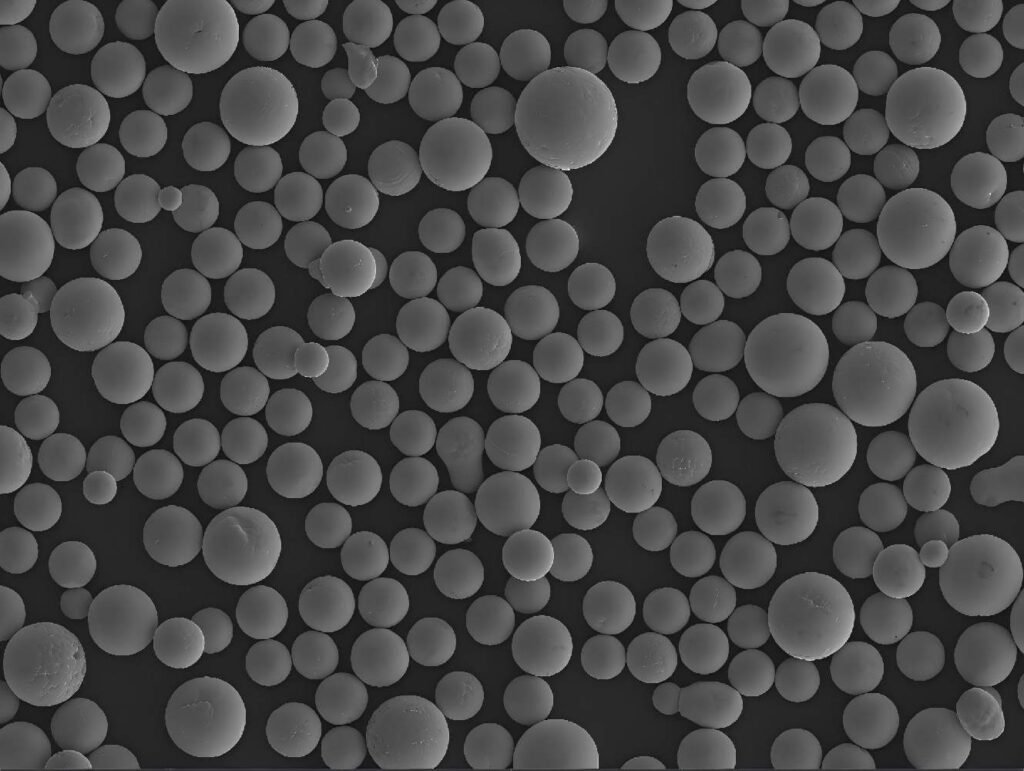
SEM morphology analysis
We use Scanning Electron Microscopy to capture high-magnification micro-images of powder particles. Our technical team evaluates sphericity, surface smoothness and particle integrity, screening out atomization defects such as hollow particles, satellite powders and surface blemishes to ensure uniform spherical shapes.
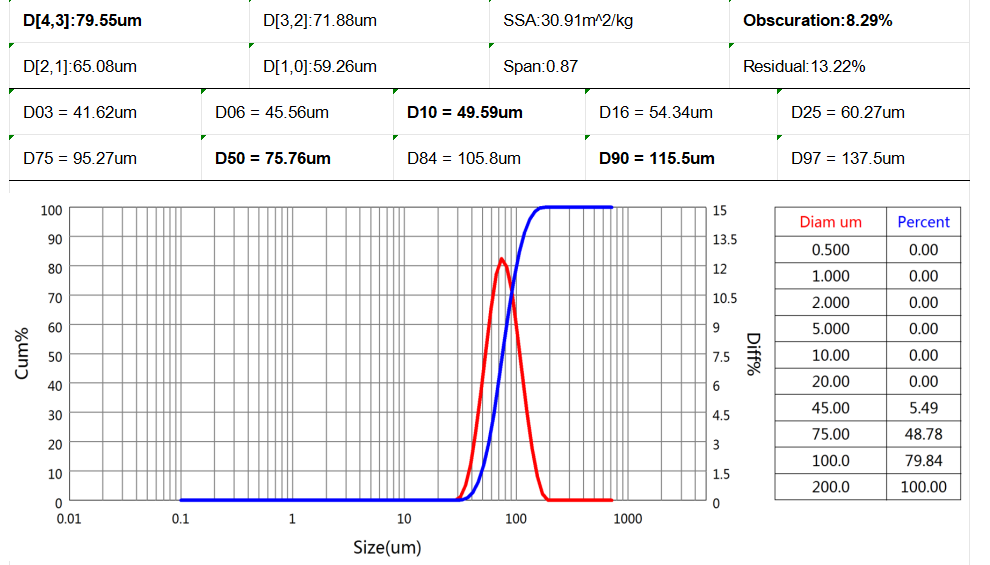
Laser diffraction PSD
We adopt laser diffraction particle size distribution testing to accurately map the full particle size range. Generated distribution curves verify whether particle fractions meet customer requirements, effectively avoiding uneven powder spreading and low packing density that result in internal part defects.
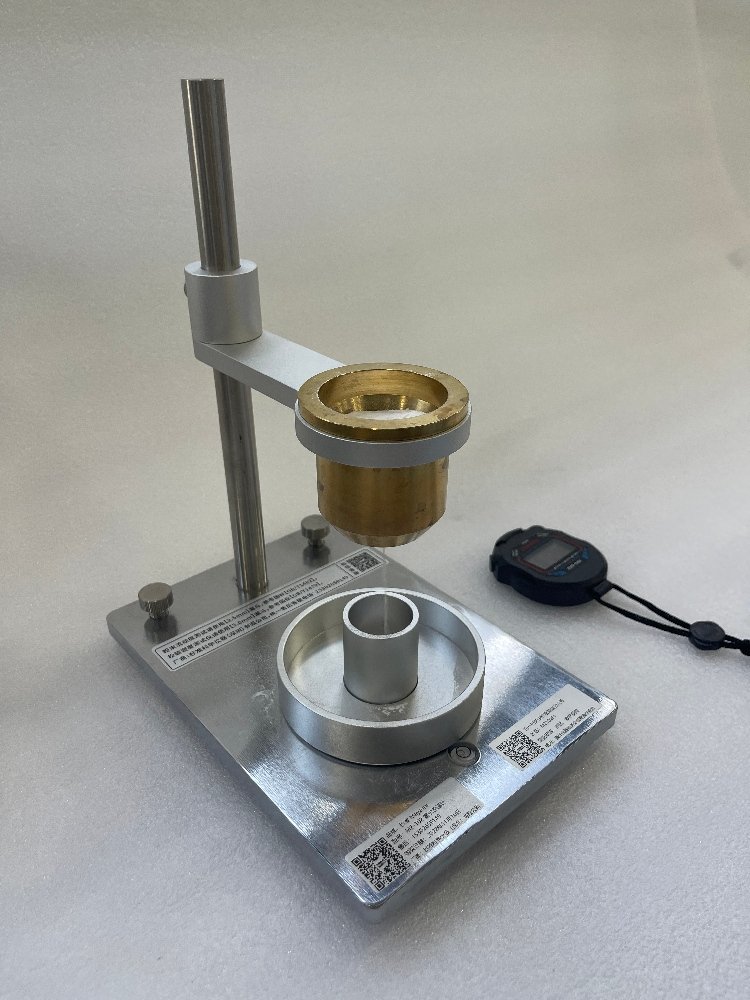
Hall flow testing
We conduct standard Hall flow tests to measure powder flowability under fixed laboratory conditions. The flow reading reflects inter-particle friction and agglomeration status. Stable free-flow performance guarantees uniform powder laying in 3D printing equipment and smooth feeding for thermal spray processes.
Tap density measurement
We perform tap density tests to obtain the maximum compacted density after standardized mechanical tapping. Qualified tap density delivers superior particle stacking efficiency, reduces internal voids and enhances the overall mechanical performance of finished components.
ONH elemental analysis
We utilize ONH elemental analyzers to detect trace oxygen, nitrogen and hydrogen contents in powder samples. Excess gaseous impurities lead to brittleness and micro-pores during printing or sintering. This test strictly controls gas residuals to satisfy high-purity standards for precision manufacturing.
FAQs
Q1:What Is Spherical Powder?
A1:Spherical powder refers to particles with a near-spherical shape, typically produced through gas atomization, plasma atomization, or spheroidization processes. Compared with irregular powders, spherical powders offer improved flowability, higher packing density, and more uniform particle distribution. These characteristics make them widely used in additive manufacturing, thermal spray coatings, powder metallurgy, and advanced electronic materials.
Q2:Why Are Spherical Powders Preferred Over Irregular Powders?
A2:Spherical powders are preferred because their smooth and uniform shape reduces interparticle friction during handling and processing. This results in better powder flowability, improved packing density, and more consistent feeding behavior. In applications such as 3D printing and thermal spraying, spherical powders can help reduce defects, improve deposition efficiency, and enhance the quality of the final component.
Q3:How Does Particle Size Distribution Affect Powder Performance?
A3:Particle size distribution (PSD) significantly influences powder flowability, packing density, melting behavior, and process stability. Fine powders provide a larger surface area but may reduce flowability, while coarse powders generally flow more easily but can affect surface finish and resolution. A controlled PSD helps ensure consistent performance in additive manufacturing, thermal spraying, and powder metallurgy processes.
Q4:What Is the Difference Between Gas Atomized and Plasma Atomized Powders?
A4:Gas atomized powders are produced by disintegrating molten material with high-pressure inert gas, making the process suitable for large-scale industrial production. Plasma atomized powders are generated by melting metal wire feedstock using plasma torches, resulting in exceptionally high sphericity and low oxygen contamination. Plasma atomization is often used for high-performance materials such as titanium and refractory metal powders.
Q5:Why Are Spherical Ceramic Powders Used in Thermal Spray Coatings?
A5:Spherical ceramic powders exhibit superior flowability and feeding consistency compared with irregular powders. During plasma spraying or HVOF processes, their uniform morphology promotes stable melting and deposition, leading to coatings with lower porosity, improved adhesion, and enhanced wear or thermal resistance. Common examples include spherical alumina (Al2O3), zirconia (ZrO2), and yttria-stabilized zirconia (YSZ) powders.
Q6:What Quality Control Tests Are Performed on Spherical Powders?
A6:Industrial spherical powders are commonly evaluated through particle size analysis, scanning electron microscopy (SEM), flowability testing, tap density measurement, and chemical composition analysis. For high-performance applications, additional testing may include oxygen and nitrogen content analysis, apparent density measurement, and morphology assessment.