| Product ID | Formula | Purity | Dimension | Inquiry |
|---|---|---|---|---|
| 2900FI001 | Cu | 99.999% | 50 mm x 50 mm x 0.05 mm | Inquire |
| 2900FI002 | Cu | 99.999% | 100 mm x 100 mm x 0.05 mm | Inquire |
| 2900FI003 | Cu | 99.999% | 50 mm x 50 mm x 0.1 mm | Inquire |
| 2900FI004 | Cu | 99.999% | 100 mm x 100 mm x 0.1 mm | Inquire |
| 2900FI005 | Cu | 99.999% | 50 mm x 50 mm x 0.25 mm | Inquire |
| 2900FI006 | Cu | 99.999% | 100 mm x 100 mm x 0.25 mm | Inquire |
Copper Metal Foil is a thin copper material with high conductivity and high ductility, widely used in electronics manufacturing, functional thin films, and precision industries.
We can provide customized copper foils according to thickness, tolerance, and surface condition requirements. Please contact us directly for specification confirmation.
Stable conductivity
Good ductility and flexibility
High thickness uniformity
Controllable surface cleanliness
Suitable for precision machining
Electronics and Circuit Manufacturing: Used for flexible circuits, connection structures, and electronic components, meeting the requirements for conductivity and reliability.
Thin Film and Coating Processes: As a substrate or conductive layer, suitable for various deposition and composite processes.
New Energy and Energy Storage: Used for conductive current collection or structural testing in experimental and small-batch production.
Scientific Research and Experimentation: Easy to cut and shape, suitable for material performance verification and process development.
1. What is copper metal foil, and what makes it useful?
Copper metal foil is a thin, flat form of copper (Cu) used where electrical conductivity, heat transfer, shielding, or a compact conductive layer is required. Its suitability depends on more than copper content alone: thickness, surface condition, mechanical properties, and the requirements of the final application all influence performance.
2. What are the main applications of copper metal foil?
Copper metal foil is used in electronic circuits, electromagnetic interference (EMI) shielding, conductive components, flexible electronic assemblies, and thermal management systems. It may also be used in battery-related applications when the foil meets the required current-collector specifications. The appropriate grade depends on the electrical, mechanical, and processing requirements of the application.
3. How does copper foil thickness affect its performance?
Copper foil thickness affects electrical resistance, flexibility, mechanical strength, and heat conduction. Thinner foil can help reduce material weight and fit space-constrained designs, but it may be more susceptible to handling damage and wrinkling. Thicker foil generally provides greater cross-sectional area for current flow and improved handling stability. The optimal thickness should be selected according to the required dimensions, operating conditions, and manufacturing process.
4. Does copper metal foil oxidize during storage?
Yes. Copper can react with oxygen and other environmental species, causing surface oxidation or discoloration. Surface condition may influence soldering, bonding, electrical contact, and other downstream processes. To minimize unwanted changes, copper foil should be stored in clean, dry conditions with suitable protective packaging. Any surface-treatment or oxidation-resistance requirement should be confirmed before ordering.
5. What is the difference between rolled copper foil and electrolytic copper foil?
Rolled copper foil is produced by mechanically reducing copper material to the required thickness, whereas electrolytic copper foil is formed through electrodeposition. Their microstructures, surface characteristics, and mechanical behavior can differ because of their manufacturing processes. Selection should depend on requirements such as bendability, surface roughness, adhesion, and the intended manufacturing process—not simply on the material name.
6. What specifications should be checked when selecting copper metal foil?
The most important specifications typically include:
Thickness and tolerance: determine dimensional fit and electrical resistance.
Width and supplied form: establish compatibility with cutting, lamination, or assembly equipment.
Purity and composition: help establish material suitability and impurity control.
Surface condition: affects contact quality, bonding, coating, and soldering.
Mechanical properties: may matter when the foil must be bent, wound, or repeatedly flexed.
Packaging and cleanliness: help protect the foil during transport, storage, and handling.
The required specifications depend on the application. A product data sheet and, where applicable, a Certificate of Analysis (CoA) should be used to verify actual product characteristics.
7. Can copper metal foil be used in flexible electronic applications?
Copper foil can be used in flexible electronic assemblies, but suitability depends on the foil’s thickness, temper, microstructure, and the bending conditions. Repeated flexing can cause fatigue or cracking, particularly when the bend radius is too small or the material is not designed for dynamic flexing. For demanding applications, validate the foil using the intended bend radius, cycle count, and assembly conditions before full-scale production.
8. Can ULPMAT supply copper metal foil with customized specifications?
ULPMAT can discuss copper metal foil requirements for research and industrial applications. When requesting a quotation, customers should provide the required thickness, width, purity or composition, surface condition, supplied form, quantity, and intended use. Customized specifications are subject to product availability and technical feasibility; the final dimensions and properties should be confirmed with ULPMAT before ordering.
Each batch is supplied with:
Certificate of Analysis (COA)
Technical Data Sheet (TDS)
Material Safety Data Sheet (MSDS)
Third-party testing reports available upon request
We have extensive experience in copper material processing and quality control, enabling us to consistently provide stable and reliable copper foil products to meet diverse application needs.
Chemical Formula: Cu
Molecular Weight: 63.55 g/mol
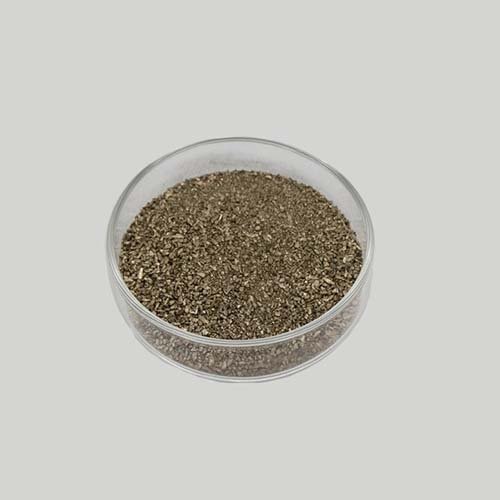
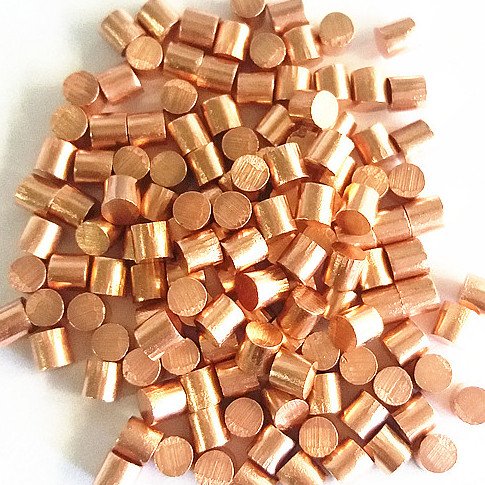
Appearance: Metallic brass-colored flakes
Density: 8.96 g/cm³
Melting Point: 1,085 °C
Boiling Point: 2,562 °C
Crystal Structure: Face-Centered Cubic (FCC)
Inner Packaging: Vacuum-sealed bags and boxed to prevent contamination and moisture.
Outer Packaging: Cartons or wooden crates selected based on size and weight.
If you need any service, please contact us