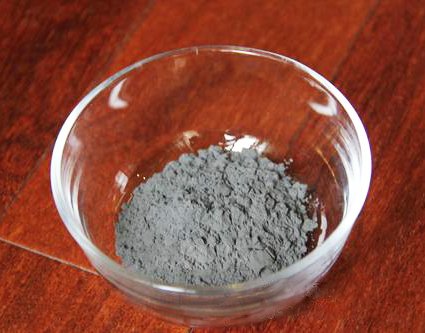
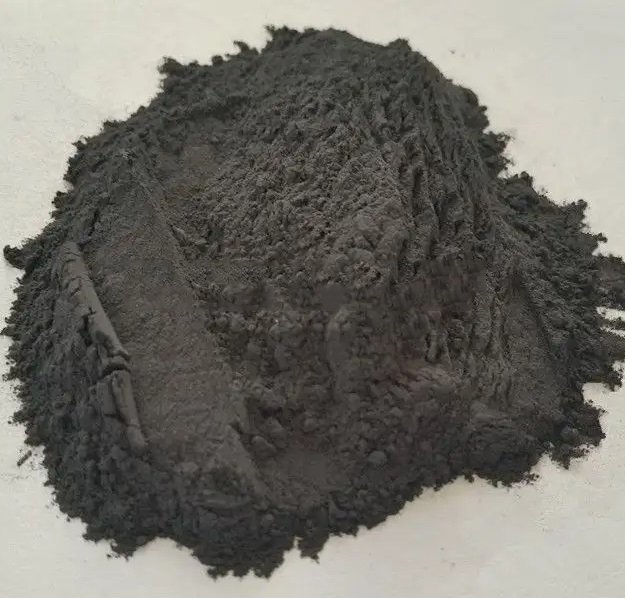
Need ZrSi₂ powder for high-temperature material development, coating research, or advanced ceramic applications? ULPMAT supplies zirconium silicide powder in 99% and 99.5% purity grades, with a standard particle size of -325 mesh. Customized specifications are also available for projects requiring specific composition, particle size, or material documentation.
Zirconium silicide, also known as zirconium disilicide, is an intermetallic compound with the chemical formula ZrSi₂. Its phase composition, chemical purity, particle size, and impurity profile are important factors when evaluating the powder for high-temperature materials, protective coating development, ceramics, and other advanced material systems.
ULPMAT offers standard and customized ZrSi₂ powder options for research, development, and industrial material preparation. Contact us with your required purity, particle size, quantity, and technical specifications to discuss a suitable grade.
| Parameter | Specification |
| Product Name | Zirconium Silicide Powder |
| Chemical Name | Zirconium Disilicide |
| Chemical Formula | ZrSi₂ |
| CAS Number | 12039-90-6 |
| EC Number | 234-911-1 |
| Molecular Weight | 147.39 g/mol |
| Product Form | Powder |
| Appearance | Gray powder |
| Available Purity | 99%, 99.5% |
| Standard Particle Size | -325 Mesh |
| Customized Grade | Available |
| Product Category | Inorganic Powder / Refractory Materials |
Purity values should be interpreted according to the stated analytical basis and the applicable product documentation. Please confirm the required specification and batch documentation before ordering.
ULPMAT provides standard ZrSi₂ powder grades and customized options to meet different material preparation and processing requirements.
| Product ID | Formula | Purity | Particle Size |
| 401400PD001 | ZrSi₂ | 99% | -325 Mesh |
| 401400PD002 | ZrSi₂ | 99.5% | -325 Mesh |
| 401400PDC01 | ZrSi₂ | Customized | Customized |
99% Zirconium Silicide Powder – 401400PD001
This grade provides a 99% purity option with a standard particle size of -325 mesh. It can be considered for material research, powder formulation, and processing routes where this purity level and particle-size specification meet the application requirements.
99.5% Zirconium Silicide Powder – 401400PD002
The 99.5% grade is intended for projects requiring a higher specified purity level. It may be suitable for applications where chemical composition and impurity control are important during material preparation and evaluation.
Customized Zirconium Silicide Powder – 401400PDC01
For projects with requirements beyond the standard grades, ULPMAT can discuss customized zirconium silicide powder specifications. Customers may provide their target purity, particle-size range, chemical composition, critical impurity limits, and other technical requirements for evaluation.
The availability of customized specifications depends on the technical requirements and production feasibility. Please contact ULPMAT to confirm the details.
When comparing zirconium silicide powders, it is important to understand how the stated purity is calculated.
For some commercial zirconium silicide grades, the reported purity is expressed as the combined zirconium and hafnium content (Zr + Hf). This value should not automatically be interpreted as the zirconium content alone or as a complete measurement of every impurity in the powder.
For applications with strict chemical requirements, buyers should confirm:
If your application requires a specific impurity limit or Zr composition, please include it in your inquiry so the required specification can be reviewed before ordering.
Zirconium disilicide is an intermetallic compound consisting of zirconium and silicon in a nominal atomic ratio of 1:2. Its material behavior should be evaluated in relation to its phase composition, chemical composition, microstructure, and processing environment.
1. Zirconium–Silicon Composition
The nominal formula ZrSi₂ represents one zirconium atom for every two silicon atoms. However, a nominal chemical formula alone does not establish the phase purity of a powder.
Zirconium can form different silicide phases, including Zr₂Si, ZrSi, and ZrSi₂. Their zirconium-to-silicon ratios differ, and they should not be treated as interchangeable materials.
When phase composition is important, X-ray diffraction (XRD) can help identify the principal crystalline phase and detectable secondary phases.
2. High-Temperature Material Behavior
ZrSi₂ has been investigated in high-temperature material systems, including protective coatings on zirconium-based alloys. Its oxidation behavior depends on temperature, atmosphere, coating microstructure, and exposure conditions.
For example, results reported for ZrSi₂-containing coating systems under air oxidation should not automatically be applied to pressurized-steam environments. The performance of a material can change with the surrounding atmosphere and test conditions.
For high-temperature applications, the material should therefore be evaluated under conditions relevant to the intended service environment.
3. Particle Size and Powder Processing
Particle size is an important consideration in powder mixing, dispersion, packing, coating preparation, and other powder-based processes.
ULPMAT offers -325 mesh as a standard particle-size specification. Customers with more specific requirements can discuss customized particle-size options.
A mesh designation and a particle-size distribution are not identical. If your process requires a defined distribution, consider specifying D10, D50, and D90 together with the required measurement method.
4. Phase Composition and Impurity Control
Secondary phases and trace impurities may influence the suitability of zirconium silicide powder for a particular process.
For applications sensitive to phase composition, customers should consider XRD verification. For chemical composition requirements, appropriate elemental and impurity analysis may be needed.
The required level of verification depends on the final material, processing route, and acceptance criteria.
Zirconium silicide powder is relevant to research and development involving high-temperature materials, protective coatings, ceramics, and zirconium–silicon compound systems. The suitability of a specific powder grade depends on its composition, phase structure, particle size, and processing conditions.
1. High-Temperature Protective Coating Development
ZrSi₂ has been investigated as a coating material for zirconium-based alloys and other high-temperature material systems.
In coating development, oxidation behavior is influenced by the phase composition of the starting material, coating thickness, microstructure, deposition or preparation method, and service atmosphere.
For this reason, engineers evaluating ZrSi₂ for protective coatings should consider not only nominal purity but also phase composition and powder characteristics.
2. Thermal Spray and Coating Materials Research
Zirconium silicide can be evaluated in selected coating and thermal spray material development projects.
For powder-based coating processes, particle-size distribution, feedstock consistency, flow behavior, and composition can affect powder feeding and coating formation. The appropriate particle-size specification should be selected according to the equipment and process requirements.
3. Refractory and High-Temperature Materials
ZrSi₂ is relevant to the development of refractory and high-temperature material systems. Its use should be assessed according to the required operating temperature, surrounding atmosphere, material combination, and expected oxidation conditions.
For material selection, phase composition and chemical impurities may be important alongside the nominal chemical formula.
4. Electronic Ceramics and Functional Materials
Zirconium silicide may be considered in research involving electronic ceramics and functional inorganic materials. The role of ZrSi₂ depends on the formulation, processing route, and desired material properties.
Customers developing such systems should specify the required composition and particle-size characteristics rather than relying only on a general powder grade.
5. Ceramic and Composite Material Development
ZrSi₂ powder can be evaluated as a component in selected ceramic and composite formulations.
During formulation development, particle size, dispersion, phase composition, and compatibility with other constituents can influence the resulting material. The appropriate powder grade should be determined according to the intended mixing, forming, sintering, or coating process.
Choosing the appropriate ZrSi₂ powder requires matching the material specification to the intended process. The following points can help engineers and material buyers define their requirements.
1. Select the Required Purity Grade
ULPMAT offers 99% and 99.5% standard purity grades.
Before comparing suppliers, confirm the analytical basis of the purity value. If the value is expressed as Zr + Hf, it should not be directly compared with a zirconium-only assay or a different purity calculation method.
2. Confirm the Particle-Size Requirement
The standard particle size listed for ULPMAT zirconium silicide powder is -325 mesh.
If your application requires a different size range, provide the target mesh specification or particle-size distribution. Where particle-size distribution is critical, D10, D50, and D90 provide more information than a single mesh designation.
It is also useful to confirm the measurement method and whether the powder was dispersed before measurement, especially when agglomeration may influence the results.
3. Verify Phase Composition
ZrSi₂ should be distinguished from other zirconium silicide phases, including ZrSi and Zr₂Si.
For phase-sensitive applications, XRD analysis can help determine whether ZrSi₂ is the principal crystalline phase and identify detectable secondary crystalline phases.
If a specific phase-purity requirement applies, communicate the acceptance criteria before ordering.
4. Define Critical Impurity Limits
Different applications may have different impurity-control requirements.
Depending on the process, buyers may need to consider hafnium, oxygen, carbon, nitrogen, iron, aluminum, and other trace elements.
Rather than requesting only a general purity value, specify the elements that are critical to your application and ask whether batch-specific analysis is available.
5. Consider Packaging and Handling
Powder packaging should be selected according to the product specification, order quantity, storage conditions, and transport requirements.
For fine inorganic powders, suitable sealed packaging and appropriate handling procedures help reduce the risk of moisture exposure and contamination. Always refer to the product-specific SDS for handling and storage instructions.
Material verification helps customers evaluate whether a zirconium silicide powder grade meets their technical requirements.
Depending on the agreed specification and available testing, the following information may be relevant:
| Verification Item | Purpose | Common Method or Document |
| Chemical Composition | Evaluates zirconium, silicon, and relevant impurity levels | ICP-OES or another suitable elemental analysis |
| Phase Composition | Identifies the principal crystalline phase and detectable secondary phases | X-ray diffraction (XRD) |
| Particle Size | Evaluates sieve classification or particle-size distribution | Sieve analysis or particle-size analysis |
| Oxygen Content | Checks oxygen where it is a critical process parameter | Suitable oxygen analysis |
| Batch Information | Supports incoming material inspection and traceability | Batch-specific COA |
The availability of individual tests and reports should be confirmed for the selected grade and order. Customers with specific testing requirements should communicate them before quotation and production.
The following product documents can be provided or added when the relevant files are available:
For specific chemical composition, phase analysis, or additional testing requirements, please contact ULPMAT.
Standard specifications may not meet every material development or production requirement. ULPMAT can discuss customized zirconium silicide powder options according to customer specifications and production feasibility.
Customization requirements may include:
For a customized inquiry, please provide the intended application, required quantity, purity, particle-size range, critical impurity limits, and any required testing or documentation.
Customized Product ID: 401400PDC01
Zirconium silicide powder should be packaged and stored according to the product-specific SDS and applicable transport requirements.
Packaging options should be confirmed according to the order quantity, material requirements, and shipping conditions.
For storage and handling:
Please consult the product-specific SDS for complete safety, handling, storage, and disposal information.
1. What is zirconium silicide powder?
Zirconium silicide powder is an inorganic intermetallic material with the chemical formula ZrSi₂. It is also known as zirconium disilicide and is evaluated for high-temperature materials, protective coating development, ceramics, and other advanced material applications.
2. What is the CAS number of ZrSi₂?
The CAS number of zirconium disilicide (ZrSi₂) is 12039-90-6.
3. What is the molecular weight of zirconium disilicide?
The molecular weight of ZrSi₂ is approximately 147.39 g/mol.
4. What purity grades are available from ULPMAT?
ULPMAT offers 99% and 99.5% standard purity grades. Customized requirements can also be discussed. Please confirm the analytical basis of the purity specification and refer to the applicable product documentation.
5. What particle size is available?
The standard particle size is -325 mesh. Customized particle-size requirements can be discussed according to the intended application and production feasibility.
6. What is the difference between ZrSi₂, ZrSi, and Zr₂Si?
These are different zirconium silicide compounds with different zirconium-to-silicon atomic ratios. ZrSi₂ has a nominal ratio of 1:2, ZrSi has a ratio of 1:1, and Zr₂Si has a ratio of 2:1. They represent different material phases and should not be treated as interchangeable.
7. Why is phase composition important for ZrSi₂ powder?
A nominal ZrSi₂ formula does not by itself confirm phase purity. Secondary phases or unreacted starting materials may be present depending on the synthesis and processing route. XRD can help identify the principal crystalline phase and detectable secondary phases.
8. Can ULPMAT provide customized zirconium silicide powder?
Yes. ULPMAT can discuss customized purity, particle size, chemical composition, impurity limits, packaging, and documentation requirements. Customized specifications are subject to technical review and production feasibility.
9. Can you provide a COA, TDS, and SDS?
TDS and SDS documents can be provided for product information and safe handling. Batch-specific COA documentation and additional analytical reports should be confirmed for the selected grade and order.
10. What information should I provide when requesting a quotation?
Please provide the required purity, particle-size specification, order quantity, intended application, critical impurity limits, phase requirements, and documentation needs. This information helps ULPMAT review the material requirements and provide a more suitable quotation.
Understanding the applications of zirconium silicide requires more than reviewing the nominal chemical formula. Phase composition, synthesis route, oxidation environment, and powder specifications can all influence material selection.
For a more detailed discussion of ZrSi₂ synthesis, high-temperature oxidation behavior, protective coating development, and powder evaluation, read our technical article:
Zirconium Silicide Applications: Synthesis, Properties, and Material Selection
This article provides additional technical background for engineers evaluating zirconium silicide materials for research and application development.
ULPMAT supplies inorganic powders, advanced materials, sputtering targets, and evaporation materials for research, development, and industrial applications.
For zirconium silicide powder inquiries, customers can discuss standard purity grades, particle-size requirements, customized specifications, and technical documentation with our team.
Contact ULPMAT to discuss your ZrSi₂ powder requirements and request a quotation.
Molecular Formula: ZrSi₂
Molecular Weight: 122.28 g/mol
Appearance: Silver-gray to light gray powder, uniform particle size
Density: Approx. 6.3 g/cm³
Melting Point: Approx. 1,540 °C
Crystal Structure: Orthorhombic
Inner Packaging: Vacuum-sealed bags and boxed to prevent contamination and moisture.
Outer Packaging: Cartons or wooden crates selected based on size and weight.
If you need any service, please contact us