| Product ID | Formula | Purity | Dimension | Inquiry |
|---|---|---|---|---|
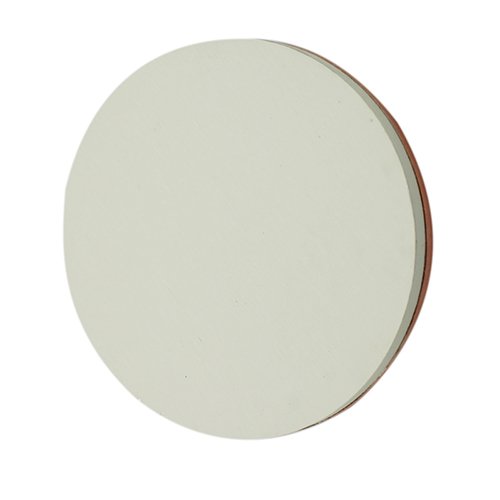
| 640800ST001 | Gd2O3 | 99.9% (REO) | Ø 25.4 mm x 3.175 mm | Inquire |
| 640800ST002 | Gd2O3 | 99.9% (REO) | Ø 50.8 mm x 3.175 mm | Inquire |
| 640800ST003 | Gd2O3 | 99.9% (REO) | Ø 76.2 mm x 3.175 mm | Inquire |
| 640800ST004 | Gd2O3 | 99.9% (REO) | Ø 76.2 mm x 6.35 mm | Inquire |
| 640800ST005 | Gd2O3 | 99.9% (REO) | Ø 101.6 mm x 6.35 mm | Inquire |
Gadolinium Oxide sputtering targets for optoelectronic and magneto-optic applications are rare earth oxide materials designed for high-end thin film deposition processes, ensuring excellent film quality and compatibility with coating processes. Their high purity, density, and thermal stability make them ideal for use in storage devices, infrared optics, and other advanced applications.
Available in various shapes and sizes, including round, rectangular, and special-shaped structures, our customized Gadolinium Oxide sputtering targets for high-performance thin film devices and Gadolinium Oxide sputtering targets optimized for advanced optoelectronic coatings can be tailored to customers’ specific equipment and application requirements. Comprehensive technical support and after-sales service ensure a worry-free experience during product selection and use.
Purity: 99.9%
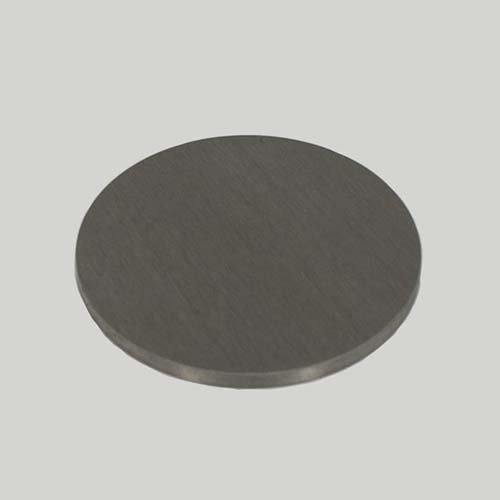
High-density ceramic target, dense and uniform, smooth surface
Excellent thermal stability and low evaporation loss
Customizable size, backplane bonding, hole position, etc.
Suitable for a variety of advanced processes such as magneto-optical storage, optical coatings, functional films, etc.
Customizable target binding service
Magneto-optical storage devices: Using its magneto-optical effect, a recording layer with excellent responsiveness is formed in devices such as MO disks and magneto-optical films.
Infrared optics and transparent ceramics: as mid-infrared window materials, they can be used in light-transmitting windows and optical components in high temperature and corrosive environments.
Film capacitors and insulating layers: provide stable insulation performance and dielectric constant in dielectrics, used in high-frequency electronic devices.
Doped films and functional coatings: introduced as additives into other oxide films to improve their refractive index, hardness or electrical properties.
1. What is a gadolinium oxide sputtering target used for?
A gadolinium oxide sputtering target is a solid source material used in physical vapor deposition (PVD) to deposit gadolinium oxide-containing thin films onto suitable substrates. Made from gadolinium oxide (Gd₂O₃), these targets can support research into functional oxide coatings, optical materials, electronic materials, and other gadolinium-containing thin-film systems. The resulting film composition and properties depend on target characteristics, sputtering conditions, substrate selection, and post-deposition processing.
2. How does a Gd₂O₃ sputtering target differ from a metallic gadolinium target?
A Gd₂O₃ sputtering target contains gadolinium chemically combined with oxygen, whereas a metallic gadolinium target consists primarily of elemental Gd. The oxide target provides an oxide-based starting composition, while a metallic target may be used with reactive oxygen during deposition to form an oxide film. These approaches can differ in process stability, oxygen control, and film formation. The appropriate choice depends on the desired film composition, the deposition system, and the process conditions.
3. Which material properties matter most when selecting a gadolinium oxide sputtering target?
Important properties include chemical purity, oxide composition, density, porosity, microstructure, target dimensions, and mechanical integrity. Purity is relevant because trace impurities may affect film composition or functional behavior, while density and microstructure can influence target durability and sputtering stability. Buyers should also confirm target thickness, cathode compatibility, backing plate requirements, and bonding specifications where applicable. A technical data sheet (TDS) and available quality documentation can help verify suitability for the intended deposition process.
4. Can Gd₂O₃ sputtering targets be used to deposit optical or functional oxide films?
Yes. Gd₂O₃ sputtering targets can be investigated for depositing gadolinium oxide-containing films for optical materials research and other functional oxide applications. However, a target’s composition alone does not establish the optical, electrical, or structural performance of the resulting film. Film properties depend on thickness, stoichiometry, crystallinity, defects, substrate characteristics, deposition conditions, and any subsequent heat treatment. Application-specific testing is necessary when defined performance requirements must be met.
5. Why might a deposited gadolinium oxide film differ from the original target?
The composition and structure of a deposited film do not necessarily reproduce every characteristic of the target. Sputtering conditions, oxygen availability, substrate temperature, deposition rate, and post-deposition annealing can influence film stoichiometry, crystallinity, and defect formation. When the film requires a particular composition or microstructure, deposition parameters should be optimized and the resulting film characterized using appropriate techniques, such as X-ray diffraction (XRD) for crystalline phases or X-ray photoelectron spectroscopy (XPS) for surface chemical states.
6. Does target density affect the performance of a Gd₂O₃ sputtering target?
Target density and microstructure can influence mechanical integrity, thermal behavior, and sputtering stability. A target with excessive porosity or structural defects may be less suitable for demanding deposition conditions. Nevertheless, density alone cannot guarantee uniform films or stable operation; purity, target geometry, mounting, cooling, and process parameters also matter. When comparing Gd₂O₃ targets, consider density alongside composition, dimensions, and compatibility with the deposition system.
7. What details should I provide when requesting a Gd₂O₃ sputtering target quotation from ULPMAT?
When requesting a quotation from ULPMAT, specify the required Gd₂O₃ purity, target dimensions, thickness, quantity, and intended application. Include the sputtering system or cathode type, backing plate and bonding requirements, and any critical density, impurity, or dimensional tolerances. If quality documentation is needed, identify the required documents in advance. These details help assess whether the requested target configuration matches the technical and operational requirements of your project.
8. Can ULPMAT provide gadolinium oxide sputtering targets in custom dimensions?
ULPMAT can review inquiries for Gd₂O₃ sputtering targets based on the requested purity, dimensions, quantity, and deposition requirements. Availability of specific geometries, backing plate configurations, or non-standard specifications must be confirmed before ordering. For a project-specific inquiry, provide a technical drawing or dimensional specification together with the required material grade and quantity so that suitable options can be evaluated.
We provide Certificate of Analysis (COA), Material Safety Data Sheet (MSDS) and other relevant reports for each batch of goods. In addition, we also support third-party testing to enhance quality assurance.
Molecular formula: Gd₂O₃
Molecular weight: 362.50 g/mol
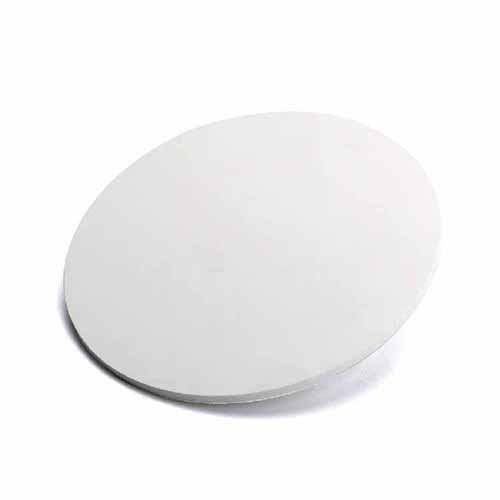
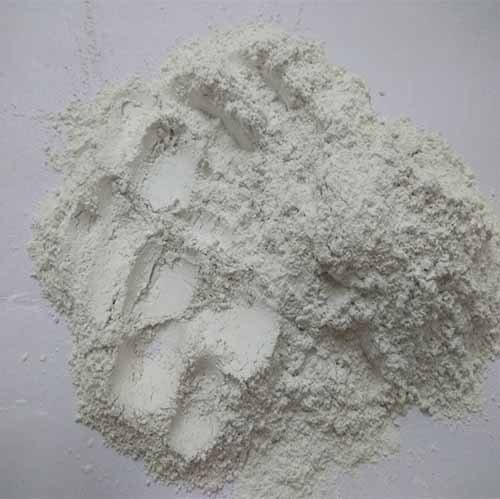
Appearance: Off-white or milky white ceramic target, with a flat and dense surface
Density: about 7.4 g/cm³ (close to theoretical density)
Melting point: about 2,420 °C
Crystal structure: cubic phase (C-type structure, space group Ia-3)
Chemical stability: stable in air, resistant to high-temperature oxidation
Signal Word:
None
Hazard Statements:
None
Inner packaging: Vacuum-sealed bag to protect against contamination and moisture.
Outer packaging: Carton or wooden box, depending on size and weight.
Fragile targets: Special protective packaging is used to ensure safe transport.
If you need any service, please contact us