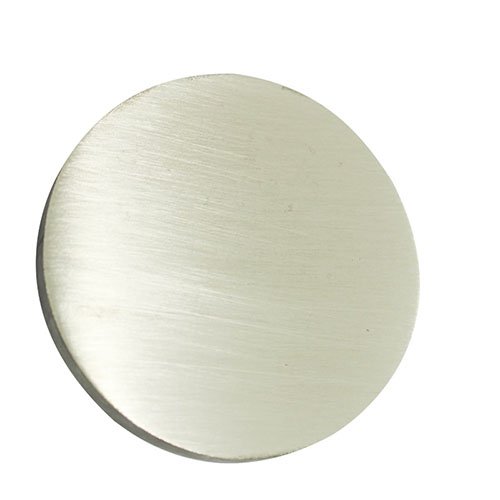
| Product ID | Formula | Purity | Dimension | Inquiry |
|---|---|---|---|---|
| 6800ST001 | Er | 99.9% (REO) | Ø 203.2 mm x 6.35 mm | Inquire |
| 6800ST002 | Er | 99.95% (REO) | Ø 50.8 mm x 3.175 mm | Inquire |
| 6800ST003 | Er | 99.95% (REO) | Ø 76.2 mm x 3.175 mm | Inquire |
| 6800ST004 | Er | 99.95% (REO) | Ø 76.2 mm x 6.35 mm | Inquire |
| 6800ST005 | Er | 99.95% (REO) | Ø 101.6 mm x 6.35 mm | Inquire |
| 6800ST006 | Er | 99.95% (REO) | Ø 203.2 mm x 6.35 mm | Inquire |
Erbium metal sputtering targets for thin film deposition are high-performance materials designed for advanced thin film deposition processes. The product has excellent density, which can ensure the uniformity and density of the deposited film, significantly improve the film quality and adhesion, and effectively reduce the impact of impurities on device performance. It is mainly used in semiconductors, displays, photovoltaics, and optical coatings.
We provide high-quality Erbium metal sputtering targets for semiconductor applications in various specifications and shapes, including round, rectangular, and customized sizes to meet the diverse needs of customers in different processes and equipment. Whether it is used for scientific research and development or large-scale production, we can provide stable and high-quality product support with our Erbium metal sputtering targets for optical coating applications.
Excellent density, achieving uniform and dense film deposition
Various sizes and shapes, supporting personalized customization
Applicable to semiconductors, displays, photovoltaics and optical coatings
Support binding services
Semiconductor industry: Excellent conductivity and process compatibility make it an ideal material for interconnection and contact layers
Display manufacturing: Widely used in the reflective layer and electrode layer of LCD and OLED panels
Photovoltaic field: As the back electrode of thin-film solar cells, it improves cell efficiency and stability
Optical coating: Coating process for high reflectivity and functional optical components
1. What is an erbium metal sputtering target used for?
An erbium metal sputtering target is a solid source of elemental erbium (Er) used to deposit thin films through physical vapor deposition (PVD). During sputtering, energetic ions bombard the target and release erbium atoms, which travel through the deposition environment and accumulate on a substrate. This process supports research into rare-earth-containing thin films, optical materials, and specialized functional coatings. The resulting film composition and properties depend on the deposition conditions and substrate system.
2. Why choose an erbium metal target instead of an erbium oxide (Er₂O₃) target?
An erbium metal target supplies elemental erbium, whereas an erbium oxide target supplies erbium and oxygen from an oxide compound. The choice depends on the intended film composition and deposition process. When depositing from an elemental metal target, oxygen may need to be introduced separately if an oxide film is desired. An Er₂O₃ target may be more appropriate when the oxide is the intended source material. Reactive sputtering conditions, oxygen partial pressure, and film stoichiometry should be considered when comparing the two options.
3. Which thin-film applications can benefit from erbium sputtering targets?
Erbium sputtering targets are relevant to research on optical coatings, photonic materials, rare-earth-containing films, and specialized electronic or functional thin films. Erbium is particularly important in optical systems because Er³⁺ ions can provide emission near 1.5 μm when incorporated into suitable host materials. However, a metallic erbium target does not automatically produce an optically active erbium-doped film; the deposited composition, oxidation state, host matrix, and processing conditions determine whether the desired optical properties are achieved.
4. How do target purity, density, and microstructure affect sputtering performance?
Target purity helps control the introduction of unwanted impurities into a deposited film. Density, porosity, grain structure, and material homogeneity can also influence sputtering stability, erosion behavior, and particle generation. These factors matter when repeatable film composition and uniformity are required. Nevertheless, higher nominal purity alone does not guarantee better film performance. Target quality should be assessed alongside the deposition parameters, substrate preparation, and the film properties required by the application.
5. What specifications should be checked before installing an erbium sputtering target?
Confirm the target’s purity, diameter or length and width, thickness, shape, and compatibility with the sputtering source. If the target requires a backing plate, bonded construction, or specific mounting features, these should also be specified. For a research system, matching the target dimensions and mounting configuration to the existing equipment is essential. Verify the supplier’s dimensional tolerances and material documentation before installation.
6. How should an erbium metal sputtering target be stored and handled?
Store the target in suitable protective packaging under the conditions specified in its Safety Data Sheet (SDS). Avoid unnecessary exposure to moisture, contamination, and incompatible substances. Use clean handling tools and appropriate protective equipment to preserve surface condition and material quality. Because machining, abrasion, or other processing can generate fine metallic particles, additional precautions may be necessary when the target is modified. Follow the applicable SDS and the laboratory’s risk assessment.
7. What details are needed to request a quotation for an erbium sputtering target from ULPMAT?
When contacting ULPMAT, provide the required purity, target dimensions, quantity, mounting or bonding requirements, and intended deposition process. If your project has strict trace-impurity limits or requires a Certificate of Analysis (CoA), include these requirements in your inquiry. Sharing the sputtering system model or target-holder specifications can also help clarify dimensional compatibility before an order is placed.
8. Can ULPMAT supply erbium metal sputtering targets in custom dimensions or configurations?
ULPMAT can review inquiries for erbium metal sputtering targets according to the required purity, dimensions, geometry, and mounting requirements. The availability of custom sizes, backing plates, bonding options, and specific purity grades should be confirmed for each order. To evaluate a suitable option, provide your target drawing or dimensional specifications, required quantity, and application details.
We provide detailed certificates of analysis (COA), material safety data sheets (MSDS) and related test reports for each batch of Erbium metal sputtering targets, support third-party authoritative testing, and ensure that product quality and performance reach world-class levels.
Molecular formula: Er
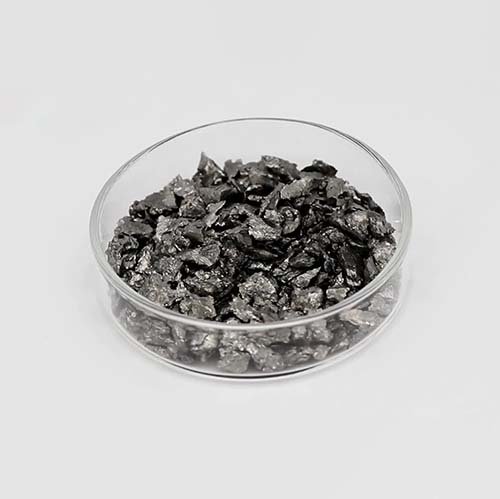
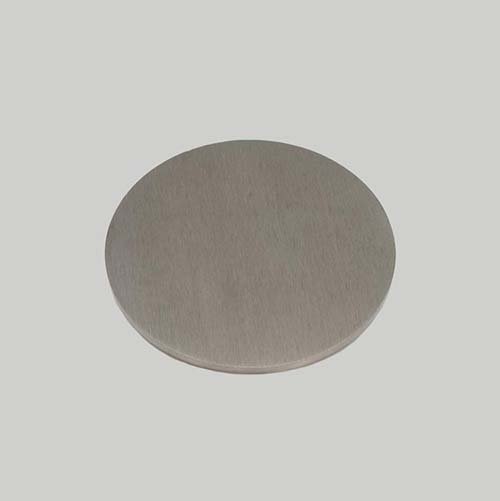
Appearance: Silvery white dense metal target with smooth and uniform surface
Density: about 9.07 g/cm³
Melting point: about 1,529 °C
Electrical conductivity: excellent metal conductivity
Crystal structure: hexagonal close-packed structure (HCP)
Chemical stability: stable in dry air and inert atmosphere, avoid high humidity environment
Corrosion resistance: good acid and alkali resistance, suitable for high temperature vacuum and extreme environment
Signal Word:
None
Hazard Statements:
None
Inner packaging: Vacuum-sealed bag to protect against contamination and moisture.
Outer packaging: Carton or wooden box, depending on size and weight.
Fragile targets: Special protective packaging is used to ensure safe transport.
If you need any service, please contact us