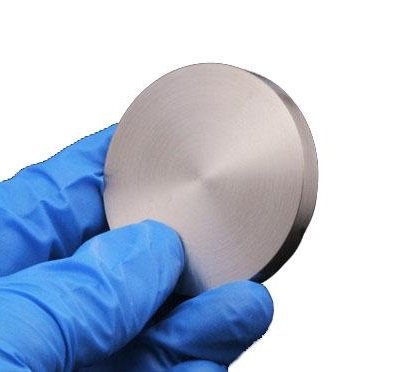
Copper Metal Pellets Overview
Copper Metal Pellets are regularly shaped, compositionally stable copper granules primarily used in smelting, alloy preparation, and materials research and development.
We can provide customized solutions based on particle size range, purity, and packaging requirements. Please contact us to confirm specific specifications and delivery time.
Product Highlights
Stable Purity
Uniform Particle Shape
Good Flowability
Easy Metering and Feeding
Suitable for Melting Processes
Customizable Packaging
Applications of Copper Metal Pellets
Metal Smelting and Alloy Preparation: Used as a basic raw material, facilitating precise control of proportions and improving smelting efficiency and compositional consistency.
Materials Research and Laboratory Studies: Suitable for performance testing, new material development, and process verification in research institutions.
Powder Metallurgy and Precursor Preparation: Can be used as an intermediate raw material in subsequent processing or conversion processes.
Industrial Pilot Production and Small-Batch Production: Used in the pilot production stage to evaluate process stability and material compatibility.
1. What are copper metal pellets used for?
Copper metal pellets are small, solid pieces of copper used as feedstock in processes that require controlled material charging or deposition. Depending on their purity, dimensions, and form, they can be used in thermal evaporation, physical vapor deposition (PVD), laboratory research, and other metallurgical or materials-processing applications. For thin-film deposition, the pellets must be compatible with the evaporation source, crucible, and required film specifications.
2. Are copper metal pellets suitable for thermal evaporation and PVD?
Yes. Copper metal pellets can serve as evaporation feedstock for thermal evaporation and compatible PVD processes. During deposition, copper is heated until it evaporates, and the vapor condenses on a substrate to form a copper film. Successful deposition depends on copper purity, pellet size, source design, heating conditions, vacuum quality, and substrate preparation. Buyers should confirm that the pellet dimensions and material specifications are compatible with their evaporation equipment.
3. How does copper purity affect thin-film deposition?
Copper purity can influence film composition, electrical properties, optical characteristics, and process consistency. Trace impurities may become relevant when producing conductive films, preparing research samples, or manufacturing devices with strict material specifications. However, higher purity alone does not guarantee better film performance. Deposition conditions, contamination from the crucible or chamber, substrate preparation, and film thickness also affect the final result. The appropriate purity grade should therefore be selected according to the application and acceptance criteria.
4. What is the difference between copper metal pellets, copper powder, and copper granules?
Copper pellets are discrete pieces designed for convenient handling and material charging, while copper powder consists of finer particles and copper granules generally refer to larger or irregular granular forms. The exact terminology can vary among suppliers, so product names alone do not guarantee a particular size or shape. For evaporation applications, pellet dimensions and consistency can affect loading, packing, and melting behavior. Buyers should check the specified particle or piece-size range rather than relying solely on the product name.
5. What size copper metal pellets should I choose for thermal evaporation?
The appropriate pellet size depends on the evaporation source, crucible geometry, charging method, and required deposition process. Smaller pieces may be easier to distribute in some crucibles, while larger pieces may be more convenient to handle and load. The selected size should fit the equipment without compromising material charging or process stability. Before ordering, confirm the dimensions recommended by the equipment manufacturer and whether the supplier can meet the required size range.
6. How should copper metal pellets be stored and handled?
Copper metal pellets should be stored in clean, dry, sealed packaging to minimize moisture, dust, and surface contamination. For high-purity deposition applications, use clean handling tools and avoid direct contact with the material whenever practical. Surface oxidation and contamination can affect process consistency, especially when stringent film specifications apply. If the pellets are intended for vacuum deposition, follow the laboratory or production procedure for material inspection, storage, and pre-use preparation.
7. What specifications should I confirm before purchasing copper metal pellets?
Before purchasing, confirm the copper purity, pellet dimensions or size range, chemical composition requirements, quantity, packaging, and intended application. For thin-film deposition, it is also useful to specify the evaporation method, equipment requirements, and any limits on trace impurities. Where necessary, request an applicable certificate of analysis (CoA) or material test documentation to verify the agreed specifications. A clear specification helps reduce the risk of receiving material unsuitable for the intended process.
8. How can I order copper metal pellets from ULPMAT?
When requesting copper metal pellets from ULPMAT, specify the required copper purity, pellet size, quantity, intended application, and any special packaging or documentation requirements. For thermal evaporation or PVD, include relevant equipment or process requirements so the material specification can be reviewed against the intended use. ULPMAT can assess the request against its available product specifications and confirm the applicable options before an order is placed.
Reports
Each batch is supplied with:
Certificate of Analysis (COA)
Technical Data Sheet (TDS)
Material Safety Data Sheet (MSDS)
Third-party testing reports available upon request
Why Choose Us?
We focus on raw material control and production consistency, and can reliably provide copper granules suitable for various applications.