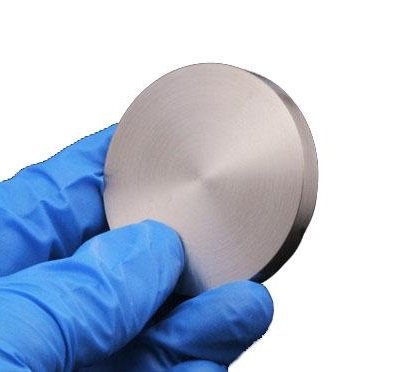
Copper Metal Backing Plate Overview
Copper metal backing plates primarily serve as supports and heat-conducting components for sputtering targets, improving target heat dissipation efficiency and ensuring the stability of the coating process.
We can process copper backing plates of different sizes and structures according to drawings or equipment requirements. Please feel free to contact us to confirm specifications and delivery time.
Product Highlights
Excellent thermal conductivity
Stable purity and density
Strict flatness control
Good dimensional consistency
Compatible with various target types
Applications of Copper Metal Backing Plates
Magnetron sputtering target assembly: As a key component between the target and the cooling system, it helps to quickly conduct heat, reducing the risk of heat concentration on the target surface.
Semiconductor and display coating equipment: Maintains structural stability under high-power conditions, contributing to improved equipment reliability.
Functional thin film industrial production: Suitable for continuous production lines, reducing process fluctuations caused by thermal deformation.
1. What is a copper backing plate used for in sputtering?
A copper backing plate supports a sputtering target, provides a mounting interface, and helps transfer heat from the target toward the cathode cooling system. It is commonly used in sputtering target assemblies where mechanical support, thermal management, and dimensional compatibility are important. Its effectiveness depends on the target material, bonding method, plate design, and cooling configuration.
2. Why is copper commonly used for sputtering target backing plates?
Copper is widely used because of its high thermal conductivity, electrical conductivity, and machinability. These properties make it suitable for heat transfer, electrical continuity where required, and precision machining of mounting features. The appropriate copper grade depends on the target assembly, operating conditions, mechanical requirements, and bonding process.
3. Which copper grade is suitable for a sputtering target backing plate?
The suitable copper grade depends on the required thermal conductivity, mechanical properties, material condition, and manufacturing tolerances. Oxygen-free high-conductivity copper (OFHC copper) is a common option when high thermal conductivity is a priority. Buyers should confirm the required grade, material specifications, and documentation before ordering.
4. Can a copper backing plate be used with ceramic sputtering targets?
Yes. Copper backing plates can be used with ceramic sputtering targets when the target material, bonding layer, and backing plate are compatible with the operating conditions. Because ceramic targets can be brittle and may have different thermal expansion characteristics from copper, the assembly design should account for thermal stress, bonding quality, and dimensional stability.
5. How does a copper backing plate affect sputtering target cooling?
A copper backing plate helps transfer heat away from a sputtering target, but cooling performance depends on the entire assembly. The bonding layer, interface contact, plate geometry, cathode design, and coolant conditions can all affect heat transfer. Proper material selection and bonding quality help reduce thermal resistance and localized overheating.
6. Can copper backing plates be reused after a sputtering target is consumed?
Copper backing plates may be reused if their dimensions, flatness, mounting features, and bonding surfaces remain within the required specifications. Before reuse, the plate should be inspected for deformation, damage, excessive material loss, and residual bonding material. Resurfacing may be possible, provided the remaining thickness and dimensional tolerances remain acceptable.
7. What dimensions and specifications are required when ordering a copper backing plate?
Important specifications include copper grade, overall dimensions, thickness, hole positions, mounting features, flatness, surface finish, and dimensional tolerances. For sputtering applications, buyers should also provide the target dimensions, cathode interface requirements, and bonding specifications where applicable. A technical drawing is the most effective way to communicate custom requirements accurately.
8. Can ULPMAT supply custom copper backing plates?
ULPMAT can review copper backing plate requirements based on the requested material grade, dimensions, geometry, and applicable tolerances, subject to manufacturing feasibility and confirmation of specifications. To request a quotation, buyers should provide a technical drawing or dimensional details, required quantity, surface requirements, and intended application. Bonding or cathode-interface requirements should also be included when relevant.
Reports
Each batch is supplied with:
Certificate of Analysis (COA)
Technical Data Sheet (TDS)
Material Safety Data Sheet (MSDS)
Third-party testing reports available upon request
Why Choose Us?
We have mature experience in metal processing and quality control, and can consistently provide stable, reliable, and highly adaptable copper backplate products.