Erbium metal rod Overview
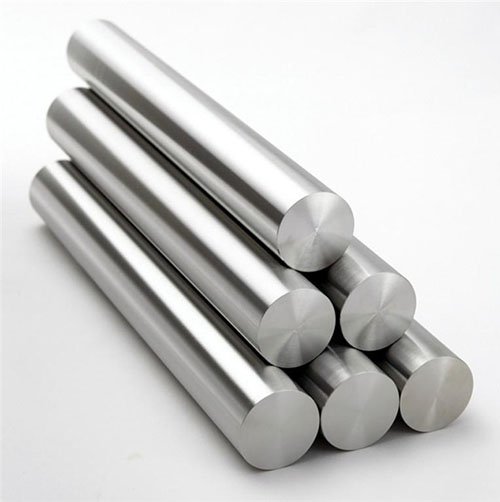
Erbium metal rods for high-precision industrial applications are high-quality materials designed for high-precision industrial and scientific research applications. With a purity of more than 99.9% and uniform density, they ensure stable mechanical properties and excellent processing performance of the material. They are mainly used to manufacture high-performance magnetic materials, functional alloys, and high-purity metal raw materials in scientific research experiments.
We provide customized Erbium metal rods for scientific research in various specifications and sizes, including round rods and special-shaped rods, which can be tailored according to customer needs. In addition, we offer comprehensive technical support and after-sales service to ensure worry-free use of Erbium metal rods for industrial and research applications.
Product highlights of Erbium metal rod
Purity up to 99.9%
Uniform density, stable mechanical properties
Various sizes, customizable shape and length
Suitable for magnetic material manufacturing, alloy preparation, high-temperature equipment and scientific research experiments
Application of Erbium metal rod
Magnetic materials: Due to their unique magnetic properties, they are widely used in high-performance magnets and magnetic alloys.
Alloy preparation: As an important alloying element, they are used to manufacture functional alloy materials.
High-temperature equipment: Good thermal stability makes it suitable for use in high-temperature environments.
Scientific research experiments: High purity ensures the accuracy and stability of experimental data.
FAQs
1. What is erbium metal rod, and what are its key characteristics?
Erbium metal rod is a solid, rod-shaped form of erbium (Er), a rare earth metal with atomic number 68 and CAS No. 7440-52-0. It has a silvery appearance and is used as a metallic feedstock in materials research, alloy preparation, and selected advanced-materials processes. Its suitability depends on the required purity, dimensions, composition, and processing conditions.
2. Where is erbium metal rod used in materials science and industrial research?
Erbium metal rod can be used in rare earth metallurgy, specialty alloy development, laboratory research, and the preparation of erbium-containing materials. Erbium is also important in optical technologies, including erbium-doped fiber amplifiers and laser materials. However, these optical applications commonly use erbium ions incorporated into glasses, crystals, or other host materials rather than an unprocessed metal rod directly.
3. How does erbium rod compare with erbium granules, foil, and sputtering targets?
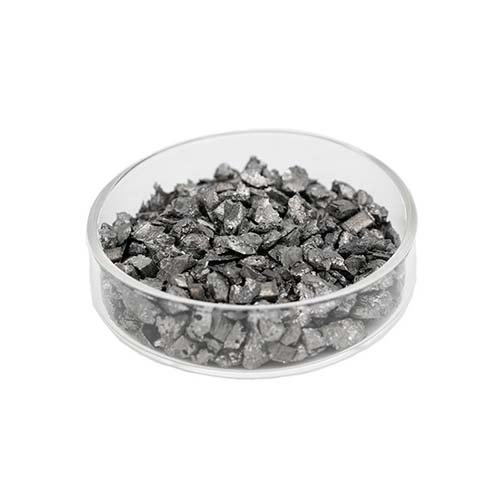
The main difference is physical form and its compatibility with the intended process. Erbium rods provide a solid, elongated feedstock; granules are discrete pieces that may be easier to portion for certain melting operations; foil is suitable when a thin, flat metal form is required; and sputtering targets are designed for physical vapor deposition systems. The best form depends on equipment compatibility, material consumption, and the desired processing method.
4. Which purity grade and dimensions are important when selecting an erbium metal rod?
Purity, rod diameter, length, and impurity limits are the main parameters to evaluate. Higher-purity material may be necessary for experiments or production processes that are sensitive to trace contamination, while dimensions should match the available equipment and material-loading requirements. Buyers should confirm the actual specifications and analytical documentation rather than assuming that all erbium rods have the same purity or dimensional tolerances.
5. Can erbium metal rod be used for alloy development?
Yes. Erbium metal rod can serve as a source of elemental erbium in alloy preparation and metallurgical research. The required amount depends on the target alloy composition, the mass of the batch, and any processing losses. Because erbium can oxidize and react under certain conditions, processing atmosphere, temperature, and compatibility with other alloying elements should be evaluated before use.
6. What precautions are needed when storing and handling erbium metal rod?
Store erbium metal rod in suitable, closed packaging under the conditions specified in its Safety Data Sheet (SDS). Protect the material from moisture, contamination, and incompatible substances. Cutting, grinding, or machining can generate fine particles with hazards that differ from those of the intact rod. Follow the applicable SDS and workplace risk assessment for handling, personal protective equipment, and fire prevention.
7. What should I include in an inquiry for erbium metal rod from ULPMAT?
When requesting a quotation from ULPMAT, provide the required purity, rod diameter, length, quantity, and intended application. If your project requires specific impurity limits, a Certificate of Analysis (CoA), or other technical documentation, include those requirements in the inquiry. This information helps clarify whether the available material specifications meet your project needs.
8. Does ULPMAT offer erbium metal rods in customized sizes or purity grades?
ULPMAT can review inquiries for erbium metal rods according to the required purity, dimensions, quantity, and application. Availability of customized sizes or purity grades must be confirmed for the specific order. For a technical evaluation, provide your target specifications and required quantity so the applicable supply options and documentation can be reviewed.
Reports
Each batch of products comes with a detailed Certificate of Analysis (COA), Material Safety Data Sheet (MSDS) and other relevant test reports. At the same time, it supports third-party authoritative testing to ensure product quality.