| Product ID | Formula | Purity | Dimension | Inquiry |
|---|---|---|---|---|
| 30500800ST001 | ZnSnO3 | 99.99% | Ø 25.4 mm x 3.175 mm | Inquire |
| 30500800ST002 | ZnSnO3 | 99.99% | Ø 50.8 mm x 3.175 mm | Inquire |
| 30500800ST003 | ZnSnO3 | 99.99% | Ø 76.2 mm x 6.35 mm | Inquire |
| 30500800ST004 | ZnSnO3 | 99.99% | Ø 101.6 mm x 3.175 mm | Inquire |
| 30500800ST005 | ZnSnO3 | 99.99% | Ø 152.4 mm x 3.175 mm | Inquire |
Zinc Stannate sputtering targets are composite oxide ceramic targets fabricated using high-purity ZnSnO₃ powder through advanced ceramic sintering processes. This material integrates the superior properties of zinc oxide and tin oxide, exhibiting excellent semiconductor and functional characteristics. It serves as a key source material for depositing high-quality ZnSnO₃ functional films in physical vapor deposition (PVD) processes, finding extensive applications in advanced sensing, new energy, and optoelectronic fields.
We offer high-quality ZnSnO3 sputtering targets in multiple purities, dimensions, and with optional bonding services. Contact us for technical support.
High-purity composite oxide
Superior semiconductor and sensing properties
High density, low porosity
Precise stoichiometric ratio
Professional bonding services available
High-performance gas sensors: Deposits highly sensitive, selective gas-sensitive films for detecting volatile organic compounds like formaldehyde and ethanol.
Transparent Conductive Films: Deposited as transparent conductive oxide films for transparent electrodes, touchscreens, and next-generation display panels through doping and other processes.
Optoelectronic Devices & Catalysis: Used to fabricate functional layers in photodetectors, photocatalytic films, and novel solar cells.
Advanced Electronic Ceramics: Serves as a source material for functional films in research on novel piezoelectric, dielectric, and ferroelectric thin-film devices.
Q1: What are the main advantages of ZnSnO3 target material?
A1: Its core advantage lies in versatility, enabling deposition of composite oxide films with excellent gas sensing properties, moderate transparency, and catalytic activity.
Q2: What purity requirements apply to target materials?
A2: Typically, purity must be ≥99.9%. For high-performance sensor films, 99.99% (4N) or higher purity is recommended to ensure performance and consistency.
Q3: How should the appropriate bonding method be selected?
A3: This depends on sputtering power and heat dissipation requirements. Conductive adhesive bonding is suitable for conventional power levels. For high power or long-term operation, metal welding (e.g., brazing) is recommended to ensure adequate heat dissipation and stability.
Q4: How should targets be maintained and stored?
A4: Store in sealed, moisture-proof containers within a dry, clean environment. Handle with care due to ceramic composition to prevent breakage from impact.
Each batch is supplied with:
Certificate of Analysis (COA)
Technical Data Sheet (TDS)
Material Safety Data Sheet (MSDS)
Third-party testing reports available upon request
We specialize in the customized development and production of composite oxide functional targets. Our professional technical solutions and reliable quality meet your needs in the R&D and manufacturing of novel thin-film devices.
Molecular Formula: ZnSnO₃
Molecular Weight: 231.47 g/mol
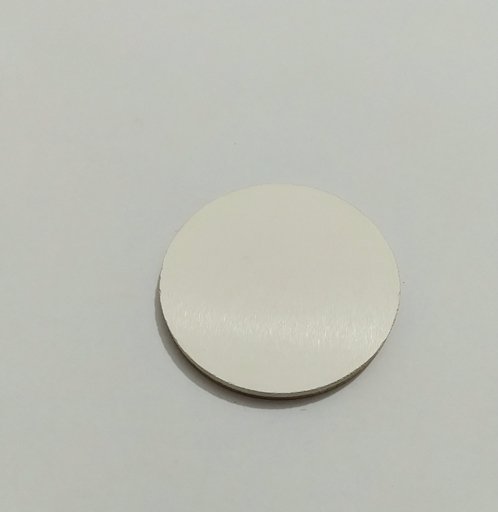
Appearance: White or off-white dense ceramic target with a smooth and uniform surface
Crystal Structure: Cubic Spinel (Fd3̅m)
Inner Packaging: Vacuum-sealed bags and boxed to prevent contamination and moisture.
Outer Packaging: Cartons or wooden crates selected based on size and weight.
If you need any service, please contact us