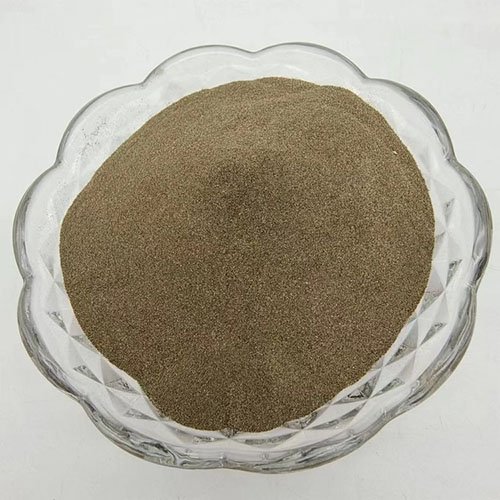
Iron Sulfide Powder Overview
Iron sulfide powder, also known as pyrite powder, is a key material attracting significant attention in the fields of new energy and environmental protection. It possesses semiconductor properties, high light absorption, and unique electrochemical performance, making it a crucial foundational material for driving the development of next-generation energy storage, conversion, and environmental governance technologies.
For customized products or to obtain detailed technical parameters and samples, please contact us immediately.
Product Highlights
High theoretical capacity electrode material
High light absorption characteristics of natural mineral
Chemically stable and highly safe
Multifunctional applications in photoelectrocatalysis
Environmentally compatible and sustainable
Applications of Iron Sulfide Powder
Energy Storage and Batteries: As a positive or negative electrode material for lithium-ion batteries and thermal batteries, it exhibits high theoretical specific capacity, helping to improve battery energy density and reduce the cost of large-scale energy storage.
Photovoltaics and Solar Energy Conversion: Due to its excellent photoelectric properties, it can be used to prepare the light-absorbing layer of quantum dot-sensitized solar cells and dye-sensitized solar cells, improving the efficiency of solar energy utilization.
Environmental Governance and Catalysis: It excels in waste gas desulfurization and heavy metal wastewater treatment, effectively adsorbing and removing pollutants. It is also a highly efficient catalyst for chemical hydrogenation and desulfurization reactions.
Cutting-Edge Scientific Research and Optoelectronics: As a precursor to novel semiconductor materials, it is widely used in the research and development of photodetectors, photocapacitors, photocatalysis, and nanocomposite materials.
Q1: What are the main uses of iron sulfide?
A1: Its main uses are concentrated in the new energy field, especially as a key electrode material for high-performance lithium batteries and thermal batteries. It also has important applications in solar cells and environmental catalysis.
Q2: What are its band gap and optical properties?
A2: Iron sulfide has a direct band gap of approximately 1.3 electron volts and a very high optical absorption coefficient. A thin film of only about 40 nanometers thick can absorb 90% of the incident visible light, making it highly advantageous in high-efficiency thin-film solar devices.
Q3: Is iron sulfide stable? How should it be stored?
A3: This material should be stored in a sealed, dry, and cool environment, avoiding prolonged exposure to air to prevent moisture absorption or oxidation. It should also be kept away from oxidants.
Q4: Can it be used to treat industrial wastewater?
A4: Yes. Iron disulfide has excellent adsorption and reduction capabilities for heavy metal ions (such as lead, cadmium, mercury, etc.) in wastewater, making it an economical and effective option for the deep treatment of wastewater from industries such as electroplating and mining.
Reports
Each batch is supplied with:
Certificate of Analysis (COA)
Technical Data Sheet (TDS)
Material Safety Data Sheet (MSDS)
Third-party testing reports available upon request
Why Choose Us?
We focus on providing high-quality iron disulfide powder. Our products undergo strict production process control to ensure high purity (e.g., electronic grade, Fe+S content ≥98%) and batch stability. From laboratory research and development to large-scale production, we provide flexible technical support and a reliable supply chain, committed to becoming your trusted partner in the application of new materials.