Germanium Metal Powder Overview
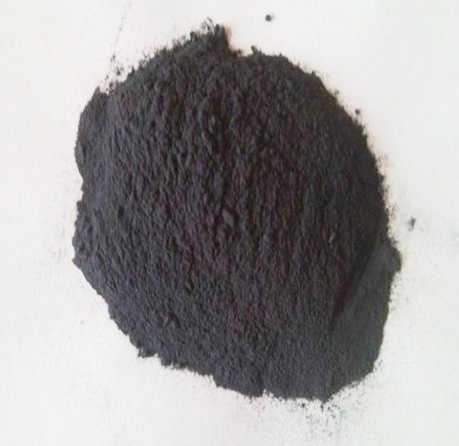
Germanium metal powder is a high-purity quasi-metallic element material with the chemical symbol Ge, appearing silver-gray or bluish-gray. It possesses unique semiconductor properties, exhibits high transparency to infrared light, and features stable chemical characteristics, earning it recognition as a “strategic key material.” As a rare-dispersed metal, germanium powder serves as an indispensable high-end raw material for preparing advanced functional materials and devices due to its high specific surface area and reactivity.
We offer germanium metal powder in various grades and particle sizes with flexible packaging options. For customized solutions, please contact our sales and technical support team.
Product Highlights
Ultra-high purity options
Controlled particle size and morphology
Superior semiconductor and infrared properties
High chemical purity with minimal impurities
Professional oxidation-resistant sealed packaging
Applications of Germanium Metal Powder
Infrared Optics & Detection: Key material for manufacturing infrared thermal imaging lenses, windows, and high-sensitivity infrared detectors.
Semiconductors & Electronic Devices: Used as substrate material or additive in high-frequency transistors, sensors, and specialty semiconductor devices.
Lithium-Ion Battery Anodes: High-capacity anode material for developing next-generation high-performance lithium-ion batteries and microbatteries.
Fiber Optic Communications: Used as a fiber dopant and in manufacturing optical amplifiers to enhance long-distance optical signal quality.
Q1: What do “4N” and “6N” in germanium powder denote? How should I choose?
A1: “N” represents the number of “9”s in purity. 4N indicates 99.99%, while 6N denotes 99.9999%. 5N (99.999%) is commonly used in infrared optics and catalysis; higher purity is required for semiconductor devices or high-end detectors.
Q2: What are the main differences between germanium powder and silicon powder?
A2: Germanium powder offers higher electron mobility and transparency to infrared light, making it ideal for high-end infrared and detection applications. Silicon powder is lower in cost with more mature processing techniques, serving as the mainstream material for large-scale integrated circuits.
Q3: What are the primary application areas for germanium powder?
A3: The three core applications are: infrared optical systems (e.g., thermal imagers), fiber optic communications (as a dopant), and as substrates for high-efficiency solar cells.
Q4: Why is germanium powder relatively expensive?
A4: Three reasons: 1. Difficult extraction—germanium is a “scattered metal” primarily recovered in trace amounts from zinc ores or coal byproducts; 2. Purification challenges: Achieving semiconductor-grade purity requires ultra-high purity standards; 3. Strategic importance: It is a critical material.
Report
Each batch is supplied with:
Certificate of Analysis (COA)
Technical Data Sheet (TDS)
Material Safety Data Sheet (MSDS)
Third-party testing reports available upon request
Why choose us?
With our deep expertise in strategic key materials, we provide high-purity germanium powder with precise specifications and reliable performance. We are committed to being your trusted partner throughout the entire process—from R&D to mass production.