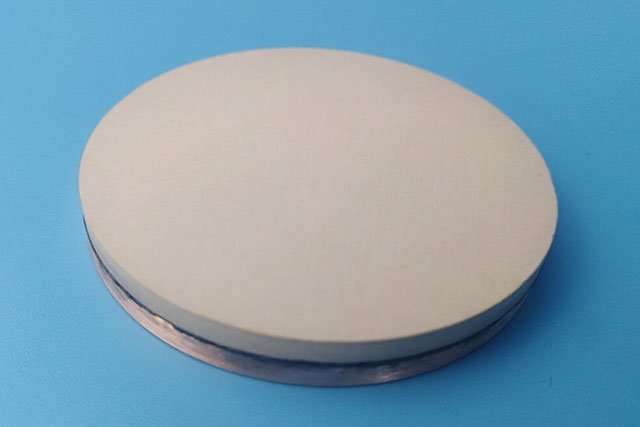
Calcium Phosphate Sputtering Targets Overview
Calcium phosphate sputtering targets are high-purity ceramic materials used in physical vapor deposition (PVD) processes. These targets, sputtered under vacuum, form a uniform and dense thin-film coating on the substrate surface. This coating technology is widely used in biomedical implant surface modification, specialty optical coatings, and functional material development.
If you have specific requirements regarding target purity, size, or bonding methods, please feel free to contact us for professional technical solutions and sample support.
Product Highlights
Ultra-high purity
High density and excellent structural integrity
Excellent coating uniformity
Customizable size and bonding methods
Applications of Calcium Phosphate Sputtering Targets
Biomedical Coatings: Used for sputtering and depositing hydroxyapatite (HA)-like coatings on the surfaces of orthopedic or dental implants such as those made of titanium alloys. This significantly enhances the biocompatibility and osseointegration of the implant with human bone, promoting healing.
Functional Thin Film Preparation: Serving as a calcium-phosphorus source, it is used in scientific research and industry to prepare calcium-phosphorus compound thin films with special electrical, optical, or catalytic properties, serving new material development and basic research.
Surface Protection and Modification: Provides a chemically stable and corrosion-resistant calcium phosphate protective film on the surface of specific metal or ceramic devices to extend their service life in harsh environments.
Q1: How does the purity of the sputtering target affect the final thin film?
A1: Purity directly affects the composition, structure, and properties of the thin film. High-purity targets ensure extremely low impurity content in the thin film, thereby obtaining the expected bioactivity, optical properties, or electrical characteristics, and ensuring the reproducibility of experimental or production results.
Q2: What specifications and bonding methods of targets are available?
A2: We offer circular and square targets of various diameters and thicknesses, and can provide brazing, conductive adhesive bonding, or bonding services with different backing plates (such as copper and molybdenum) according to customer equipment requirements.
Q3: What are the key process parameters to pay attention to when using calcium phosphate targets for sputtering?
A3: Key process parameters include sputtering power, working gas pressure (usually argon), substrate temperature, and target-substrate distance. Optimizing these parameters is crucial for controlling the crystallinity, composition, deposition rate, and adhesion of the film.
Q4: How to evaluate the quality of sputtered films?
A4: Typically, morphology and thickness are observed using scanning electron microscopy (SEM), crystal structure is analyzed using X-ray diffraction (XRD), elemental composition and chemical states are determined using X-ray photoelectron spectroscopy (XPS) or energy dispersive spectroscopy (EDS), and targeted tests such as adhesion, abrasion resistance, or in vitro bioactivity are performed for comprehensive evaluation.
Report
Each batch is supplied with:
Certificate of Analysis (COA)
Technical Data Sheet (TDS)
Material Safety Data Sheet (MSDS)
Size Inspection Report
Third-party testing reports available upon request
Why Choose Us?
We have deep expertise in the field of specialty ceramic materials, focusing on the research and development and production of high-performance sputtering targets. With a profound understanding of PVD processes, we not only provide high-quality calcium phosphate targets that meet stringent standards, but also offer comprehensive technical support throughout the thin film development process, from material selection to process parameter optimization.