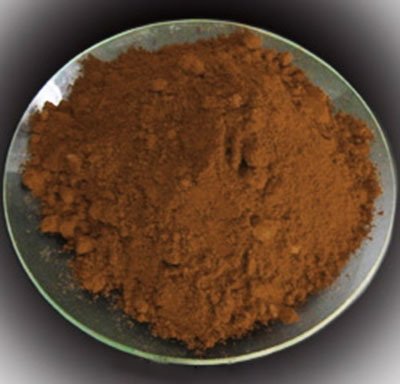
Calcium Copper Titanate Powder Overview
Calcium copper titanate powder is a composite oxide ceramic material featuring a unique crystal structure, renowned for its exceptionally high dielectric constant and broad frequency stability. Primarily utilized in high-end electronic components, it serves as a critical base material for manufacturing high-capacity multilayer ceramic capacitors, varistors, and novel dielectric energy storage devices.
We specialize in producing and supplying high-purity, single-phase calcium copper titanate powder with superior monophasic properties. We support customized particle size and sintering activity requirements. For samples or to discuss material solutions, please contact us anytime.
Product Highlights
Ultra-high and stable dielectric constant
Superior monophasic properties and high purity
Precise, controllable submicron particle size
Excellent sintering activity and batch consistency
Applications of Calcium Copper Titanate Powder
Next-generation multilayer ceramic capacitors (MLCCs): Used to manufacture ultra-high-capacitance, compact MLCCs that meet the stringent performance demands of high-frequency, miniaturized electronic devices.
High-performance varistors: As the core functional phase, it enables the fabrication of varistors with outstanding nonlinear voltage-current characteristics and high energy absorption capacity for circuit overvoltage protection.
Dielectric Energy Storage Materials: With its high dielectric constant and moderate breakdown field strength, it is a key candidate material for developing high-energy-density, fast-charging/discharging dielectric energy storage capacitors.
Functional Coatings and Composites: Serves as a functional filler for preparing polymer-based or ceramic-based composites with specialized dielectric, electromagnetic shielding, or absorptive properties.
Q1: What is the specific dielectric constant of calcium copper titanate, and over what frequency range is it stable?
A1: Its dielectric constant typically reaches values in the 10,000 range or higher, and this high value remains relatively stable across a broad frequency spectrum from low frequencies to MHz. This represents a key advantage over many traditional ferroelectric materials.
Q2: Are there specific process requirements when sintering ceramics using this powder?
A2: To achieve dense ceramics with excellent electrical properties, sintering is typically performed in air at appropriate temperatures (e.g., 1000-1100°C). Precise control of heating and cooling rates may be necessary to prevent cracking or phase decomposition.
Q3: What are its core advantages compared to traditional barium titanate-based dielectric materials?
A3: Compared to barium titanate, its core advantages lie in an extremely high dielectric constant that remains nearly constant across a wide temperature range, coupled with the absence of significant ferroelectricity. Dielectric loss can be controlled at low levels through optimization.
Q4: How do powder particle size and morphology affect the performance of the final ceramic device?
A4: Powder particle size and morphology directly influence sintering densification behavior, grain growth, and the resulting microstructure. Fine, uniform spherical or near-spherical particles are more conducive to achieving high-density, fine-grained ceramics, thereby enhancing dielectric strength and reliability.
Report
Each batch is supplied with:
Certificate of Analysis (COA)
Technical Data Sheet (TDS)
Material Safety Data Sheet (MSDS)
Third-party testing reports available upon request
Why Choose Us?
We specialize in the R&D and preparation of advanced electronic ceramic powders, possessing deep insights into the synthesis mechanisms and performance regulation of high-performance materials like calcium copper titanate. We not only provide powders meeting stringent chemical composition and physical specifications but also prioritize their process compatibility as the core material for electronic components.