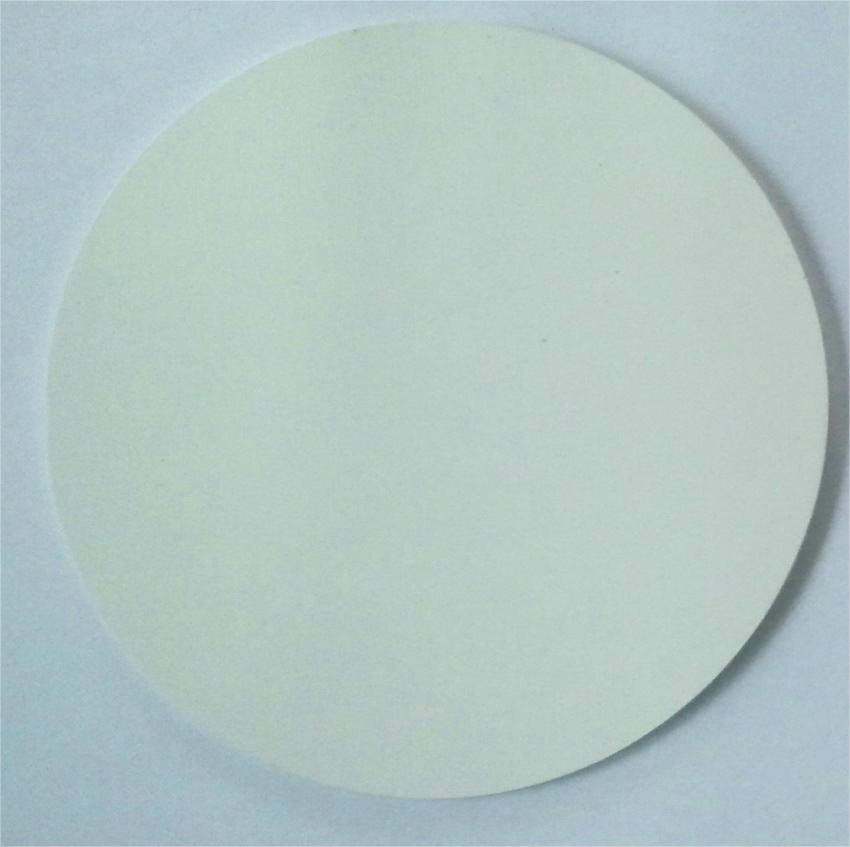
Boron Oxide-doped Zinc Oxide Sputtering Targets Overview
Boron Oxide-doped Zinc Oxide Sputtering Targets is a multifunctional ceramic target formed by combining wide-bandgap semiconductor zinc oxide (ZnO) with glass-forming boron oxide (B₂O₃) in a specific ratio. Through this composite structure, the material aims to combine the excellent piezoelectric and optoelectronic properties of ZnO with the low melting point, high thermal stability, and fluxing characteristics of B₂O₃. It can be used to deposit composite oxide films with special optoelectronic properties, high density, and excellent interface characteristics. It is widely used in electronic packaging, transparent electronics, and special functional coatings.
We can customize composite ceramic sputtering targets with varying ZnO:B₂O₃ ratios (by weight or molar) and high purity (≥99.9%) to meet your process requirements, offering standard sizes or custom solutions. Contact us.
Product Highlights
Flexible customization of composition ratios
High purity and high density
Combines the superior properties of both oxides
Excellent potential for film uniformity
Professional bonding and technical services
Applications of Boron Oxide-doped Zinc Oxide Sputtering Targets
Electronic Packaging & Insulation: Deposits highly insulating, dense encapsulation passivation or dielectric layers to protect semiconductor devices.
Transparent Conductive Films: Deposited as transparent conductive oxide films for touchscreens and displays through doping and other processes.
Piezoelectric and Acoustic Devices: Used to prepare films with outstanding piezoelectric properties for sensors, surface acoustic wave devices, and microelectromechanical systems (MEMS).
Specialized Functional Coatings: Serves as wear-resistant, corrosion-resistant, or optically tailored protective and anti-reflective coatings.
Q1: Why composite B₂O₃? What is its function?
A1: B₂O₃ is a glass-forming component primarily serving to lower the material’s melting point, enhance sintering activity, improve film density, and form specific borate glass phases with ZnO.
Q2: What are the main advantages of this composite target?
A2: The core advantage lies in synergistically regulating the film’s electrical, optical, and mechanical properties—such as simultaneously achieving high insulation, excellent adhesion, and specific optical characteristics.
Q3: How is the target material ratio determined?
A3: It depends on the desired film properties. Increasing the B₂O₃ proportion enhances insulation and density, while prioritizing piezoelectricity or conductivity requires a ZnO-dominant composition. Experimental optimization is typically required.
Q4: How should target materials be stored and maintained?
A4: Store in sealed, moisture-proof containers within a dry environment. Handle with care during removal and placement to prevent cracking of brittle ceramic targets from impact. Keep the target surface clean after use.
Report
Each batch is supplied with:
Certificate of Analysis (COA)
Technical Data Sheet (TDS)
Material Safety Data Sheet (MSDS)
Third-party testing reports available upon request
Why Choose Us?
We specialize in the customized development of functional oxide materials. With professional technical solutions and reliable manufacturing processes, we meet your specific requirements for composite thin-film materials.