

Overview of High-Purity Lithium Niobate Powder
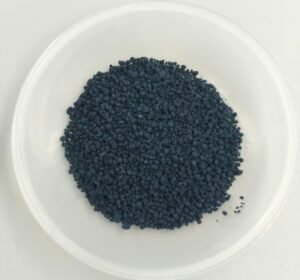
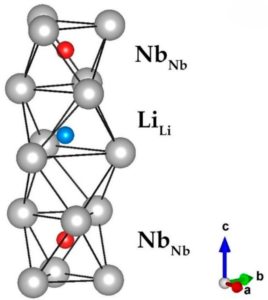
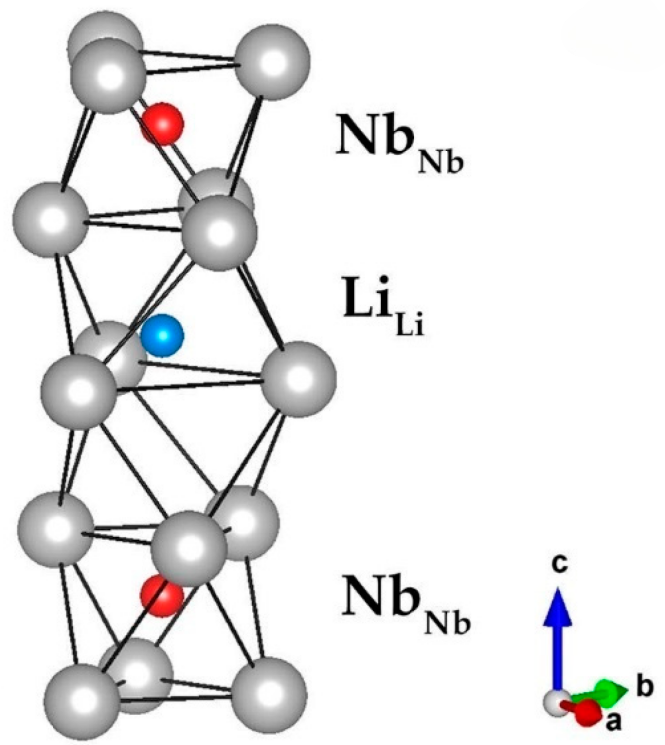
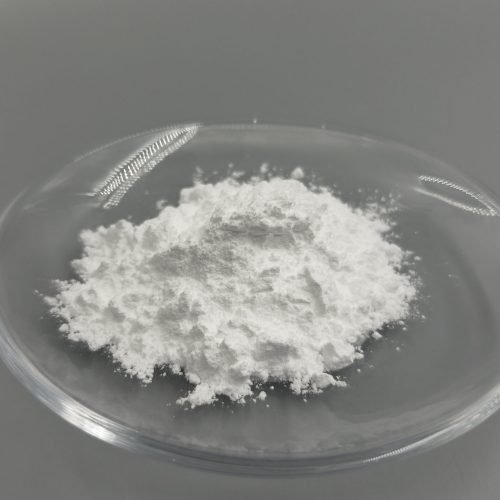
High-purity lithium niobate powder is a key functional inorganic material widely used in optoelectronic devices, high-performance ceramics, and research materials. Its unique α-LiNbO₃ trigonal crystal structure, controlled particle size, and minimal lattice defects ensure consistent material performance. Our self-made high-purity lithium niobate powder provides reliable stability, high reproducibility, and precise optical and piezoelectric properties for various applications.
Key Features
Stable Crystal Structure
The α-LiNbO₃ trigonal lattice exhibits strong nonlinear optical response and piezoelectric effects. Low lattice defect density reduces optical loss and enhances device efficiency, making this powder suitable for high-precision optoelectronic devices and research experiments.
Chemical Stability
High-purity lithium niobate powder contains negligible impurities, maintaining performance under varying temperature and humidity conditions. Compared to commercial powders, it demonstrates stable optical and piezoelectric properties essential for industrial and scientific applications.
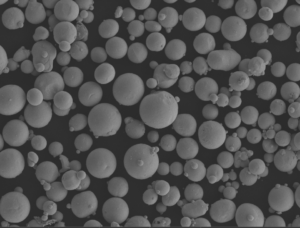
Particle Morphology and Size Control
Uniform and controllable particle size improves sintering density and optical transmittance. After sintering, the powder produces transparent ceramics and high-performance piezoelectric devices, making it suitable for advanced functional materials and high-end optical components.
Key Parameters
- Purity: ≥ 99.99%
- Particle Size: Controllable according to application requirements
- Crystal Structure: α-LiNbO₃, Trigonal Crystal System
- Theoretical Density: 4.64 g/cm³
- Moisture Content: < 0.05%
Applications of Lithium Niobate Powder in Optoelectronics and Ceramic
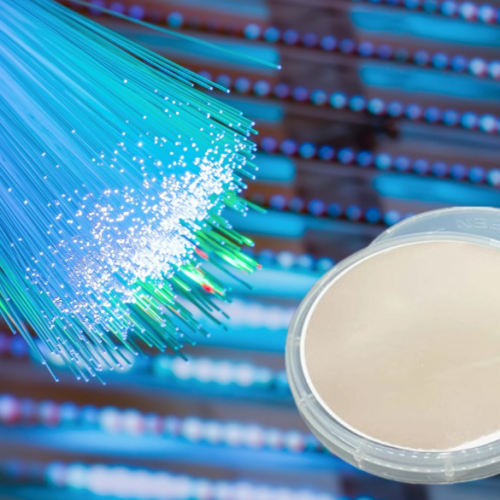
Nonlinear Optical Devices: High-purity lithium niobate powder can be used for laser frequency doubling, optical parametric oscillators (OPOs), and optical switches.
Sintered crystals exhibit stable optical properties and low optical loss, ensuring high device efficiency and stability.
High-Performance Ceramics and Functional Materials: Preparation of piezoelectric ceramics, ferroelectric ceramics, and multifunctional composite materials.
Powder uniformity ensures sintering density and mechanical strength, guaranteeing stable performance of electronic devices.
Scientific Research Materials: Preparation of nanomaterials, thin films, and composite materials.
High The low-defect properties of pure powder improve experimental repeatability and optical/electrical response efficiency.
Preparation and Processing of Lithium Niobate Powder
Our production process combines solid-state reaction and sol-gel techniques to minimize lattice defects and precisely control particle size:
- Dry Grinding: Initial pulverization maintains crystal integrity.
- Wet Grinding: Alcohol or deionized water ensures uniform particle distribution for high-transmittance ceramics.
- Sintering and Heat Treatment: Temperature strictly controlled at 1100–1250°C ensures optimal density and optical properties.
- Storage and Handling: Store in a dry, dark environment to maintain long-term stability and prevent agglomeration.
FAQs
Q1: Why choose high-purity lithium niobate powder?
A1: High purity, low lattice defects, and uniform particle size ensure excellent performance in research and industrial applications.
Q2: Can the powder still be used after absorbing moisture?
A2: Moisture can cause agglomeration, affecting sintering and optical properties. Store powder in dry conditions.
Q3: How does particle size affect material properties?
A3: Uniform particle size improves sintering density, optical transmittance, and piezoelectric performance.
Q4: What is the ideal sintering temperature?
A4: 1100–1250°C. Excessive heat may cause phase changes and reduce material performance.
Q5: What advantages does self-made powder provide for research?
A5: High purity and minimal defects ensure reproducible experiments, improved nonlinear optical efficiency, and stable piezoelectric response.
Summary
Our self-made high-purity lithium niobate powder exhibits significant and unique advantages in the fields of optoelectronics and ceramics. Firstly, its high purity effectively reduces optical losses while maintaining stable piezoelectric properties, providing reliable support for various high-precision optoelectronic devices and scientific research experiments. Secondly, the uniform and controllable particle size of the powder results in sintered ceramics and optical devices exhibiting excellent density and high performance, ensuring the material achieves the expected results in practical applications.
Furthermore, the proprietary synthesis process ensures minimal lattice defects, which not only improves the material’s nonlinear optical efficiency and piezoelectric response but also guarantees more stable and reproducible results in scientific research and industrial applications. Through scientific preparation, processing, and storage methods, our lithium niobate powder provides a solid material foundation for scientific research, high-end optical devices, and functional ceramic applications, demonstrating performance advantages significantly superior to commercially available powders.