

Why IZTO sputtering target Is Gaining Attention in Advanced Electronics?
IZTO sputtering target with the rapid development of flexible electronics, next-generation displays, and high-efficiency solar technologies, the demand for high-performance transparent conductive oxide (TCO) materials continues to grow. Traditional materials such as ITO (Indium Tin Oxide) have been widely used, but their limitations in flexibility, processing temperature, and long-term stability are becoming increasingly evident.
In this context, IZTO (Indium Zinc Tin Oxide) sputtering target has emerged as a next-generation solution, offering improved performance in conductivity, transparency, and flexibility.
What is IZTO Sputtering Target?
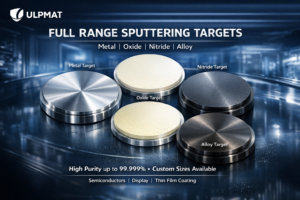
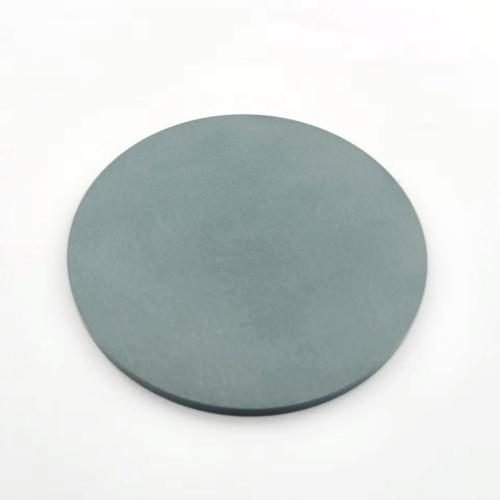
IZTO sputtering target is a multi-component ceramic material composed of In₂O₃ (Indium Oxide), ZnO (Zinc Oxide), and SnO₂ (Tin Oxide), typically fabricated through high-temperature solid-state sintering to achieve high density and compositional uniformity. It serves as a critical source material in magnetron sputtering deposition, where it is used to form high-performance transparent conductive thin films on substrates such as glass, silicon, or flexible polymers (e.g., PET and PI).
Compared with conventional binary TCO systems, the introduction of a third component enables more precise tuning of electrical, optical, and structural properties. Each oxide plays a distinct and complementary role in the overall material system:
In₂O₃ (Indium Oxide) forms the primary matrix of the material, providing a wide bandgap (approximately 3.6 eV), which ensures excellent transparency in the visible light region. It also offers a stable crystalline or amorphous framework that supports carrier transport.
SnO₂ (Tin Oxide) functions as an effective n-type dopant. When Sn⁴⁺ ions substitute for In³⁺ in the lattice, extra free electrons are generated, significantly increasing carrier concentration and reducing resistivity. This doping mechanism is essential for achieving high electrical conductivity in the final thin film.
ZnO (Zinc Oxide) plays a crucial role in modifying the microstructure of the film. It helps suppress excessive crystallization, promotes the formation of amorphous or nanocrystalline structures, and reduces grain boundary defects. As a result, ZnO enhances film uniformity, improves mechanical flexibility, and allows high-quality films to be deposited at lower temperatures.
Through this synergistic multi-component design, IZTO achieves a superior balance between high optical transparency, low electrical resistivity, mechanical flexibility, and low-temperature process compatibility. This makes it significantly more versatile and adaptable than traditional binary TCO materials such as ITO or IZO, especially in emerging applications like flexible displays, wearable electronics, and next-generation photovoltaic devices.
Why Is IZTO Better Than ITO?
Compared to ITO, IZTO offers several critical advantages that make it more suitable for modern applications.
1. Lower Deposition Temperature
IZTO can be deposited at temperatures as low as ≤120°C, making it ideal for temperature-sensitive substrates such as PET and PI.
2. Superior Flexibility
Unlike brittle ITO films, IZTO films maintain stable electrical performance even under repeated bending conditions, making them suitable for foldable and wearable devices.
3. Higher Transparency with Low Resistivity
IZTO achieves an excellent balance between optical transparency and electrical conductivity, helping improve device efficiency and brightness.
4. Better Chemical and Plasma Stability
IZTO shows strong resistance to hydrogen plasma, moisture, and UV exposure, which is especially important in advanced photovoltaic applications.
5. Stable Sputtering Performance
High-density IZTO targets provide:
Lower particle generation
Reduced arcing
More uniform film deposition
How Does IZTO sputtering target Work in Sputtering?
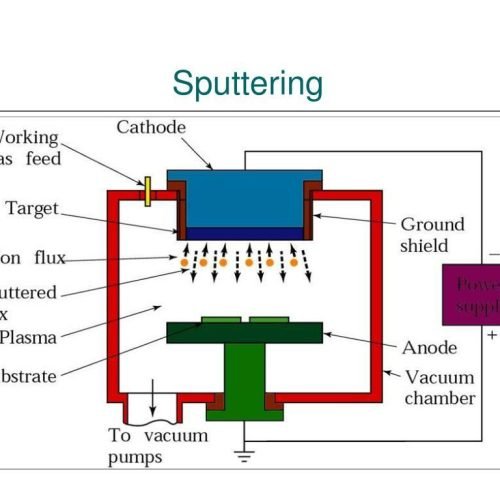
During magnetron sputtering, plasma ions bombard the IZTO sputtering target surface, ejecting atoms that deposit onto a substrate to form a thin conductive film.
Magnetic fields confined near the cathode enhance plasma efficiency, enabling stable and high-quality film deposition at relatively low temperatures.
Applications of IZTO Sputtering Target
IZTO sputtering target is widely used in advanced electronic and energy applications due to its excellent combination of high optical transparency, low electrical resistivity, superior flexibility, and strong environmental stability. As a next-generation transparent conductive oxide (TCO) material, it plays a critical role in enabling high-performance device architectures across multiple cutting-edge industries.
Flexible Displays (OLED, Foldable Screens)
IZTO is extensively applied in flexible display technologies, including OLED panels, foldable smartphones, and rollable screens. Its ability to maintain stable conductivity under repeated mechanical deformation makes it highly suitable for devices that require bending, folding, or continuous dynamic operation. In addition, its low-temperature deposition capability allows integration with plastic substrates such as PET and PI, supporting large-scale flexible manufacturing processes.
Touch Panels and Transparent Electrodes
In capacitive touch panels and transparent electrode systems, IZTO provides a highly uniform conductive layer with excellent light transmittance. This ensures fast response speed, high touch sensitivity, and improved display clarity. Compared with traditional ITO, IZTO delivers better mechanical durability, reducing the risk of cracking or performance degradation under long-term usage.
Perovskite and HJT Solar Cells
IZTO is increasingly used in advanced photovoltaic technologies such as perovskite solar cells and heterojunction (HJT) solar cells. Its strong resistance to hydrogen plasma and environmental degradation makes it highly compatible with modern cell fabrication processes. Additionally, its high transparency helps maximize light absorption in the active layer, improving overall energy conversion efficiency.
Automotive Displays and Smart Glass
In automotive applications, IZTO is utilized in advanced display systems such as head-up displays (HUD), center console screens, and smart glass technologies. Its excellent thermal stability and optical performance ensure reliable operation under wide temperature ranges and harsh environmental conditions. This makes it a strong candidate for next-generation vehicle electronics and intelligent cockpit systems.
Wearable Electronics and Sensors
IZTO also plays an important role in wearable devices and flexible sensor technologies. It enables the development of ultra-thin, lightweight, and highly durable electronic components that can conform to the human body. Applications include smart bands, health monitoring sensors, and electronic skin systems, where mechanical flexibility and stable electrical performance are essential.

Key Quality Indicators of IZTO Target
To ensure high-performance thin films, IZTO targets should meet the following criteria:
- High purity (≥99.99%)
- High density (close to theoretical density)
- Uniform microstructure
- Strong bonding strength
- Low surface roughness
FAQ: IZTO Sputtering Target
Q1:What is IZTO sputtering target used for?
A1:It is used to deposit transparent conductive thin films in displays, solar cells, and electronic devices.
Q2:Why is IZTO better than ITO?
A2:IZTO offers better flexibility, lower processing temperature, and improved stability compared to ITO.
Q3:Is IZTO suitable for flexible electronics?
A3:Yes, IZTO is ideal for flexible electronics due to its excellent bending stability.
Q4:Can IZTO sputtering targets be customized?
A4:Yes, composition, size, and purity can all be customized.
Q5:Is IZTO used in solar cells?
A5::Yes, especially in perovskite and heterojunction solar cells.
Conclusion
IZTO sputtering targets represent an advanced generation of transparent conductive materials. Compared with traditional ITO, IZTO offers improved mechanical flexibility, lower processing and deposition temperatures, and enhanced chemical and structural stability. These advantages make it more suitable for modern device manufacturing, especially for temperature-sensitive and flexible substrates. As a result, IZTO is rapidly gaining attention as a preferred alternative to ITO in next-generation electronic and energy applications, including advanced displays, touch technologies, and emerging optoelectronic systems.