

Introduction to High-Purity Chromium Carbide (Cr₃C₂) Powder
High-Performance Chromium carbide powder (Cr₃C₂) is a widely used advanced ceramic material known for its excellent wear resistance, corrosion resistance, and high-temperature stability. As a typical representative of transition metal carbides, chromium carbide powder combines the advantages of high hardness and structural stability, making it highly suitable for demanding industrial environments.
With the continuous development of surface engineering and advanced manufacturing technologies, high purity chromium carbide powder has become an essential material in thermal spray coatings, wear-resistant components, and metal matrix composites. Its ability to maintain performance under extreme conditions makes it a preferred solution in aerospace, energy, and heavy industry applications.
Key Properties and High-Temperature Performance of Chromium Carbide Powder
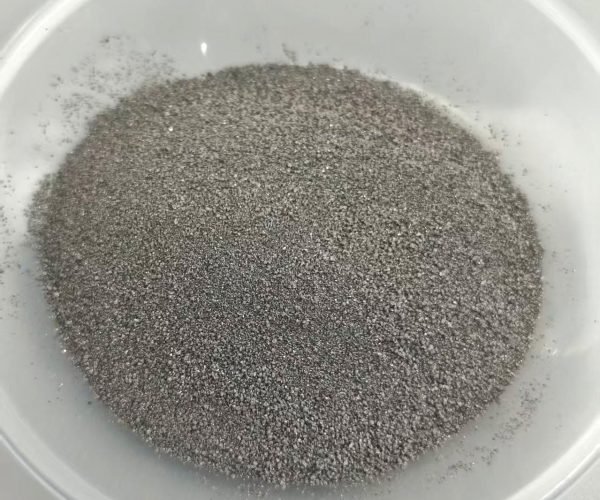
Chromium carbide powder exhibits a unique combination of mechanical strength and thermal stability. Its hardness typically ranges from 1200 to 1800 HV, providing strong resistance against abrasion and erosion in high-wear environments. This makes it particularly effective in extending the service life of industrial components.
In terms of thermal performance, chromium carbide has a melting point of approximately 1890°C, allowing it to maintain structural integrity under elevated temperatures. Compared to many other carbide materials, chromium carbide shows superior oxidation resistance, especially in environments up to around 1000°C. This characteristic makes it highly suitable for high-temperature coating applications.
From a chemical standpoint, chromium carbide powder offers good corrosion resistance in both acidic and alkaline environments. It also features moderate electrical conductivity and a relatively low thermal expansion coefficient, ensuring dimensional stability during repeated thermal cycling.
Synthesis and Production Techniques of High-Performance
Chromium Carbide Powder
The quality of chromium carbide powder is highly dependent on its production method. The most commonly used industrial process is carbothermal reduction, where chromium oxide reacts with carbon at high temperature to form Cr₃C₂. This method is cost-effective and suitable for large-scale production, although further refinement is often required to reduce oxygen impurities.
Mechanical alloying is another method used to produce fine chromium carbide powder with controlled particle size distribution. This process improves powder uniformity and is suitable for high-performance applications.
For advanced applications, plasma synthesis is used to produce high purity chromium carbide powder with spherical morphology. These spherical chromium carbide powders offer excellent flowability and are particularly suitable for thermal spraying and additive manufacturing processes.
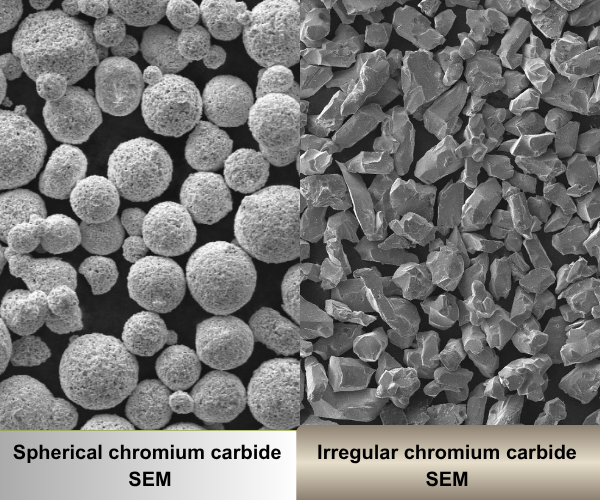
What is the use of chromium carbide?
Chromium carbide powder is widely used in industries that require high wear resistance, corrosion resistance, and high-temperature stability. Its versatility allows it to be applied across multiple engineering fields, especially in surface protection and advanced manufacturing.
- Thermal Spray Coatings
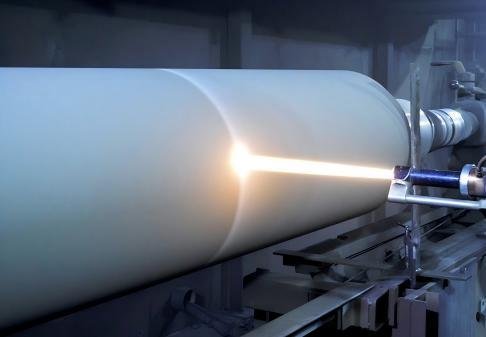
Chromium carbide powder, especially Cr₃C₂ powder, is most commonly used in thermal spray coatings such as Cr₃C₂-NiCr systems. These coatings form dense and wear-resistant protective layers on metal surfaces, significantly improving resistance to abrasion, erosion, and oxidation. They are widely applied in aerospace components, boiler tubes, and industrial rollers where high-temperature performance is critical.
High purity chromium carbide powder is used as a reinforcing phase in metal matrix composites to enhance hardness and wear resistance. By integrating Cr₃C₂ powder into metal matrices, the overall mechanical strength and durability of the material are improved, making it suitable for structural components and high-load applications.
- Welding and Hardfacing Materials
Chromium carbide powder is added to welding consumables and hardfacing materials to increase surface hardness and extend service life. It is especially valuable in industries such as mining, cement, and steel production, where equipment is exposed to severe wear and mechanical stress.
- Additive Manufacturing
With the development of additive manufacturing technologies, chromium carbide powder is increasingly used in 3D printing as a reinforcing material. It enhances the wear resistance and mechanical properties of printed components, making it suitable for high-performance engineering applications.
Chromium Carbide vs Other Carbides: Performance Comparison
To better understand the advantages of chromium carbide powder, it is compared with tungsten carbide (WC) and titanium carbide (TiC).
- Hardness
Chromium carbide (Cr₃C₂) offers high hardness suitable for wear-resistant applications, while tungsten carbide provides extremely high hardness. Titanium carbide also has high hardness but is typically used in lighter structural applications. - Oxidation Resistance
Chromium carbide powder shows excellent oxidation resistance at elevated temperatures (up to ~1000°C), making it ideal for thermal spray coatings. In comparison, tungsten carbide has lower oxidation resistance, while titanium carbide performs moderately. - Density
Chromium carbide has medium density (~6.68 g/cm³), which is lower than tungsten carbide but higher than titanium carbide. This makes it a balanced option where both weight and performance are important. - High-Temperature Stability
Cr₃C₂ powder maintains stable performance at high temperatures, especially in oxidizing environments. Tungsten carbide tends to degrade under such conditions, while titanium carbide performs well but lacks oxidation resistance. - Corrosion Resistance
Chromium carbide demonstrates strong corrosion resistance in both acidic and alkaline environments. Tungsten carbide and titanium carbide offer moderate resistance in comparison. - Cost and Application
Chromium carbide powder provides a balanced cost-performance ratio and is widely used in thermal spray coatings. Tungsten carbide is more expensive and mainly used in cutting tools, while titanium carbide is used in specialized structural applications.
Quality Control and Key Technical Parameters of High-Performance Chromium Carbide Powder
To ensure consistent performance, several key parameters must be controlled in the production of high purity chromium carbide powder. These include purity (typically ≥99%), particle size distribution, oxygen content, flowability, and phase composition.
Stable quality is essential for applications such as thermal spraying and additive manufacturing, where powder consistency directly affects the final product performance. Therefore, reliable suppliers usually provide complete technical documentation, including particle size analysis and phase characterization.
Storage and Handling
High-Performance Chromium carbide powder should be stored in a dry and controlled environment to prevent moisture absorption and oxidation. Vacuum packaging or inert gas protection is recommended, especially for long-term storage.
Proper handling is also important to avoid contamination, which may affect the powder’s performance in coating or manufacturing processes.
Conclusion
High-Performance Chromium carbide powder (Cr₃C₂ powder) is a key industrial material that offers excellent wear resistance, high-temperature stability, and corrosion resistance. Its wide range of applications in thermal spray coatings, metal matrix composites, and advanced manufacturing highlights its importance in modern industry.
With increasing demand for high-performance materials, high purity and spherical chromium carbide powder will continue to play a critical role in future industrial development.