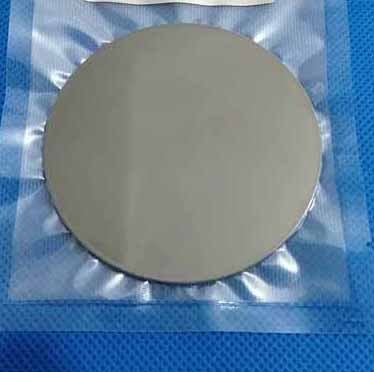
Iron Sulfide Sputtering Targets Overview
Iron sulfide sputtering targets are a promising semiconductor material. They have attracted significant attention due to their suitable band gap, extremely high light absorption coefficient, and the fact that their constituent elements are abundant, non-toxic, and inexpensive in the Earth’s crust. Using magnetron sputtering technology, FeS₂ sputtering targets can be used to prepare high-quality, large-area, uniform FeS₂ thin films, which are core functional layers for constructing various advanced optoelectronic and energy devices.
We specialize in the production and supply of high-quality iron sulfide sputtering targets for reactive magnetron sputtering. Our products are prepared using high-purity raw materials and advanced processes, ensuring pure crystal structure, precise composition, high density, and uniform microstructure, meeting diverse needs from R&D to large-scale production. Please contact us.
Product Highlights
Excellent optoelectronic properties
Abundant elemental reserves
Excellent film quality
High cost-effectiveness
Broad application prospects
Applications of Iron Sulfide Sputtering Targets
Thin-film solar cells: As a highly promising light-absorbing layer material, FeS₂ thin films can be used to prepare low-cost, high-efficiency next-generation solar cells.
Photodetectors and Sensors: Due to its excellent photoelectric response characteristics, FeS₂ can be used to manufacture high-performance photodetectors and various sensors in the visible to near-infrared bands.
Lithium/Sodium-Ion Battery Electrodes: iron sulfide nanostructures, with their high theoretical capacity, are promising new anode materials for energy storage batteries, contributing to improved battery energy density.
Electromagnetic Wave Absorption and Shielding: iron sulfide micro/nanomaterials with specific morphologies exhibit excellent electromagnetic wave absorption performance, making them valuable in electromagnetic compatibility and stealth coatings.
Photocatalysis and Photoelectrochemistry: iron sulfide can be used in photocatalytic processes such as water splitting for hydrogen production or pollutant degradation, as well as in the construction of photoelectrochemical batteries.
FAQs
Q1: What type of thin film is primarily formed when iron sulfide is used as a target for sputtering?
A1: FeS₂ thin films prepared by reactive magnetron sputtering are typically polycrystalline or nanocrystalline semiconductor films. Their conductivity type (P-type or N-type) and electrical properties can be effectively controlled by precisely adjusting parameters such as deposition temperature, H₂S partial voltage, and sputtering power.
Q2: What are the advantages of sputtering compared to other preparation methods?
A2: Magnetron sputtering, especially high-power pulsed magnetron sputtering (HIPIMS), enables precise control of film composition, achieves excellent film uniformity and density, and offers good process repeatability, making it easier to achieve large-area, continuous industrial production.
Q3: What key process parameters need attention when using iron sulfide sputtering targets?
A3: Key process parameters include: substrate temperature, the ratio of H₂S to Ar reactant gases, and total working pressure. These parameters directly affect the crystal quality, stoichiometry, and final photoelectric properties of the film.
Reports
Each batch is supplied with:
Certificate of Analysis (COA)
Technical Data Sheet (TDS)
Material Safety Data Sheet (MSDS)
Size Inspection Report
Third-party testing reports available upon request
Why Choose Us?
In the field of thin film materials, we are not just a supplier, but a trusted partner. We have a professional, international R&D and technical team with deep expertise in the sputtering target industry, and we have established a comprehensive quality management system. We are committed to providing customers with technical support and customized solutions that go beyond the products themselves, helping your research and production projects succeed.