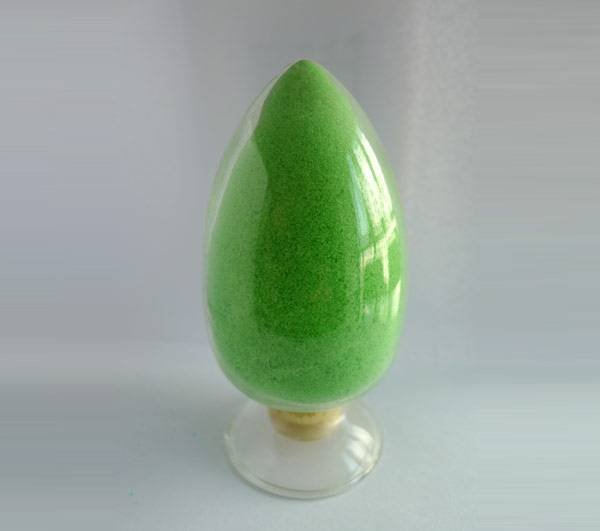
Nickel Chloride Powder Overview
Nickel chloride powder is a high-purity nickel halide, commonly used in catalysis, chemical synthesis, and electronic material preparation.
We offer NiCl2 powder in various purities and particle sizes, and support experimental process matching and technical consultation. Please contact us for detailed specifications and quotations.
Product Highlights
High purity and stability
Uniform powder distribution
Easy to dissolve and disperse
Good chemical reactivity
Reliable batch consistency
Customizable products
Small packaging, low minimum order quantity
Strong process adaptability
Applications of Nickel Chloride Powder
Catalyst Preparation: NiCl₂ powder can be used in organic reactions or inorganic catalytic systems to improve reaction efficiency and selectivity.
Chemical Synthesis Reagent: The powder is suitable for synthesizing nickel compounds or other functional materials, ensuring reaction uniformity and stability.
Electronic Material Precursor: Can be used as a precursor for the preparation of electronic materials or thin films, ensuring consistent material performance.
Scientific Research and Material Development: The powder is suitable for laboratory research and new material development, used for performance evaluation and process exploration.
Q1: In which fields is NiCl2 powder mainly used?
A1: Commonly used in catalysis, chemical synthesis, electronic material precursors, and scientific research experiments.
Q2: How should NiCl2 powder be stored to ensure stability?
A2: It is recommended to store it in a sealed container in a dry environment, avoiding moisture and prolonged exposure to air.
Q3: Does NiCl2 powder need to be treated before use?
A3: It can usually be used directly. Dissolution or dispersion treatment can be performed according to experimental needs.
Q4: What are the differences between NiCl2 and other nickel halides?
A4: NiCl₂ is nickel dichloride. Its structure and solubility differ from nickel halides such as NiBr₂ and NiI₂, making it suitable for specific experiments and processes.
Report
Each batch is supplied with:
Certificate of Analysis (COA)
Technical Data Sheet (TDS)
Material Safety Data Sheet (MSDS)
Third-party testing reports available upon request
Why Choose Us?
We have extensive experience in the supply of nickel halides and functional powder materials, focusing on the stability of powder performance and application adaptability. We provide comprehensive technical information and flexible specifications to help customers achieve reliable and efficient results in catalysis, electronic materials and scientific research experiments.