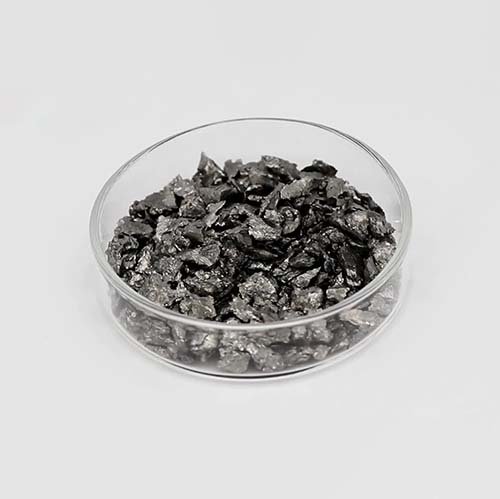
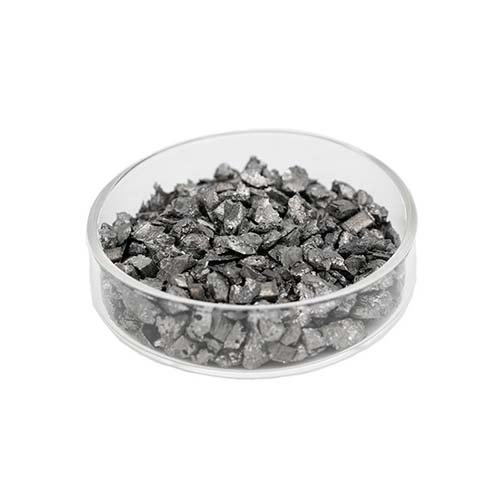
Erbium Nickel alloy Granules Overview
Erbium nickel alloy granules are high-performance rare earth alloy materials designed for high-end functional materials and magnetic applications. Through precise proportioning and high-purity preparation processes, the product has excellent alloy uniformity, purity control, and physical stability, and is suitable for many cutting-edge fields such as magnetic cold materials, magneto-optical films, vacuum melting additives, etc.
We can provide Erbium nickel alloy granules of different specifications, including spherical, flake, and irregular particles with uniform size distribution, which can be customized according to your specific process requirements. All products are strictly controlled and tested to ensure that the alloy phase structure and composition are stable and consistent, meeting high-standard application environments with our high-purity Erbium nickel alloy granules.
Product highlights of Erbium nickel alloy granules
Purity: 99.9%, ensuring stable magnetic and physical properties
Uniform composition, dense alloy structure, good thermal stability
Customizable particle morphology and size distribution, suitable for various smelting or sputtering systems
Good compatibility, suitable for vacuum environment, high temperature smelting and functional film preparation
Customizable packaging
Applications of Erbium nickel alloy granules
Magnetic materials: widely used in rare earth permanent magnet alloy systems or magnetic refrigeration materials to regulate magnetic properties
Magneto-optical film: used to make rare earth metal magnetic film structures and improve magneto-optical response characteristics
Vacuum metallurgy: as a rare earth modified alloy additive, used for high-end special alloy smelting
Scientific research and new material development: suitable for new material formulation research in the fields of magnetism, thermoelectricity, catalysis, etc.
FAQs
1. What are erbium nickel alloy granules?
Erbium nickel alloy granules are small solid pieces of an alloy containing erbium (Er) and nickel (Ni). They provide a granular metallic feedstock for materials research, alloy preparation, and other processes requiring an erbium–nickel composition. Their chemical composition, phase structure, and physical properties depend on the alloy ratio and manufacturing process. Buyers should confirm the specified composition and material grade before selecting a product for research or production.
2. What are erbium nickel alloys used for?
Erbium nickel alloys may be investigated in rare-earth alloy research, magnetic-material studies, intermetallic compound development, and specialized metallurgical applications. Nickel-based rare-earth systems can exhibit composition-dependent structural and magnetic behavior, making the exact alloy phase important when evaluating their properties. The suitability of a particular Er–Ni alloy depends on its composition, phase constitution, processing history, and the requirements of the intended application.
3. Why does the erbium-to-nickel ratio matter when selecting an Er–Ni alloy?
The erbium-to-nickel ratio influences the alloy’s phase composition, crystal structure, and potentially its magnetic, thermal, and mechanical behavior. Different compositions may form different intermetallic phases, so erbium nickel alloys should not be treated as a single material with universal properties. For research or production, specify the required composition in atomic percent or weight percent and confirm whether the product is intended to meet a particular phase or compositional specification.
4. Are erbium nickel alloy granules suitable for alloy melting and materials research?
They may be suitable as metallic feedstock for alloy preparation and laboratory-scale materials research when their composition and physical form meet the process requirements. Before melting, confirm the target composition, batch size, compatibility with other charge materials, and required processing atmosphere. Because erbium is reactive under certain conditions, oxidation control and appropriate handling procedures may be important. The final alloy properties depend on processing conditions and verification of the resulting composition and phase structure.
5. What is the advantage of using erbium nickel alloy granules instead of separate erbium and nickel metals?
Using a pre-alloyed granular material can simplify material charging when the supplied composition matches the required alloy specification. It may reduce the need to calculate and weigh separate elemental additions, although the final composition still depends on material losses and processing conditions. Using separate erbium and nickel metals can offer greater flexibility when preparing different compositions. The preferred approach depends on the required alloy ratio, process control, and whether a pre-alloyed feedstock is available in the appropriate grade.
6. Which specifications should be checked before purchasing erbium nickel alloy granules?
The most important specifications are erbium and nickel content, allowable impurity levels, granule size, and the required quantity. Depending on the application, buyers may also need phase identification, compositional analysis, or other technical documentation. If the material is intended for magnetic or intermetallic research, confirm whether the requirement concerns the overall elemental composition or a specific phase. These details help ensure that the supplied material is suitable for the intended experiment or manufacturing process.
7. How can I request an erbium nickel alloy granules quotation from ULPMAT?
When contacting ULPMAT, provide the target erbium-to-nickel ratio, preferred composition units (atomic percent or weight percent), granule size, required quantity, and intended application. Include any impurity limits or documentation requirements, such as a Certificate of Analysis (CoA), if applicable. If a specific intermetallic phase is required, state that explicitly rather than providing only the alloy’s general name.
8. Can ULPMAT supply erbium nickel alloy granules with customized compositions or sizes?
ULPMAT can review inquiries for erbium nickel alloy granules according to the required composition, granule size, quantity, and application. Availability of customized compositions, size ranges, and specific analytical documentation should be confirmed for each order. To assess a suitable supply option, provide your target composition, technical specification, and required quantity.
Report
We provide complete analysis certificates (COA), material safety data sheets (MSDS) and third-party testing support for each batch of erbium nickel alloy granules. Ensure that the material composition is traceable and the quality is stable, to protect your R&D and production.