Erbium oxide powder Overview
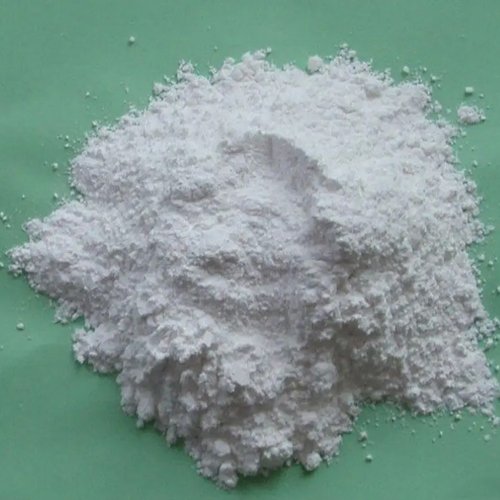
Erbium oxide powder is a high-purity rare earth oxide designed for advanced thin film deposition and functional material applications. With a purity of up to 99.99%, it offers stable chemical properties and exceptional thermophysical performance, ensuring uniform film formation and high efficiency during magnetron sputtering, laser melting, and ceramic sintering processes.
We offer high-quality erbium oxide powder with fine particle distribution and customizable sizes to meet various process requirements. Our team also provides comprehensive technical support and after-sales service to ensure the successful execution of your projects using our Erbium oxide powder.
Product Highlights of Erbium oxide powder
Purity: 99.99%
Excellent thermal and chemical stability
Controllable and customizable particle size, uniform distribution, easy process processing
Widely used in magnetron sputtering, ceramic preparation and laser materials
Packaging can be customized
Applications of Erbium oxide powder
Optical thin films: used to prepare laser gain media, infrared windows and high refractive index functional films.
Functional ceramics: key raw materials in rare earth-doped ceramics and optical ceramics.
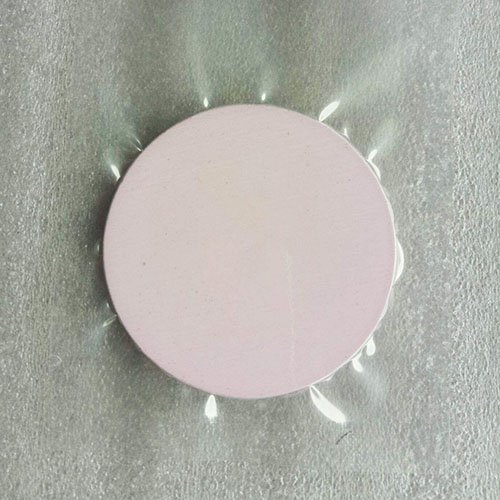
Magnetron sputtering targets: High-purity erbium oxide powder is the basic material for preparing high-performance targets.
Laser devices: used for Er:YAG laser material preparation, applied in medical and industrial laser fields.
FAQs
1. What is erbium oxide powder?
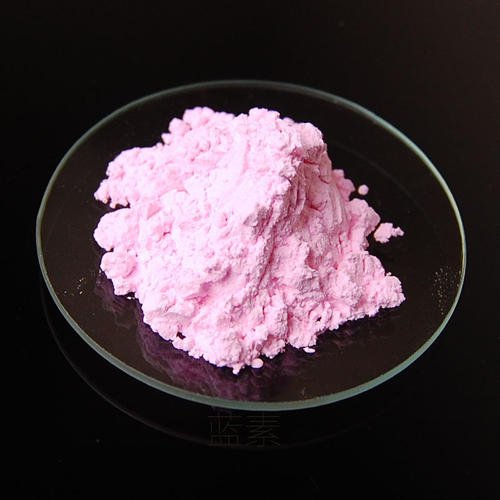
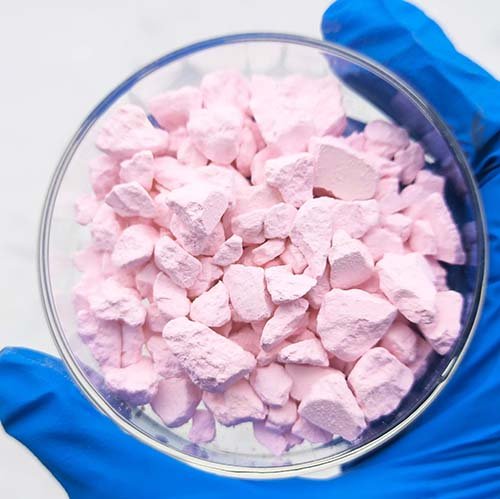
Erbium oxide powder is a rare earth compound with the chemical formula Er₂O₃, also known as erbium(III) oxide. It typically appears as a pale pink powder, although its appearance can vary with material characteristics. Er₂O₃ is used as a source of erbium in specialty glass, ceramic materials, optical-material research, and the preparation of other erbium-containing compounds. Its suitability depends on purity, particle size, and the requirements of the intended application.
2. What are the main applications of erbium oxide powder?
Erbium oxide powder is used in specialty glass formulations, advanced ceramics, phosphor-related research, and the preparation of erbium-containing materials. It can also serve as a starting material for optical glasses and other host materials incorporating erbium ions for photonic and laser-related applications. The final performance depends on the host composition, erbium concentration, processing conditions, and material quality rather than the oxide powder alone.
3. How do purity and particle size affect erbium oxide powder selection?
Purity affects the level of unwanted impurities introduced into a formulation, which can be important for optical, electronic, and high-performance ceramic applications. Particle size and particle-size distribution influence powder mixing, dispersion, compaction, and reaction behavior during processing. A suitable specification should therefore consider both chemical purity and physical characteristics. Buyers should confirm the required purity, particle-size range, impurity limits, and available analytical documentation for their application.
4. Is erbium oxide powder suitable for optical glass and laser-material research?
Yes. Erbium oxide powder can be used as an erbium source in the preparation of optical glasses and other host materials for photonic and laser-related research. Erbium ions, particularly Er³⁺, are associated with optical transitions used in technologies such as fiber amplifiers and lasers operating near 1.5 μm. However, the oxide powder is a raw material, not a finished laser material. Optical performance depends on the host matrix, erbium concentration, processing quality, and resulting material properties.
5. What is the difference between erbium oxide powder and erbium oxide granules?
Both forms consist of erbium oxide (Er₂O₃), but they differ in physical form and handling characteristics. Fine powder is often preferred for blending, dispersion, ceramic processing, and reactions requiring intimate contact between particles. Granules may be more suitable for certain feeding or handling operations that favor a coarser material form. The best choice depends on the process, equipment, particle-size requirements, and material-consumption method.
6. Can erbium oxide powder be used to prepare other erbium compounds?
Yes. Erbium oxide can serve as a starting material for preparing other erbium-containing compounds through appropriate chemical processing. The selected synthesis route depends on the target compound, required purity, reaction chemistry, and downstream processing conditions. Conversion procedures should be developed and validated for the intended application, with suitable controls for chemical compatibility, contamination, and product quality.
7. How should erbium oxide powder be stored and handled?
Store erbium oxide powder in a tightly closed, clearly labeled container under the conditions specified in its Safety Data Sheet (SDS). Protect the material from contamination and unnecessary moisture exposure, and minimize dust generation during weighing, transfer, and mixing. Appropriate ventilation and personal protective equipment should be selected according to the SDS and workplace risk assessment. Avoid assuming that a rare earth oxide powder is hazard-free simply because it is an inorganic material.
8. What information should I provide when ordering erbium oxide powder from ULPMAT?
When requesting a quotation from ULPMAT, specify the required purity, particle size or particle-size distribution, order quantity, and intended application. If your process has strict impurity limits or requires a Certificate of Analysis (CoA), Safety Data Sheet (SDS), or other technical documentation, include these requirements in your inquiry. ULPMAT can review the requested specifications and confirm the applicable product and supply options.
Report