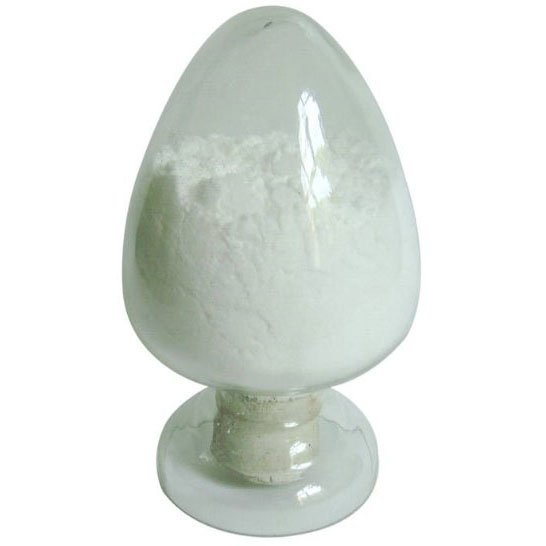
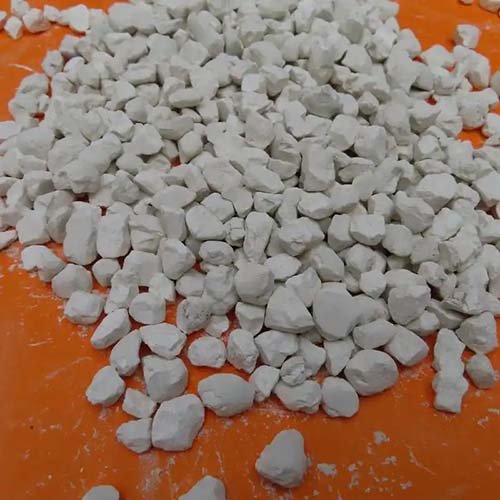
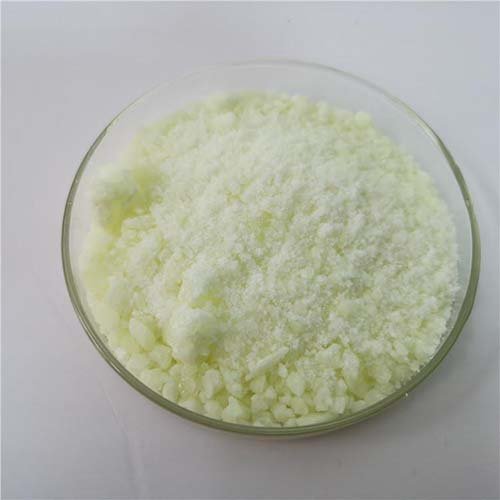
Dysprosium Oxide powder Overview
Dysprosium Oxide powder for magnetic materials is a high-purity rare earth oxide designed for high-performance ceramics and luminescent applications. With a purity of up to 99.99%, it exhibits excellent thermal stability, magneto-optical properties, and chemical stability, making Dysprosium Oxide powder for industrial manufacturing and research ideal for maintaining stable performance under complex working conditions.
We provide Dysprosium Oxide powder for customized particle sizes in various specifications. Comprehensive after-sales support is available—if you have any questions about use, please feel free to contact us for technical guidance.
Product highlights of Dysprosium Oxide powder
Purity: 99.9% – 99.99%
High thermal stability, suitable for high-temperature sintering
Excellent magneto-optical activity, suitable for magnetic material modification
Customizable particle size specifications and purity
Customizable packaging
Applications of Dysprosium Oxide powder
Magnetic materials: used for doping of NdFeB permanent magnets to improve high-temperature coercivity.
Ceramics and optical glass: used for doping of special ceramics, luminescent glass and infrared window materials.
Nuclear industry: can be used as a moderator and control material due to its strong neutron absorption cross section.
High Energy Physics and Scientific Research: Widely used to synthesize high refractive index or special magneto-optical materials.
FAQs
1. What is dysprosium oxide powder used for?
Dysprosium oxide (Dy₂O₃) powder is a rare-earth oxide used in advanced ceramics, optical materials, phosphor research, specialty glass, and the preparation of other dysprosium-containing compounds. It is also used as a precursor in materials research involving magnetic and electronic applications. The appropriate grade depends on the intended process, required purity, particle characteristics, and acceptable impurity levels. For specialized applications, chemical composition and processing compatibility should be evaluated alongside nominal purity.
2. Why does dysprosium oxide purity matter in advanced materials?
Purity is important because trace impurities can affect optical behavior, ceramic properties, phase formation, and the performance of materials prepared from Dy₂O₃. In applications involving luminescent materials, specialty ceramics, or electronic materials research, even relatively small amounts of certain contaminants may influence reproducibility. However, higher purity does not automatically guarantee better performance. Particle size, phase composition, dispersion, sintering conditions, and the chemistry of the final formulation also contribute to the resulting material properties.
3. Does particle size influence the sintering behavior of Dy₂O₃ powder?
Yes. Particle size and particle size distribution can influence packing density, surface area, diffusion behavior, and densification during sintering. Fine powders may promote sintering under suitable conditions because of their higher specific surface area, but they can also agglomerate, making uniform dispersion more difficult. Consequently, the ideal particle size depends on the forming method, additives, sintering temperature, and desired microstructure. Particle size should be evaluated together with powder morphology, agglomeration, and processing requirements.
4. How is dysprosium oxide different from other rare-earth oxides?
Dysprosium oxide differs from other rare-earth oxides in its elemental composition and the functional properties it contributes to a material. Dy₂O₃ is selected when dysprosium is specifically required for a formulation, rather than as a universal substitute for compounds such as terbium oxide, gadolinium oxide, or yttrium oxide. These oxides have different electronic, optical, and chemical characteristics. Material selection should therefore be based on the intended function, compatibility with other constituents, and the required final composition.
5. Can dysprosium oxide powder be used as a dopant in ceramics or functional materials?
Yes. Dy₂O₃ can serve as a dysprosium source in selected ceramic and functional-material formulations. When incorporated into a host material, dysprosium may influence optical emission, defect chemistry, or other composition-dependent properties, depending on the host structure and processing conditions. The effect depends on the concentration, distribution, oxidation state, phase compatibility, and thermal treatment. Appropriate formulation and characterization are needed to determine whether the resulting material achieves the desired performance.
6. What should be considered when storing and handling dysprosium oxide powder?
Dysprosium oxide powder should be kept in clean, tightly closed packaging and protected from contamination and unnecessary exposure to moisture. Fine powders should be handled in a manner that minimizes dust generation, using suitable ventilation and personal protective equipment in accordance with the product’s Safety Data Sheet (SDS). Clean tools and controlled weighing procedures are particularly important for high-purity applications. Specific handling, exposure-control, and disposal measures should follow the applicable SDS and workplace requirements.
7. Which specifications should buyers confirm before ordering dysprosium oxide powder?
Buyers should confirm the chemical formula (Dy₂O₃), required purity, particle size or particle size distribution, quantity, packaging, and any application-specific impurity limits. Depending on the intended use, additional requirements may include morphology, specific surface area, trace-element analysis, or other characterization data. For ceramic processing or functional-material synthesis, it is helpful to explain the intended application so that the requested powder characteristics can be evaluated against the process requirements.
8. Can ULPMAT supply dysprosium oxide powder for specific material requirements?
ULPMAT can review inquiries for dysprosium oxide powder according to the requested purity, particle size, quantity, and intended application, subject to confirmation of available specifications. To request a quotation, provide the required Dy₂O₃ grade, preferred particle size, order quantity, packaging requirements, and any necessary analytical documentation. If the powder is intended for advanced ceramics, optical materials, or a specialized research process, include the relevant technical requirements to help establish the appropriate specification before ordering.
Reports
We provide complete Certificate of Analysis (COA), Material Safety Data Sheet (MSDS) and other relevant reports for each batch of dysprosium oxide powder. In addition, we also support third-party testing to enhance quality assurance.